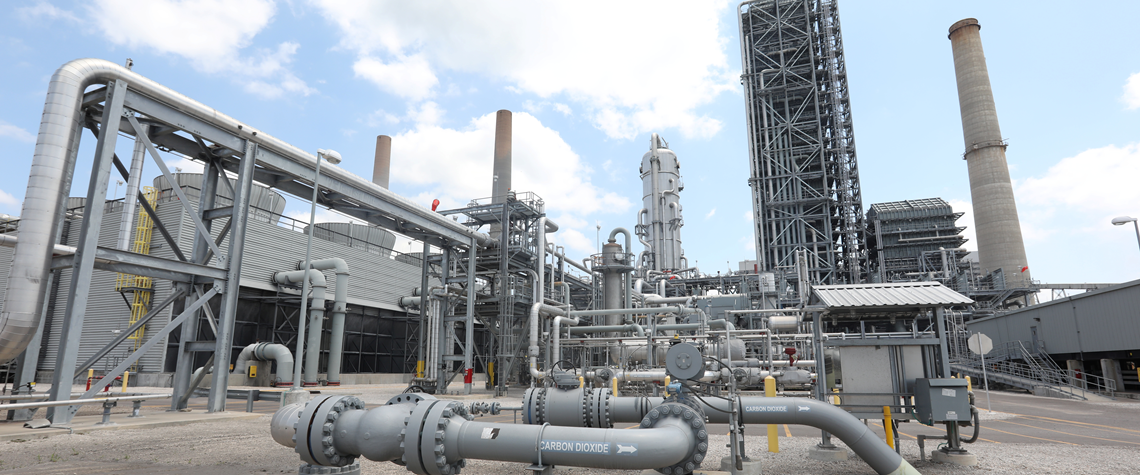
The Petra Nova CCS Facility at NRG Power Plant in Richmond, Texas
Solving the CCS cost conundrum
Changes to the energy mix and government-backed development of CCS would put the climate goal within reach, according to DNV GL
Standards agency DNV GL’s forecast that there will be significant changes to the world’s energy mix over the next three decades, set out in its Energy Transition Outlook, is hardly a consensus-breaking view. But its almost 300-page report, built on a cost-based model, is more analytical and provides more robust predictions than most. Its model predicts that the share of renewables in the world energy mix will increase from 14pc to 40pc in 2050 while oil and gas will decline from 54pc to 46pc. For fossil fuels, it sees carbon capture and storage (CCS) as an essential and increasingly affordable technology—as long as governments provide support for its development. “Our model forecasts tha

Also in this section
9 January 2026
A shift in perspective is needed on the carbon challenge, the success of which will determine the speed and extent of emissions cuts and how industries adapt to the new environment
2 January 2026
This year may be a defining one for carbon capture, utilisation and storage in the US, despite the institutional uncertainty
23 December 2025
Legislative reform in Germany sets the stage for commercial carbon capture and transport at a national level, while the UK has already seen financial close on major CCS clusters
15 December 2025
Net zero is not the problem for the UK’s power system. The real issue is with an outdated market design in desperate need of modernisation