


Newsletters | Request Trial | Log in | Advertise | Digital Issue   |   Search
  • Upstream
  • Midstream & Downstream
  • Gas & LNG
  • Trading & Markets
  • Corporate & Finance
  • Geopolitics
  • Podcasts
Search
Related Articles
India’s refining project strengthens ties to Mongolia
The Central Asian country’s first oil refinery is being funded by a $1.7b line of credit from New Delhi, but routes in and out of the country remain controlled by Russia and China
Letter from Saudi Arabia: US-Saudi energy ties enter a new phase
Aramco’s pursuit of $30b in US gas partnerships marks a strategic pivot. The US gains capital and certainty; Saudi Arabia gains access, flexibility and a new export future
Turkmenistan's pipe dream
Construction of the pipeline in Afghanistan is making tangible progress, but extending it into Pakistan and India remains unrealistic for political reasons
Accelerating MENA’s gas transformation
Gas has become a pillar of MENA economies and a catalyst for development strategies, fostering cooperation and creating new paths for economic diversification. Continued progress will require substantial investment and adapted regulations
Mideast states power up their gas priorities
Saudi Arabia, the UAE and Qatar are ploughing resources into gas—with a growing eye on facilitating domestic use in power and value-added sectors
Natural gas: A vital bridge for the Middle East’s energy future
With responsible development and rigorous regulation, gas can help the region move forward not just as an energy exporter, but as a global leader in the energy transition
MENA's gas metamorphosis
Across the Middle East and North Africa, gas is taking an enhanced role in helping build out economies that need to diversify away from crude oil dependence
Middle East doubling down on oil strength
Saudi Arabia, the UAE, Iraq and Kuwait aim to turn geological advantage into sustained geopolitical power via greater spare capacity
India’s LNG falling short
More needs to be done to meet the government’s ambitious targets for gas
India’s retreat from Russian oil could cause global trade flow shockwaves
US secondary sanctions are forcing a rapid reassessment of crude buying patterns in Asia, and the implications could reshape pricing, freight and supply balances worldwide. With India holding the key to two-thirds of Russian seaborne exports, the stakes could not be higher
Saudi Aramco Saudi Arabia India
Gerald Butt
13 August 2019
Follow @PetroleumEcon
Forward article link
Share PDF with colleagues

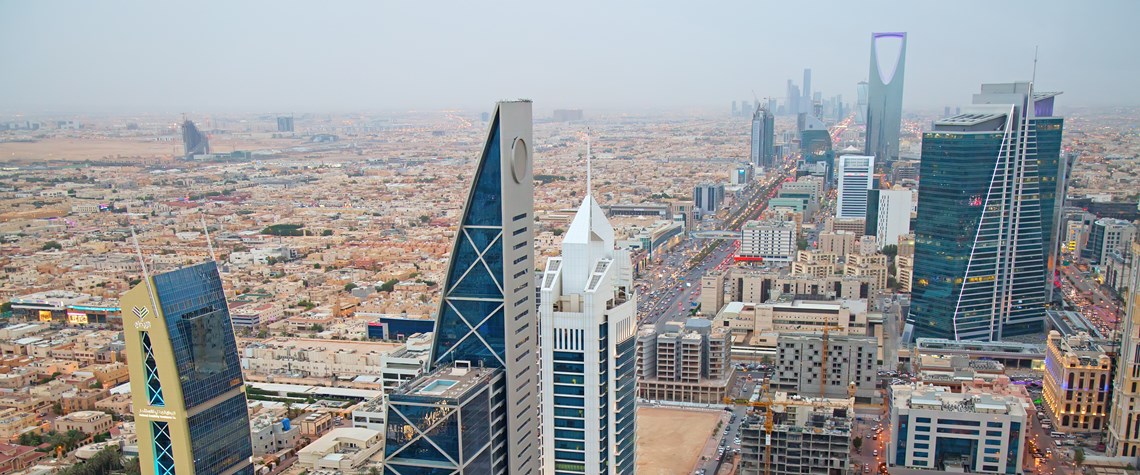
Aramco sends off IPO signals

The company boosts key investor metrics, suggesting it has renewed its appetite for an IPO

Saudi Aramco yesterday announced a hugely increased dividend despite falling revenues—in a move that analysts suggest may be calculated to impress investors ahead of enacting its long-delayed public float. The firm recorded drops in net income and Ebit in the first half of 2019, falls that substantially outstripped the decline in the firm's realised oil price. Net income for the first six months of 2019 was $46.9bn, down by 12pc from $53bn in the same period last year. Ebit was down by 9pc from $101.3bn to $92.5bn. Nonetheless, reported free cash flow was up by 7pc from $35.6bn to $38bn and a whopping 233pc higher special dividend to its government sole shareholder. Increasing these metrics—

Also in this section
Venezuela mismanaged its oil, and US shale benefitted
14 January 2026
Chavez’s socialist reforms boosted state control but pushed knowledge and capital out of the sector, opening the way for the US shale revolution
Outlook 2026: From wells to wafers – How MENA is powering the new energy–data nexus
Outlook 2026
14 January 2026
Leading economies in the region are using oil and gas revenues to fund mineral strategies and power hyperscale computing
Outlook 2026: Peru 2026 – A confident step into a new energy era
Outlook 2026
14 January 2026
The South American country offers stable, transparent and high-potential opportunities and is now ready for fresh exploration and partnership
Europe’s rising energy security challenge
13 January 2026
Across Europe, countries have grappled with balancing ambitious energy transition plans with realities about security of supply

Share PDF with colleagues

COPYRIGHT NOTICE: PDF sharing is permitted internally for Petroleum Economist Gold Members only. Usage of this PDF is restricted by <%= If(IsLoggedIn, User.CompanyName, "")%>’s agreement with Petroleum Economist – exceeding the terms of your licence by forwarding outside of the company or placing on any external network is considered a breach of copyright. Such instances are punishable by fines of up to US$1,500 per infringement
Send

Forward article Link

Send
Sign Up For Our Newsletter
Project Data
Maps
Podcasts
Social Links
Featured Video
Home
  • About us
  • Subscribe
  • Reaching your audience
  • PE Store
  • Terms and conditions
  • Contact us
  • Privacy statement
  • Cookies
  • Sitemap
All material subject to strictly enforced copyright laws © 2025 The Petroleum Economist Ltd
Cookie Settings
;

Search
