


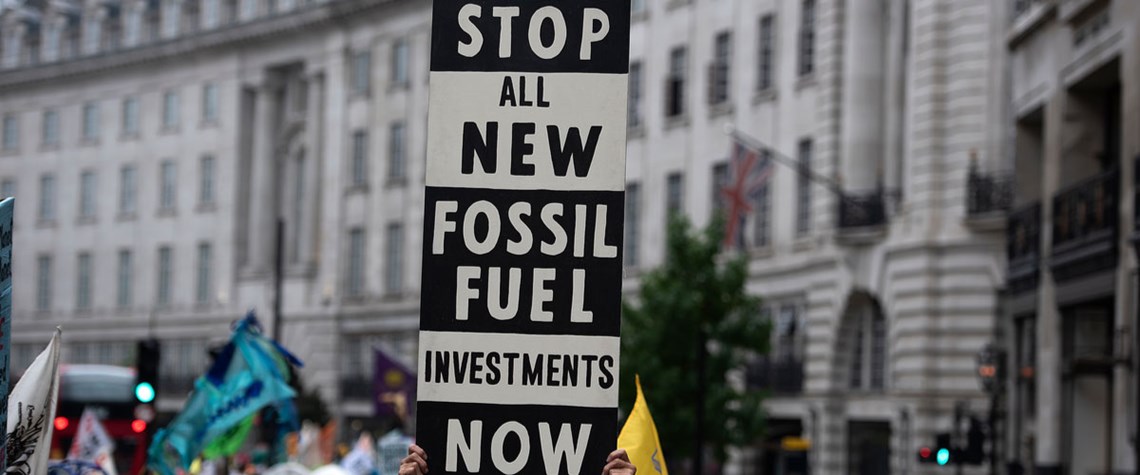
A protest against fossil fuels in London
Social licence needed in a decarbonising world
Oil and gas producers can become part of the solution. But only if they can maintain, or regain, public trust
The UK oil and gas E&P industry and its continuing social licence to operate came under significant scrutiny in the run-up to and aftermath of Cop26 in Glasgow. Never before have the names of hydrocarbons projects or their owners been so front and centre of people’s consciousness. The recent unprecedented rise in prices for gas—and more recently also for oil—has also loomed large in the consciousness of the general public and the media. Thus, the role of firms operating on the UK continental shelf (UKCS) in a decarbonising world has come into ever sharper focus. The UK oil and gas sector has long accepted the need to reinvent itself as an integrated energy and carbon capture and storage

Also in this section
2 April 2026
Alongside a rapid continued build-out of renewables, China’s latest five-year plan stresses the value of domestic hydrocarbon production for energy security and calls for increased Russian gas imports
2 April 2026
The government is taking important steps to revive domestic production, lift investment and benefit from the geopolitical crisis even if more needs to be done in the longer term
1 April 2026
Golden Pass’s startup offers QatarEnergy a timely boost but may also force a difficult choice between honouring disrupted contracts and capitalising on soaring spot LNG prices
1 April 2026
It is not a case of if or when, but the length and magnitude of economic damage from elevated oil prices


