



As Saudi Arabia accelerates toward the ambitious goals set out in Vision 2030, the energy sector sits at the heart of the Kingdom’s transformation. Few executives are as closely involved in that journey as Mahmoud Sulaimani, managing director of Siemens Energy Saudi Arabia, whose career mirrors the company’s deep and evolving relationship with the country.
“Over the years, we have enhanced our partnership with stakeholders and started manufacturing operations within the country. This local focus gives our customers a strong degree of trust in the solutions we are providing,” said Sulaimani.
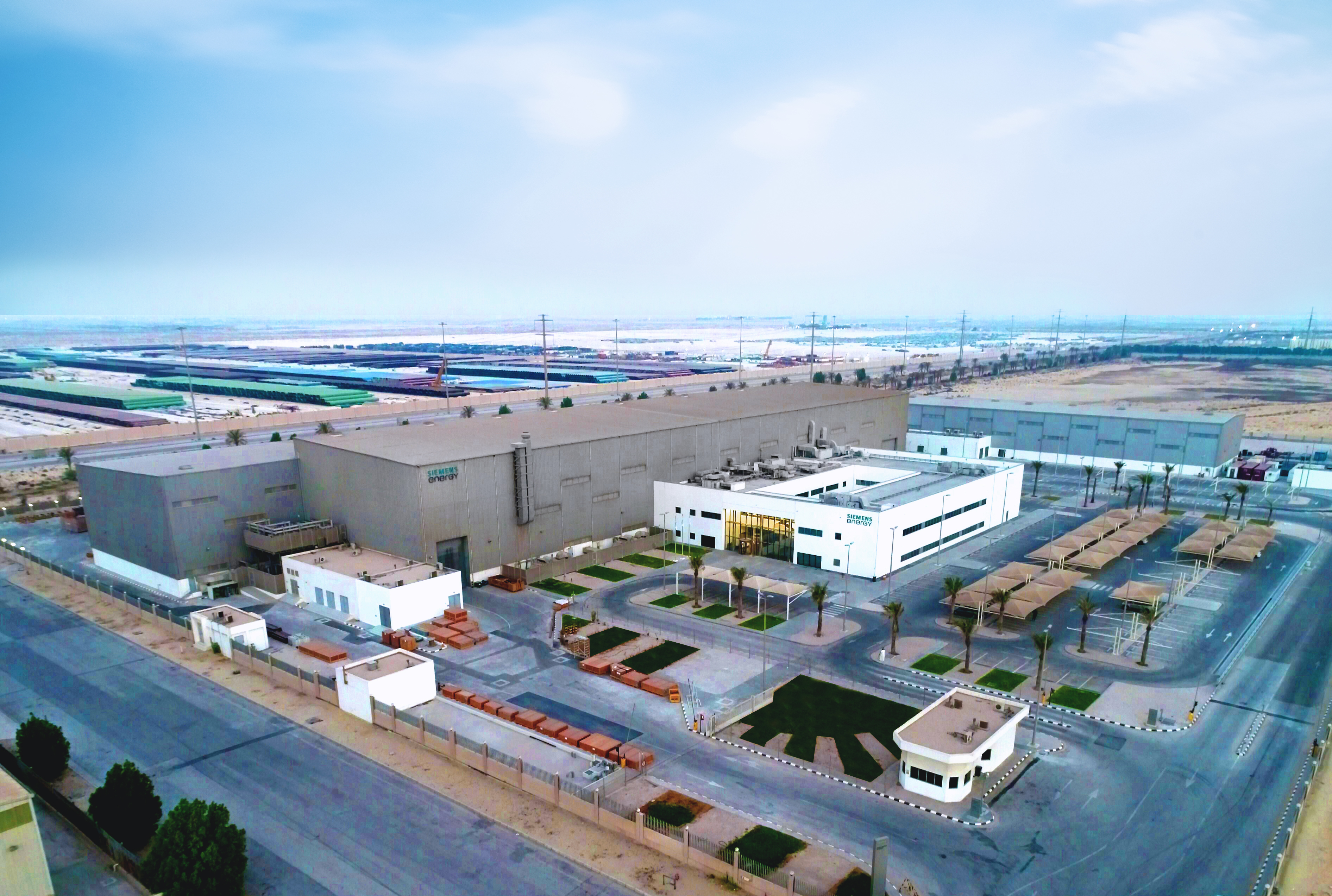
The localisation strategy is anchored by the largest Siemens Energy facility in the Gulf region. The Siemens Energy Dammam Hub (SEDH) offers manufacturing, assembly and advanced service capabilities for multiple technologies—including gas turbines, compression trains and steam power technologies.
“Last year we expanded the facility’s capacity by 35 percent,” said Sulaimani. “The move brought additional technologies into local production and opened the door for more Saudi talent.”
Building capacity
Vision 2030 sets out clear targets for the Kingdom’s energy mix, including 50 percent renewable and 50 percent conventional power generation by 2030, alongside steep reductions in carbon emissions. Achieving these goals requires an increased focus on natural gas over liquids in the nation’s energy ecosystem, as well as the development of a number of low-carbon technologies that Siemens is helping to spearhead.
“Our most advanced gas turbine technology supports the fast growth of electricity demand,” Sulaimani explained, “while also reducing CO₂ emissions compared to liquid fuels.”
Localising these technologies, he added, multiplies their impact by creating jobs and transferring industry knowledge into the Kingdom’s ecosystem.
The Vision 2030 strategy will drive a massive electrification of Saudi Arabia’s energy infrastructure. To help with this electrification initiative, Siemens Energy has developed its Blue GIS (Gas-Insulated Switchgear) solution. The technology helps control the flow of power in power stations and large buildings in a more sustainable way by eliminating the use of environmentally harmful SF6 gases.
“This technology is based on clean air,” Sulaimani said. “It’s environmentally friendly, and will be installed as a pilot project in Saudi Arabia—one of the first in the region.”
Another high-profile initiative is a direct air capture (DAC) pilot project, designed to remove CO₂ directly from the atmosphere. With a current capacity of 12t/yr, the project may be modest in scale, but its significance is large.
This is the only project of its kind in the region today,” Sulaimani noted. “We’re very proud that Siemens Energy was selected as a trusted partner.”
The test facility, developed in collaboration with Saudi Aramco, is a key step in the efforts of both firms to scale up viable DAC systems for deployment in the Kingdom of Saudi Arabia and beyond.
Other advanced technologies, including hydrogen-ready gas turbines capable of reducing CO₂ emissions by up to 60 percent compared to liquid fuels, are already being deployed. For Sulaimani, the common thread is leadership through action.
“We believe Siemens Energy is leading the market here,” he said. “We are supporting Saudi Arabia’s agenda to become greener while still enabling very fast growth.”
Digitalisation drive
Beyond manufacturing the hardware, Siemens Energy is now layering digital intelligence onto the Kingdom’s energy assets to drive performance gains. One of Siemens Energy’s flagship initiatives in Saudi Arabia is its ‘Power Diagnostics Center’, which uses AI-driven analytics to monitor turbine fleets in real time.
“The centre combines recorded data with the real-life operation of assets,” Sulaimani explained. “It gives early indications of impending issues and tells customers exactly what actions to take to address them.”
The result is higher efficiency, improved reliability and more predictive maintenance—benefits that compound across large-scale power systems.
These digital capabilities extend beyond power generation into transmission, oil and gas, and electrification projects, helping customers shift from purely mechanical to digitally optimised operations.
Developing Saudi talent
While technology is central, Sulaimani repeatedly returns to people as Siemens Energy’s most valuable resource.
“Our key asset is the local talent. We are fully committed to continuing to develop this asset as best we can,” he said.
Today, around 50 percent of Siemens Energy’s workforce in Saudi Arabia is local talent, a share achieved through structured development programs, university partnerships and international training. Young engineers are sent to Europe and the US for short- and long-term placements, returning with skills shaped by international expertise.
The results are increasingly visible. “Some of our local talents are now executing projects not only in Saudi Arabia, but globally,” Sulaimani said. “They are working today in Asia, South America—that’s a major achievement.”
Sulaimani’s commitment to the development of this talent is deeply personal. He joined Siemens Energy as a young graduate of the King Fahd University of Petroleum and Minerals in Dhahran, Saudi Arabia, and grew his career through project execution, project management and field services.
“If Siemens had not provided me with the skills and tools to develop, I would have left,” he admitted. “But because those opportunities were there, I stayed.”
Now, as a senior leader, he sees it as an obligation to create similar pathways for the next generation. “Leadership means supporting young talent in the same way,” he said. “Not only through training, but by guiding their career development step-by-step.”
That philosophy—thinking globally while operating locally—defines both Siemens Energy’s strategy and Sulaimani’s leadership style. In a country undergoing one of the world’s fastest economic and energy transformations, it will help ensure that rapid changes are matched by long-term operational resilience.



Comments