


Newsletters | Request Trial | Log in | Advertise | Digital Issue   |   Search
  • Upstream
  • Midstream & Downstream
  • Gas & LNG
  • Trading & Markets
  • Corporate & Finance
  • Geopolitics
  • Podcasts
Search
Related Articles
Top EU court bans investors from suing member states in arbitration
Decision limits rights under the Energy Charter Treaty and other investment agreements
Fit for 55: Challenges and opportunities for EU industry
Stricter rules and higher targets demand a rethink of value chains and business models by energy-intensive companies
Looking for green hydrogen’s easy wins in Europe
Integration of low-carbon hydrogen into existing value chains will need new regulatory frameworks in all jurisdictions
A new approach to coordinating offshore electricity grids
Sustained increases in UK and EU offshore wind power generation mean that making changes to regulation and infrastructure has become a priority
Letter from Brussels: Gas infrastructure falls out of favour
Coal-to-gas switching could be undermined by proposed regulation excluding gas infrastructure from energy priority scheme
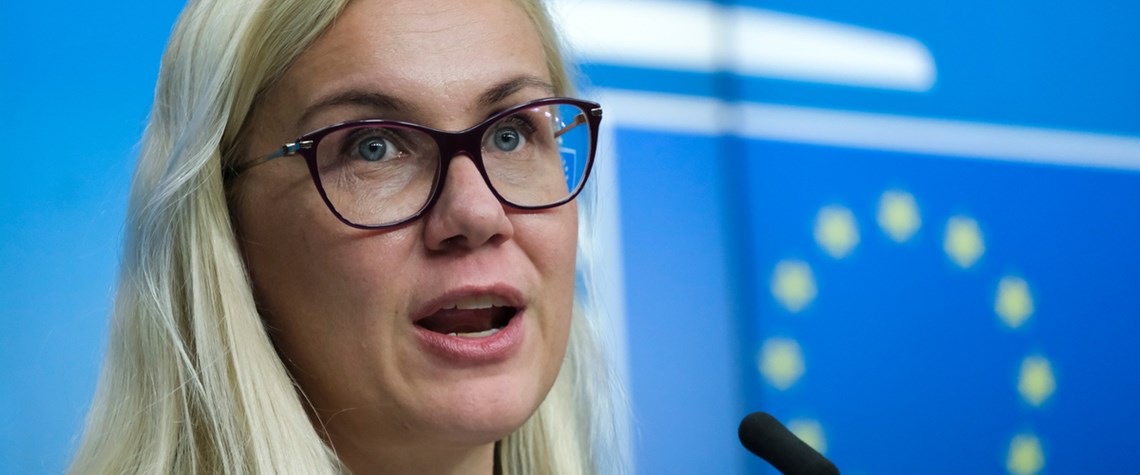
EU Commissioner for Energy Kadri Simson
Opinion
Natural gas Coal EU Greece Croatia Poland
Christian Ernhede
Brussels
4 February 2021
Follow @PetroleumEcon
Forward article link
Share PDF with colleagues

Letter from Brussels: Gas infrastructure falls out of favour

Coal-to-gas switching could be undermined by proposed regulation excluding gas infrastructure from energy priority scheme

The European Commission’s proposal to revise the Trans-European Energy ­(TEN-E) regulation aims to align EU support for energy projects with European Green Deal objectives. But it threatens to hamper the coal-to-gas switching that has made, and could still make, a significant contribution to lowering emissions across several member states. The proposed changes, unveiled in December, will constrain the scope of TEN-E regulation to designate new gas infrastructure as EU projects of common interest (PCIs). Becoming a PCI means greater potential for EU funding—primarily under the Connecting Europe Facility, which allocated €1.5bn ($1.82bn) to gas projects from 2014-20—and for fast-tracking of pe

Also in this section
QatarEnergy and JERA enter new LNG chapter
6 February 2026
The long close relationship between key supplier Qatar and pivotal buyer Japan becomes even deeper following new landmark deal 
Evolving partnerships in LNG
6 February 2026
Partnerships across the LNG value chain have evolved over time, growing in both complexity and importance, according to panellists at LNG2026
Dangote: Big ambitions, harsh realities
6 February 2026
Nigeria's mega-refinery is still trying to solve many challenges, all while its owner talks up expansion
EU methane regulation could backfire
5 February 2026
While broadly supportive of EU efforts to tackle methane emissions, representatives of the gas industry warn it could deter supply contracting if timelines and compliance requirements are not made more pragmatic

Share PDF with colleagues

COPYRIGHT NOTICE: PDF sharing is permitted internally for Petroleum Economist Gold Members only. Usage of this PDF is restricted by <%= If(IsLoggedIn, User.CompanyName, "")%>’s agreement with Petroleum Economist – exceeding the terms of your licence by forwarding outside of the company or placing on any external network is considered a breach of copyright. Such instances are punishable by fines of up to US$1,500 per infringement
Send

Forward article Link

Send
Sign Up For Our Newsletter
Project Data
Maps
Podcasts
Social Links
Featured Video
Home
  • About us
  • Subscribe
  • Reaching your audience
  • PE Store
  • Terms and conditions
  • Contact us
  • Privacy statement
  • Cookies
  • Sitemap
All material subject to strictly enforced copyright laws © 2025 The Petroleum Economist Ltd
Cookie Settings
;

Search
