


Newsletters | Request Trial | Log in | Advertise | Digital Issue   |   Search
  • Upstream
  • Midstream & Downstream
  • Gas & LNG
  • Trading & Markets
  • Corporate & Finance
  • Geopolitics
  • Podcasts
Search
Related Articles
Outlook 2026: From wells to wafers – How MENA is powering the new energy–data nexus
Leading economies in the region are using oil and gas revenues to fund mineral strategies and power hyperscale computing
Accelerating MENA’s gas transformation
Gas has become a pillar of MENA economies and a catalyst for development strategies, fostering cooperation and creating new paths for economic diversification. Continued progress will require substantial investment and adapted regulations
Mideast states power up their gas priorities
Saudi Arabia, the UAE and Qatar are ploughing resources into gas—with a growing eye on facilitating domestic use in power and value-added sectors
Natural gas: A vital bridge for the Middle East’s energy future
With responsible development and rigorous regulation, gas can help the region move forward not just as an energy exporter, but as a global leader in the energy transition
MENA's gas metamorphosis
Across the Middle East and North Africa, gas is taking an enhanced role in helping build out economies that need to diversify away from crude oil dependence
Middle East gas can power regional prosperity
The Middle East natural gas playbook is being rewritten. The fuel source offers the region a pathway to a cleaner, sustainable and affordable means of local power, to fasttrack economic development and as a lucrative opportunity to better monetise its energy resources.
Qatar’s Syria gas deal makes regional waves
The Gulf state’s offer to supply electricity-starved Syria is an opportunity to support a key ally, but Doha’s ambitions to build broader pipeline networks to Turkey and Europe face challenges
MENA NOCs secure influence in low-carbon future
Regional state-owned firms are transforming their strategies and leveraging their resources to position themselves as clean energy powerhouses, and to ensure they maintain influence in a low-carbon world
Qatari warning on EU legislation resonates across industry
The CEO of QatarEnergy has highlighted the potential impact a new EU directive could have on energy exports to the continent
IOCs undeterred by Middle East conflict
Companies operating offshore assets in the region are unlikely to halt development plans for now, even as hostilities intensify
Qatar QatarEnergy
Peter Ramsay
8 February 2021
Follow @PetroleumEcon
Forward article link
Share PDF with colleagues

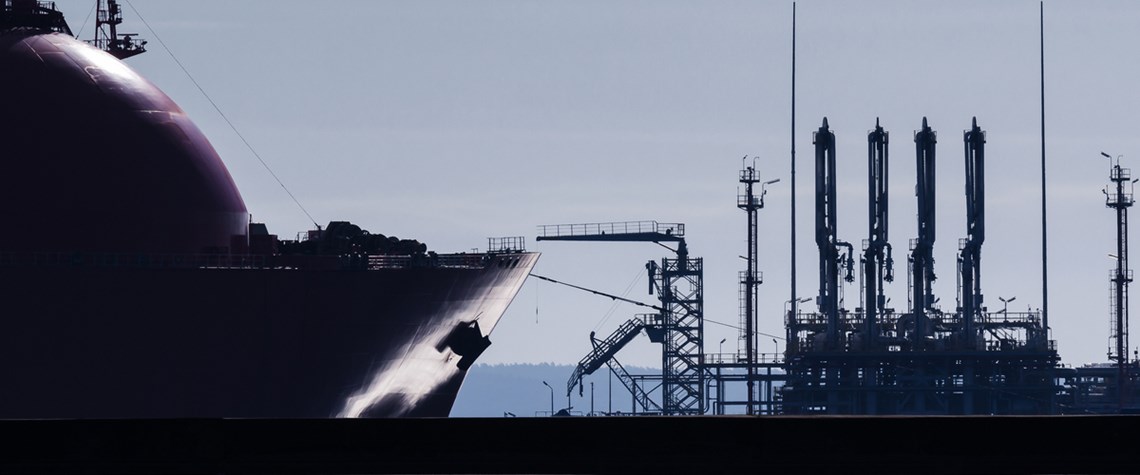
Qatar looks to go even bigger on LNG

The Gulf state takes FID on four more trains but is already looking at going beyond its 126mn t/yr goal

The world’s largest LNG exporter, Qatar Petroleum (QP), took a long-anticipated FID on the first stage of its huge North Field East (NFE) expansion project on Monday. The firm signed an EPC contract with engineering heavyweights France’s Technip and Japan's Chiyoda committing it to four new 8mn t/yr mega-trains at its Ras Laffan liquefaction plant that will lift capacity from 77mn t/yr to 110mn t/yr. But, fresh from announcing that NFE would proceed, the firm opened up the possibility that its planned second phase, the North Field South (NFS) expansion, which will boost capacity by another 16mn t/yr to 126mn t/yr via two more mega-trains, is not the end of its ambitions. “As… appraisal activ

Also in this section
LNG buyer strategies in the age of volatility
11 February 2026
Panellists from three LNG buyers at LNG2026 in Doha outlined their evolving procurement strategies as they navigate heightened market volatility
Libya looks to maximise gas opportunity
11 February 2026
North African producer plans to boost output by early 2030, with Europe its number one priority as export destination
LNG shipping needs freedom to evolve
11 February 2026
Maritime leaders at LNG2026 warned of the dangers of over-regulation on competitiveness, sustainability and innovation
Nigeria in upstream charm offensive
10 February 2026
The country has opened bidding on 50 blocks in a new licensing round but will face competition for attention and will need to address concerns about security and legislation

Share PDF with colleagues

COPYRIGHT NOTICE: PDF sharing is permitted internally for Petroleum Economist Gold Members only. Usage of this PDF is restricted by <%= If(IsLoggedIn, User.CompanyName, "")%>’s agreement with Petroleum Economist – exceeding the terms of your licence by forwarding outside of the company or placing on any external network is considered a breach of copyright. Such instances are punishable by fines of up to US$1,500 per infringement
Send

Forward article Link

Send
Sign Up For Our Newsletter
Project Data
Maps
Podcasts
Social Links
Featured Video
Home
  • About us
  • Subscribe
  • Reaching your audience
  • PE Store
  • Terms and conditions
  • Contact us
  • Privacy statement
  • Cookies
  • Sitemap
All material subject to strictly enforced copyright laws © 2025 The Petroleum Economist Ltd
Cookie Settings
;

Search
