


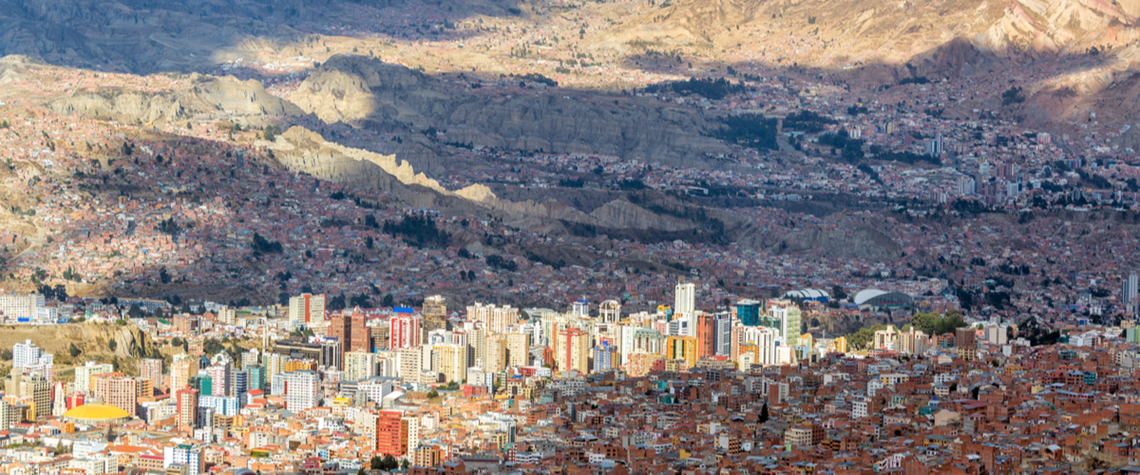
La Paz, Bolivia

Letter from South America: Bolivia's shrinking gas role
Declining production and cheaper LNG threaten the country’s role as gas supplier to its neighbours
Bolivia is a land of contrasts. The country encompasses dense Amazon rainforest, fertile plains, soaring Andes mountains and the second-highest altiplano in the world behind the Tibetan plateau. And yet the country is landlocked, with no access to the Pacific Ocean since the end of the Saltpeter War in 1884. It has struggled with a long history of pendulum swings between military dictatorships and socialist elected governments. The administrative capital of La Paz looks and feels very much like a city built in a crater on Mars, both in terms of aesthetics and lack of oxygen. Doing business in the country, especially in the energy sector, can sometimes feel like doing business on Mars as well

Also in this section
14 April 2026
The GECF has warned it may revise its projections for demand this year downwards in light of conflict in the Middle East, although it maintains its forecasts for 2027 and onwards
13 April 2026
Petroleum Economist analysis highlights sharp shift from crude oversupply to market deficit, with Iraq and Kuwait badly affected and key producers Saudi Arabia and the UAE also seeing output sharply lower
13 April 2026
Turkmenistan is moving ahead with a modest expansion of the giant Galkynysh field to sustain gas deliveries abroad, but persistent delays to other key pipeline projects and geopolitical risks continue to constrain its export ambitions
13 April 2026
Expensive electricity has forced out swathes of energy-intensive industry and now threatens the country’s ability to attract future investment in datacentres and the digital economy


