


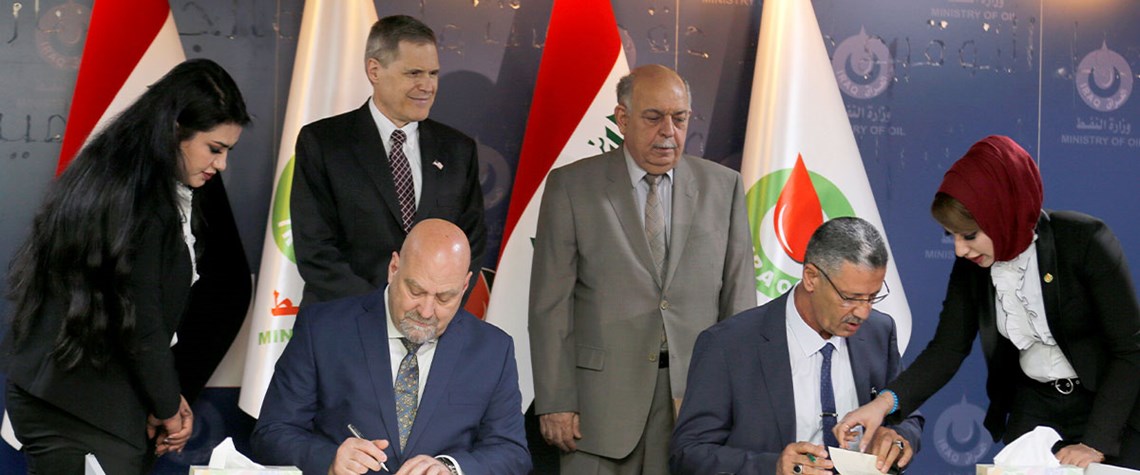
New Iraqi oil minister Hayan Abdulghani previously served as director-general of state-owned South Gas Company
This time for Iraqi gas?
The new Baghdad government hopes to succeed where predecessors have failed in developing supply
New Iraqi oil minister Hayan Abdulghani took office in October pledging to accelerate gas development. Successive oil chiefs have been making the same promise for well over a decade, yet only a single significant non-associated field is onstream while the volume of associated gas productively harnessed remains less than that squandered in environmentally damaging flaring. Instead, Iraq remains dependent on imports from Iran, with all the fiscal and political issues that brings. There are, though, reasons to hope that Abdulghani might fare better than his predecessors, not least of these is awareness of the need to seize the opportunity created by conducive international market conditions. Us

Also in this section
13 April 2026
Petroleum Economist analysis highlights sharp shift from crude oversupply to market deficit, with Iraq and Kuwait badly affected and key producers Saudi Arabia and the UAE also seeing output sharply lower
13 April 2026
Turkmenistan is moving ahead with a modest expansion of the giant Galkynysh field to sustain gas deliveries abroad, but persistent delays to other key pipeline projects and geopolitical risks continue to constrain its export ambitions
13 April 2026
Expensive electricity has forced out swathes of energy-intensive industry and now threatens the country’s ability to attract future investment in datacentres and the digital economy
13 April 2026
For GCC producers, the ceasefire may prove more destabilising than the war itself: exports remain constrained, and control over Hormuz has shifted in ways that could endure


