


Newsletters | Request Trial | Log in | Advertise | Digital Issue   |   Search
  • Upstream
  • Midstream & Downstream
  • Gas & LNG
  • Trading & Markets
  • Corporate & Finance
  • Geopolitics
  • Podcasts
Search
Related Articles
Is this nuclear power’s big moment?
The Middle East energy crisis may turn out to be pivotal to the industry’s long-term expansion, but significant challenges still stand in its way
Hydrocarbon Processing Refining Databook 2025: Europe, Russia & CIS
EU net-zero polices have shifted refining investment among member states, while across the region countries and companies continue to adjust to changes in trade flows caused by the war in Ukraine
Global LNG analysis report 2023 – Part 3
The third part of this deep-dive analysis looks at liquefaction and regasification developments in the Europe and Russia
Tanzania to see upstream consolidation
French independent Maurel & Prom is seeking to expand its Tanzanian portfolio
Japan and South Korea prepare for crucial winter
Nuclear availability and the extent of low temperatures will decide how much LNG they will need for the months ahead
Nuclear SMRs could decarbonise Canada’s oil sands sector
But cost and commercialisation timeframes may prove a barrier to adoption
Storage disincentives and regional dislocations roil European gas trading
The loss of Russian volumes has made for unusual market conditions
Power demand threat to Europe’s winter gas security
Greater-than-expected requirements to burn the fuel to keep the lights on could harm supply conservation efforts
Adnoc forgoes seasonal break
The Emirati heavyweight is racing to bring on new gas production to exploit rampant global thirst for the resource
Japan and South Korea promise little immediate LNG market relief
East Asia’s power sector use may be poised to shrink from 2023, but demand for the fuel is expected to remain strong this year
France EDF Nuclear
Thibault Laconde
Paris
21 February 2018
Follow @PetroleumEcon
Forward article link
Share PDF with colleagues

France's changing energy mix

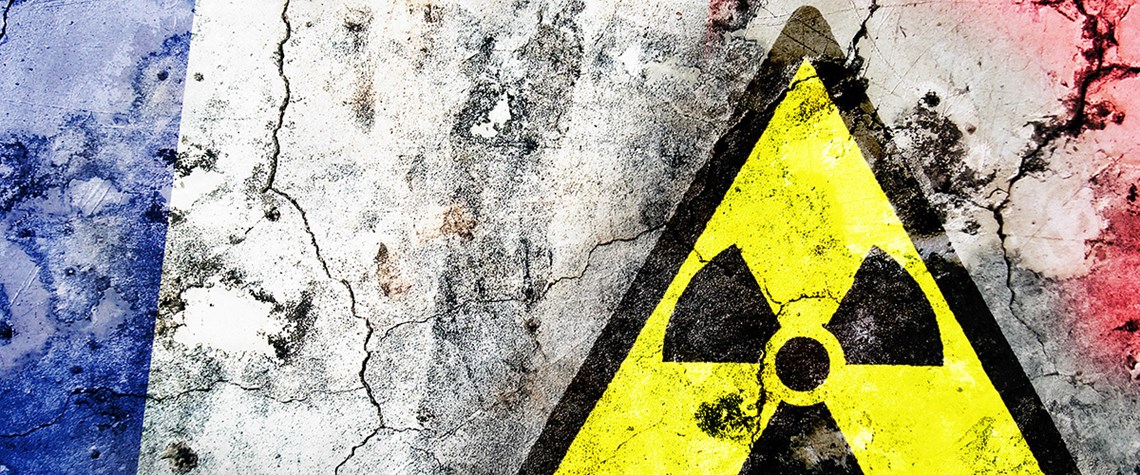
The Macron government faces the difficult task in 2018 of juggling competing demands for France's energy cocktail

The past year was an interesting one for French energy policy. The presidential campaign offered a wide range of options, from right-wing enthusiasm for nuclear power to left-wing plans to phase it out within 25 years. After the election, Emmanuel Macron's newly designed government didn't waste time: it unveiled a long-term vision with a "plan climat" (climate plan) designed to fulfil a commitment to the Paris Agreement and reach carbon neutrality around 2050. A law was passed accordingly to ban oil and gas exploration and production by 2040, a mostly symbolic move, given France's huge dependence on imported hydrocarbons. A more concrete and immediate step was the inclusion of a sharp carbon

Also in this section
Letter from the US: This crisis Is different
Opinion
28 April 2026
Oil traders warning of $200/bl oil are wrong, and the market should be wary of proclamations that the impact of the oil shortage has only begun to be felt and a that a ‘harsh adjustment’ is coming—even for industrialised nations
Middle East oil’s multi-step recovery plan
28 April 2026
Restoring supply from Saudi Arabia, the UAE, Kuwait, Qatar, Bahrain and Iraq involves complexities far beyond simply adjusting operational controls
Decoding datacentre energy demand
28 April 2026
Datacentres will guzzle power at a ferocious rate, but the impact on wider energy markets will be far more complex than previously thought
Iraq’s pipeline dilemma
28 April 2026
The key energy player faces balancing regional routes, political complexities, and creating a clear strategic vision for energy security

Share PDF with colleagues

COPYRIGHT NOTICE: PDF sharing is permitted internally for Petroleum Economist Gold Members only. Usage of this PDF is restricted by <%= If(IsLoggedIn, User.CompanyName, "")%>’s agreement with Petroleum Economist – exceeding the terms of your licence by forwarding outside of the company or placing on any external network is considered a breach of copyright. Such instances are punishable by fines of up to US$1,500 per infringement
Send

Forward article Link

Send
Sign Up For Our Newsletter
Project Data
Maps
Podcasts
Social Links
Featured Video
Home
  • About us
  • Subscribe
  • Reaching your audience
  • PE Store
  • Terms and conditions
  • Contact us
  • Privacy statement
  • Cookies
  • Sitemap
All material subject to strictly enforced copyright laws © 2025 The Petroleum Economist Ltd
Cookie Settings
;

Search
