


Newsletters | Request Trial | Log in | Advertise | Digital Issue   |   Search
  • Upstream
  • Midstream & Downstream
  • Gas & LNG
  • Trading & Markets
  • Corporate & Finance
  • Geopolitics
  • Podcasts
Search
Related Articles
Southeast Asia’s digital age requires the right energy mix
Indonesia and Malaysia are at the dawn of breathtaking digital capabilities. Their energy infrastructure must keep up with their ambitions
Outlook 2026: How critical mineral partnerships are shaping ASEAN’s energy transition
The global race for critical minerals has become a defining feature of energy geopolitics, presenting the ASEAN region with both opportunity and risk
Asia’s potential upstream powerhouse
Petronas-Eni eyes joint venture to prioritise key gas developments, with huge opportunities for growth in Indonesia and a steady Malaysia portfolio
Malaysia tackles upstream declines
Petronas is making huge efforts to arrest falling oil production and accelerate gas increases to meet rising demand, but political tensions persist
Malaysia looks to deepwater to sustain output
The country is nearing a tipping point as its domestic needs continue to grow
Jadestone sees opportunities in Southeast Asia
The AIM-listed independent is pushing ahead with developments in Indonesia, Malaysia and Vietnam, CEO Paul Blakeley tells Petroleum Economist
Longboat splits attention between Norway and Malaysia
CEO Helge Hammer speaks to Petroleum Economist about the company’s recent activities and its expansion plans
Malaysia LNG faces growing gas supply challenges
Pipeline problems, maturing fields, gas quality issues and territorial disputes threaten to erode Malaysia’s LNG exports
Asia’s NOCs chart paths to decarbonisation
But none of the companies are poised to abandon oil and gas anytime soon
Petronas presses ahead with Sabah LNG
The project is another sign of the industry’s growing adoption of floating liquefaction technology
Malaysia Petronas
James Gavin
20 September 2018
Follow @PetroleumEcon
Forward article link
Share PDF with colleagues

Petronas: To float or not to float?

Petronas’s financial success makes it a target for a government desperate for new revenue streams

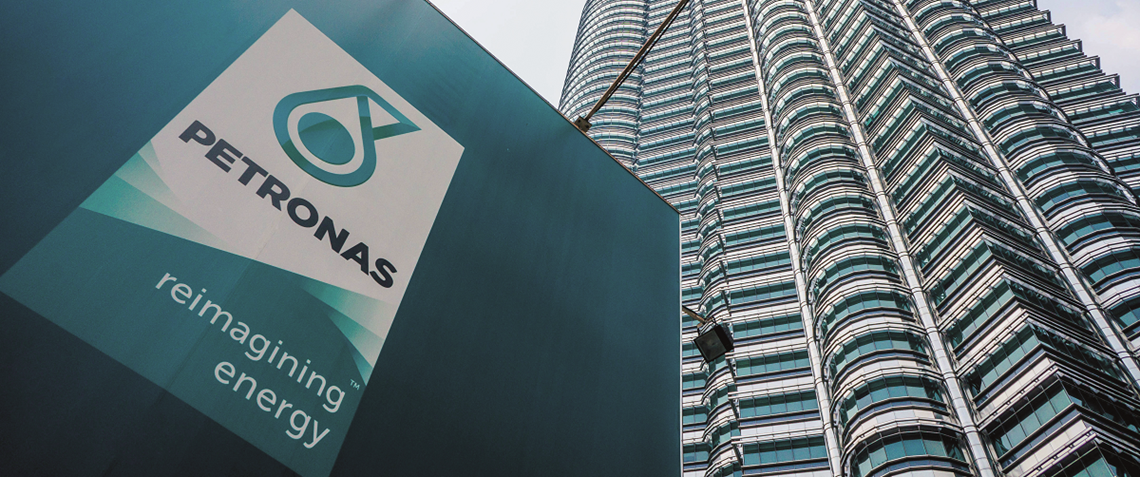
Despite posting some impressive earnings, Malaysia's state-owned oil company Petronas could be forgiven for taking a few anxious looks over its shoulder. Four months on from the country's shock election result, which turfed out prime minister Najib Razak and returned the veteran former premier Mahathir Mohamad to power, the cash-strapped government needs to secure new revenue streams. Petronas could be primed as a sacrificial lamb, with an initial public offering of 25% of its equity a possibility. The idea emerged within weeks of the Pakatan Harapan government coming to power on a mandate to root out corruption. Ministers were reported to be mooting a float for Petronas, Malaysia's only For

Also in this section
Explainer: Iran’s indispensable energy role
16 January 2026
The country’s global energy importance and domestic political fate are interlocked, highlighting its outsized oil and gas powers, and the heightened fallout risk
Oil’s tanker transformation
16 January 2026
The global maritime oil transport sector enters 2026 facing a rare convergence of crude oversupply, record newbuild deliveries and the potential easing of several geopolitical disruptions that have shaped trade flows since 2022
Letter from the US: The curse of strong energy exports
Opinion
15 January 2026
Rebuilding industry, energy dominance and lower energy costs are key goals that remain at odds in 2026
Venezuela mismanaged its oil, and US shale benefitted
14 January 2026
Chavez’s socialist reforms boosted state control but pushed knowledge and capital out of the sector, opening the way for the US shale revolution

Share PDF with colleagues

COPYRIGHT NOTICE: PDF sharing is permitted internally for Petroleum Economist Gold Members only. Usage of this PDF is restricted by <%= If(IsLoggedIn, User.CompanyName, "")%>’s agreement with Petroleum Economist – exceeding the terms of your licence by forwarding outside of the company or placing on any external network is considered a breach of copyright. Such instances are punishable by fines of up to US$1,500 per infringement
Send

Forward article Link

Send
Sign Up For Our Newsletter
Project Data
Maps
Podcasts
Social Links
Featured Video
Home
  • About us
  • Subscribe
  • Reaching your audience
  • PE Store
  • Terms and conditions
  • Contact us
  • Privacy statement
  • Cookies
  • Sitemap
All material subject to strictly enforced copyright laws © 2025 The Petroleum Economist Ltd
Cookie Settings
;

Search
