


Newsletters | Request Trial | Log in | Advertise | Digital Issue   |   Search
  • Upstream
  • Midstream & Downstream
  • Gas & LNG
  • Trading & Markets
  • Corporate & Finance
  • Geopolitics
  • Podcasts
Search
Related Articles
Outlook 2026: From wells to wafers – How MENA is powering the new energy–data nexus
Leading economies in the region are using oil and gas revenues to fund mineral strategies and power hyperscale computing
Kurdistan starts to deliver on oil promise
Gulf Keystone looks to a ‘transformational’ 2026, with the oil producer upbeat for the region should all the vested interests keep their eyes on the prize
Letter from Saudi Arabia: US-Saudi energy ties enter a new phase
Aramco’s pursuit of $30b in US gas partnerships marks a strategic pivot. The US gains capital and certainty; Saudi Arabia gains access, flexibility and a new export future
Sonatrach feels the winds of change
Algeria’s state energy company has new leadership looking to inject fresh momentum into its upstream E&P sector—with majors’ interest piqued by untapped unconventional gas deposits
Accelerating MENA’s gas transformation
Gas has become a pillar of MENA economies and a catalyst for development strategies, fostering cooperation and creating new paths for economic diversification. Continued progress will require substantial investment and adapted regulations
MENA states try to change their gas fortunes
While Syria has gas import plans and Jordan is targeting greater production, Egypt is struggling with declining output and Lebanon with the after-effects of conflict
MENA states sharpen their gas focus
The GCC countries and other states in the region are looking to make greater domestic use of gas, both that produced at home and imported volumes
Mideast states power up their gas priorities
Saudi Arabia, the UAE and Qatar are ploughing resources into gas—with a growing eye on facilitating domestic use in power and value-added sectors
Natural gas: A vital bridge for the Middle East’s energy future
With responsible development and rigorous regulation, gas can help the region move forward not just as an energy exporter, but as a global leader in the energy transition
MENA's gas metamorphosis
Across the Middle East and North Africa, gas is taking an enhanced role in helping build out economies that need to diversify away from crude oil dependence
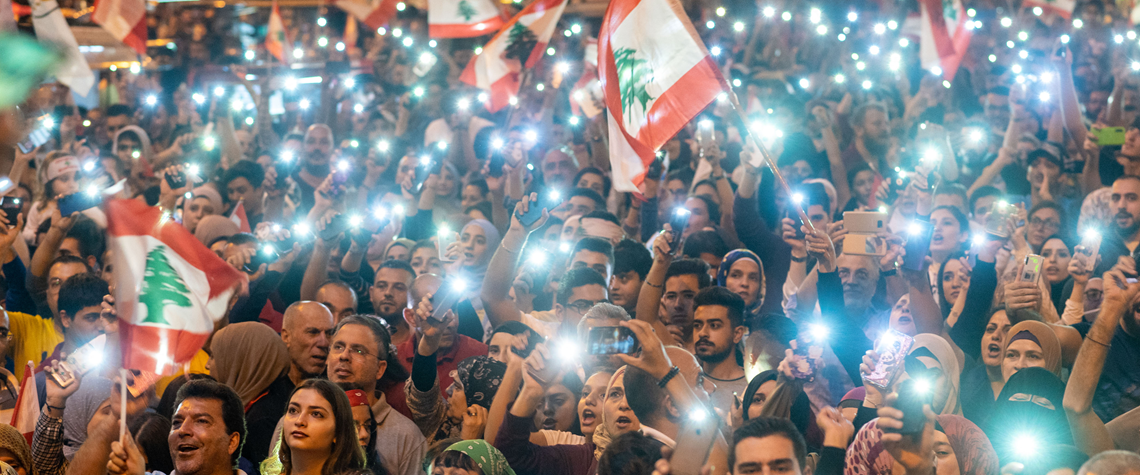
Lebanese protest in Tripoli against the corruption of political leaders
Oil markets Saudi Arabia Iraq Algeria
Gerald Butt
13 January 2020
Follow @PetroleumEcon
Forward article link
Share PDF with colleagues

Mena: a region of backhanders

A new book identifies corruption as a major factor holding back Middle East and North Africa (Mena) development —not least in oil-exporting states

Slogans analogous to those heard on the streets of Cairo and other Arab cities during the popular uprisings that began in 2011 are ringing out today in Baghdad, Beirut, Algiers, Tehran and many other Mena population centres. There may be country-specific differences in protesters’ demands, but there are undeniably strong common themes. One is the call for a rooting out of corruption.  The scale of the region’s problem is clear. Anti-corruption advocate Transparency International lists six Mena states (Iraq, Libya, Sudan, Yemen, Southern Sudan and Syria) among the 12 least transparent in the world. Eight more occupy places firmly in the bottom half of the 183-nation table: Morocco, Tunisia, K

Also in this section
Explainer: Iran’s indispensable energy role
16 January 2026
The country’s global energy importance and domestic political fate are interlocked, highlighting its outsized oil and gas powers, and the heightened fallout risk
Oil’s tanker transformation
16 January 2026
The global maritime oil transport sector enters 2026 facing a rare convergence of crude oversupply, record newbuild deliveries and the potential easing of several geopolitical disruptions that have shaped trade flows since 2022
Letter from the US: The curse of strong energy exports
Opinion
15 January 2026
Rebuilding industry, energy dominance and lower energy costs are key goals that remain at odds in 2026
Venezuela mismanaged its oil, and US shale benefitted
14 January 2026
Chavez’s socialist reforms boosted state control but pushed knowledge and capital out of the sector, opening the way for the US shale revolution

Share PDF with colleagues

COPYRIGHT NOTICE: PDF sharing is permitted internally for Petroleum Economist Gold Members only. Usage of this PDF is restricted by <%= If(IsLoggedIn, User.CompanyName, "")%>’s agreement with Petroleum Economist – exceeding the terms of your licence by forwarding outside of the company or placing on any external network is considered a breach of copyright. Such instances are punishable by fines of up to US$1,500 per infringement
Send

Forward article Link

Send
Sign Up For Our Newsletter
Project Data
Maps
Podcasts
Social Links
Featured Video
Home
  • About us
  • Subscribe
  • Reaching your audience
  • PE Store
  • Terms and conditions
  • Contact us
  • Privacy statement
  • Cookies
  • Sitemap
All material subject to strictly enforced copyright laws © 2025 The Petroleum Economist Ltd
Cookie Settings
;

Search
