


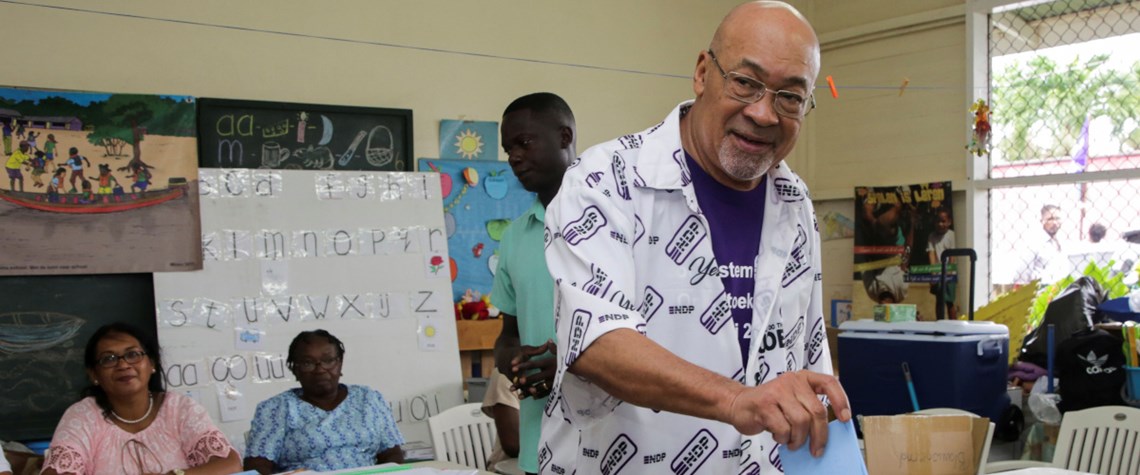
Suriname's president, Desi Bouterse
Suriname’s election setback
Development of the country’s oil sector faces a slowdown in the face of political instability and dire economic conditions
National elections in Suriname were supposed to bring much-needed stability to the country following a string of political scandals and an economy poised to suffer significant recession. The landmark offshore oil discoveries announced by French operator Total in the first quarter offered a rare reprieve from the sense of gloom. But the fallout from the election has highlighted Suriname’s fractious political scene and the potential risks of investing in the country. President Desi Bouterse, who was standing for a third term in office, demanded a recount ahead of the official result, and international observers fear a lengthy dispute. “The risk of political violence and civil unrest is c

Also in this section
16 April 2026
Demand for oil is falling because supply cannot meet it, not because it is no longer required
16 April 2026
The continent has an immediate opportunity to make the most of its energy resources by capturing gas that is currently slipping away
15 April 2026
The continent is seeing political pushback to climate plans, corporate reassessment of transition goals and rising supply risk in a fractured global order
15 April 2026
The Middle East energy crisis may turn out to be pivotal to the industry’s long-term expansion, but significant challenges still stand in its way


