


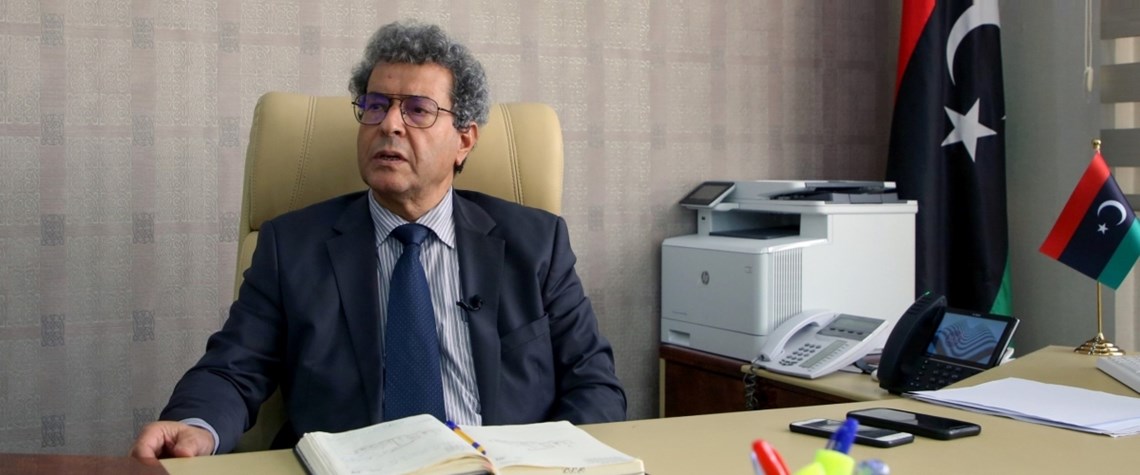
Oil minister Mohamed Oun has been doing his best to oust NOC chairman Mustafa Sanalla in recent months
Political row threatens Libya’s oil recovery
Tug-of-war to steer Africa’s largest oil reserves risks stalling the country’s recent upstream progress
A political power struggle for control of Libya’s oil industry has thrown it into crisis just as booming production and a civil war ceasefire had begun restoring investor confidence. The dispute is between oil minister Mohamed Oun and National Oil Corporation (NOC) chairman Mustafa Sanalla, with the minister demanding Sanalla’s suspension and the chairman refusing to go. The roots of the conflict began in March, when the Government of National Unity (GNU) took office—replacing rival, warring administrations in Tripoli and Tobruk. GNU prime minister Abdulhamid Dbeibeh revived the post of oil minister and appointed Oun, Libya’s former Opec representative. Libya has not had an oil ministry for

Also in this section
2 April 2026
Alongside a rapid continued build-out of renewables, China’s latest five-year plan stresses the value of domestic hydrocarbon production for energy security and calls for increased Russian gas imports
2 April 2026
The government is taking important steps to revive domestic production, lift investment and benefit from the geopolitical crisis even if more needs to be done in the longer term
1 April 2026
Golden Pass’s startup offers QatarEnergy a timely boost but may also force a difficult choice between honouring disrupted contracts and capitalising on soaring spot LNG prices
1 April 2026
It is not a case of if or when, but the length and magnitude of economic damage from elevated oil prices


