


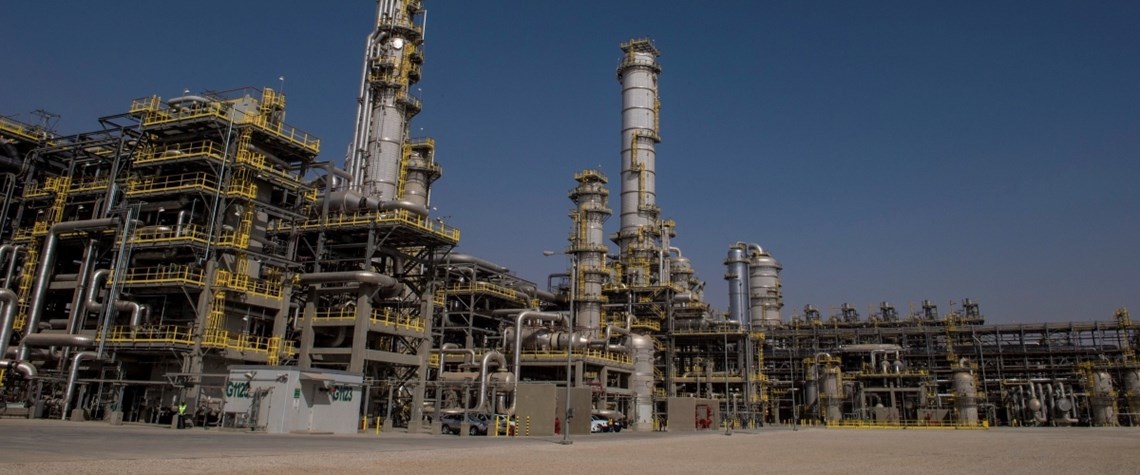
Sadara Chemical Company's facility in Jubail, Saudi Arabia
Aramco’s domestic petchems path remains bumpy
The firm still faces challenges balancing economics with politics
Ethane scarcity, which forced the domestic Saudi petrochemicals industry to increasingly switch to naphtha feedstock, was a key factor in upstream heavyweight Saudi Aramco beginning to take the lead in the expansion of local petchems production in the second half of last decade. The completion of the 3mn t/yr Sadara Chemical Company plant, in partnership with the US’ Dow Chemicals, at Jubail in 2017 cemented Aramco’s pivotal role. But, just as with its international plans, the expansion process at home has not been entirely smooth. Aramco and its merger partner Sabic formally cancelled a first-ever crude-to-chemicals plant—a putative landmark deliberately symbolic of the desire to convert an

Also in this section
13 April 2026
Petroleum Economist analysis highlights sharp shift from crude oversupply to market deficit, with Iraq and Kuwait badly affected and key producers Saudi Arabia and the UAE also seeing output sharply lower
13 April 2026
Turkmenistan is moving ahead with a modest expansion of the giant Galkynysh field to sustain gas deliveries abroad, but persistent delays to other key pipeline projects and geopolitical risks continue to constrain its export ambitions
13 April 2026
Expensive electricity has forced out swathes of energy-intensive industry and now threatens the country’s ability to attract future investment in datacentres and the digital economy
13 April 2026
For GCC producers, the ceasefire may prove more destabilising than the war itself: exports remain constrained, and control over Hormuz has shifted in ways that could endure


