


Newsletters | Request Trial | Log in | Advertise | Digital Issue   |   Search
  • Upstream
  • Midstream & Downstream
  • Gas & LNG
  • Trading & Markets
  • Corporate & Finance
  • Geopolitics
  • Podcasts
Search
Related Articles
OPEC+’s 11m b/d March production collapse
Petroleum Economist analysis highlights sharp shift from crude oversupply to market deficit, with Iraq and Kuwait badly affected and key producers Saudi Arabia and the UAE also seeing output sharply lower
The demand destruction timebomb
It is not a case of if or when, but the length and magnitude of economic damage from elevated oil prices
Lessons from the crisis
The US-Iran conflict demonstrates the need for diversification in several senses of the word. It also exposes the limits of Washington applying pressure on major oil and gas producers it considers geopolitical adversaries
Letter from the US: The oil market abyss
The overlooked oil supply issue is that even after the Strait of Hormuz opens, barrels won’t readily return
Middle East chaos creates new oil and gas trends
A complex and sometimes contradictory web of factors that include unpredictable oil prices, the globalisation of LNG markets, the expansion of Middle Eastern sovereign capital and the growth of datacentre demand will shape the energy landscape beyond 2026
The key arteries of the energy world
The Strait of Hormuz crisis highlights how key waterways can become global chokepoints
Through the oil looking glass
The extent of the US-Israel war with Iran means there will be no going back to the previous market equilibrium no matter how the conflict ends
Do not fear runaway Henry Hub prices
Rising LNG exports and AI-driven power demand have raised concerns that US gas prices could climb sharply, but analysts say abundant shale supply and continued productivity gains should keep Henry Hub within a range that preserves the competitiveness of US LNG
Will policymakers panic before the oil market?
Risks of shortages in oil products may cause world leaders to panic and make mistakes instead of letting the market do what it does best
India taking pole position on oil demand growth
The country’s rapidly expanding economy is boosting its consumption of oil as demand for the fuel slows elsewhere in the world
Oil stability has become the codeword for an implied price floor
Markets Finance
Paul Hickin,
Editor-in-chief
17 April 2023
Follow @PetroleumEcon
Forward article link
Share PDF with colleagues

Opec+ mastering art of targeting prices without targeting prices

Two-speed producer group is now nimble enough to make price floor work

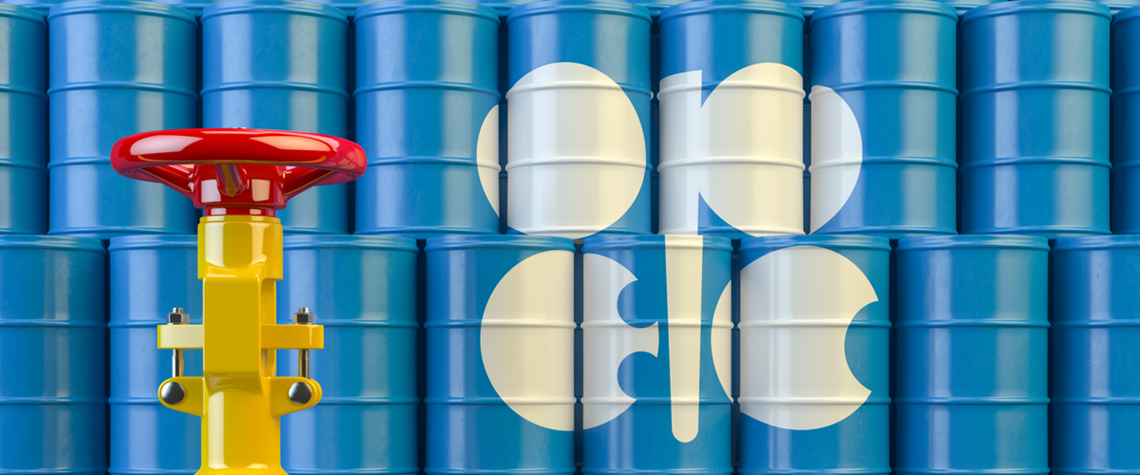
Opec messaging could not be any clearer: oil stability has become the codeword for an implied price floor, with Saudi Arabia’s ire constantly aimed at speculators. While some commentators were caught up in the complexities of geopolitical doublespeak to explain Opec+’s surprise voluntary production cut in early April, the reasoning for the 1.66mn bl/d reduction from May through December—which includes a 500,000bl/d cut from Russia—is much simpler: uncertainty over the demand outlook. What is more nuanced is Opec+’s newfound approach. Unshackled by those cartel producers themselves shackled by production constraints, Saudi Arabia and its predominantly Middle Eastern cohorts were able to move

Also in this section
Letter from Europe: Energy transition meets reality
Opinion
15 April 2026
The continent is seeing political pushback to climate plans, corporate reassessment of transition goals and rising supply risk in a fractured global order
Is this nuclear power’s big moment?
15 April 2026
The Middle East energy crisis may turn out to be pivotal to the industry’s long-term expansion, but significant challenges still stand in its way
Turkey’s gas bridge under threat
15 April 2026
The country plays a vital role in connecting Asia to Europe, but the expiration of Russian contracts and the ramifications of the war in Iran are placing it under pressure
Gas growth cools in 2025
14 April 2026
The GECF has warned it may revise its projections for demand this year downwards in light of conflict in the Middle East, although it maintains its forecasts for 2027 and onwards

Share PDF with colleagues

COPYRIGHT NOTICE: PDF sharing is permitted internally for Petroleum Economist Gold Members only. Usage of this PDF is restricted by <%= If(IsLoggedIn, User.CompanyName, "")%>’s agreement with Petroleum Economist – exceeding the terms of your licence by forwarding outside of the company or placing on any external network is considered a breach of copyright. Such instances are punishable by fines of up to US$1,500 per infringement
Send

Forward article Link

Send
Sign Up For Our Newsletter
Project Data
Maps
Podcasts
Social Links
Featured Video
Home
  • About us
  • Subscribe
  • Reaching your audience
  • PE Store
  • Terms and conditions
  • Contact us
  • Privacy statement
  • Cookies
  • Sitemap
All material subject to strictly enforced copyright laws © 2025 The Petroleum Economist Ltd
Cookie Settings
;

Search
