


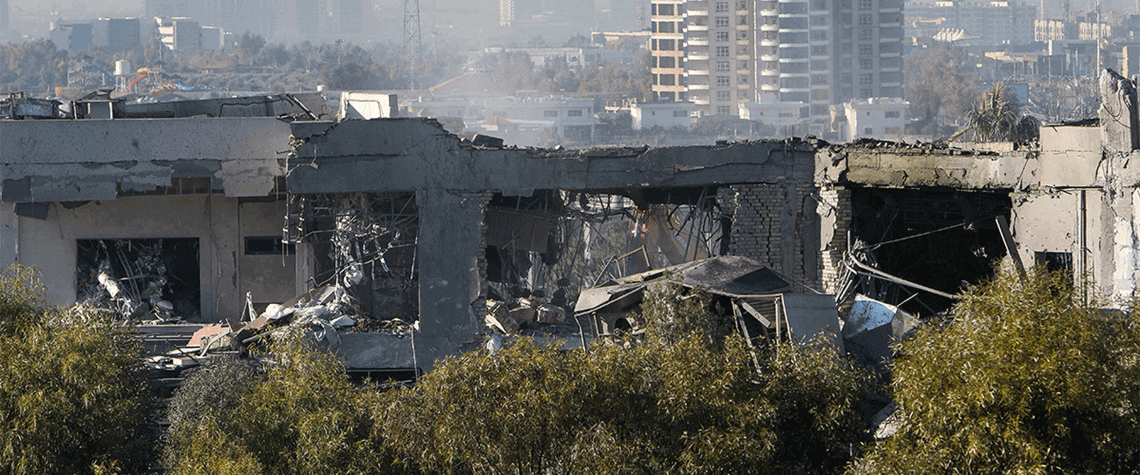
A damaged building in Erbil following the Iranian strike
Iraq looks beyond headwinds for the upside in 2024
Optimism about Kurdish production increases contrasts with a messy security situation that could obstruct oil and gas progress
Iraq’s one-step-forwards, two-steps-back progress is continuing in 2024, with recent improvements in northern crude output clouded by a deterioration in the country’s wider security situation. An Iranian missile strike on the Kurdish capital of Erbil on 15 January coincided with a general uptick in militia violence in the country—regional fallout from the Israel-Hamas conflict. A drone attack on the Khor Mor gas field in the Kurdistan region on 25 January, damaging Emirati company Dana Gas’ liquid storage tank, has reinforced oil and gas companies’ vulnerability to militia violence in Iraq’s north. The incidents obscured some recent good news for Iraq: crude production is trending upwards ag

Also in this section
16 April 2026
Demand for oil is falling because supply cannot meet it, not because it is no longer required
16 April 2026
The continent has an immediate opportunity to make the most of its energy resources by capturing gas that is currently slipping away
15 April 2026
The continent is seeing political pushback to climate plans, corporate reassessment of transition goals and rising supply risk in a fractured global order
15 April 2026
The Middle East energy crisis may turn out to be pivotal to the industry’s long-term expansion, but significant challenges still stand in its way


