


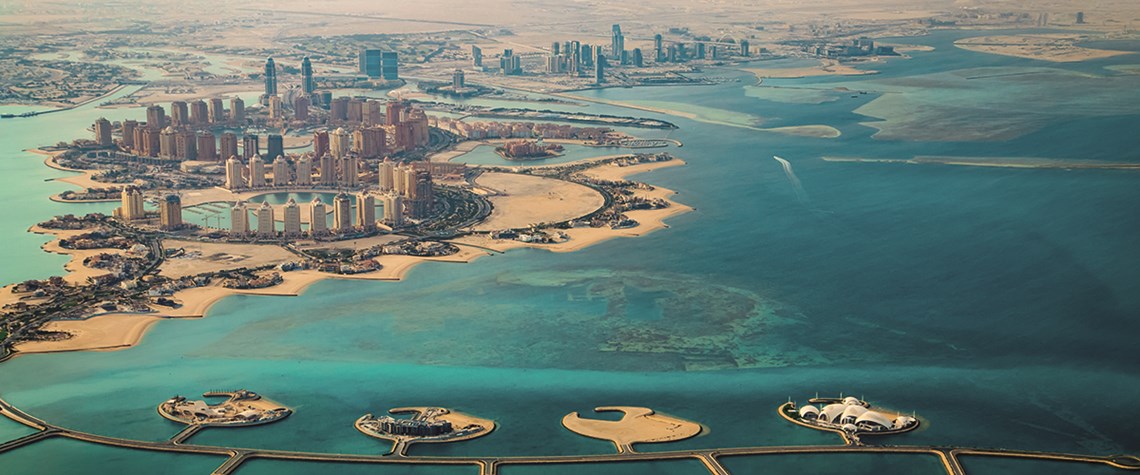
Qatar—steady as she goes
Qatar's oil strategy is to stem further production declines, as it tightens its economic belt and keeps the investment focus on natural gas
If a day comes soon, with or without Opec/non-Opec consent, when Gulf oil producers decide to open the taps to the full, Qatar's contribution won't make the headlines. Saudi Arabia, with healthy spare capacity, and Kuwait—hopeful of reclaiming its 250,000-barrels a day Neutral Zone half-share and reaching its long-desired 4m b/d capacity target—are the Gulf's best hopes for adding new crude oil to the market. Since the discovery and spectacular development of Qatar's offshore North Field and the country's meteoric ascent to the peak of liquefied natural gas producers, oil has always been something of a poor relation. In the current climate, with a harsh mixture of relatively low global oil p

Also in this section
23 March 2026
A complex and sometimes contradictory web of factors that include unpredictable oil prices, the globalisation of LNG markets, the expansion of Middle Eastern sovereign capital and the growth of datacentre demand will shape the energy landscape beyond 2026
23 March 2026
The Strait of Hormuz crisis highlights how key waterways can become global chokepoints
20 March 2026
Attacks on key oil and LNG assets across the Gulf mean a prolonged supply disruption, with damage to Qatar’s export capacity undermining confidence in the global gas system
20 March 2026
The US may be systemically stripping Russia of key geopolitical allies, but Moscow can reap rewards from the Hormuz crisis, both in the short and long term


