


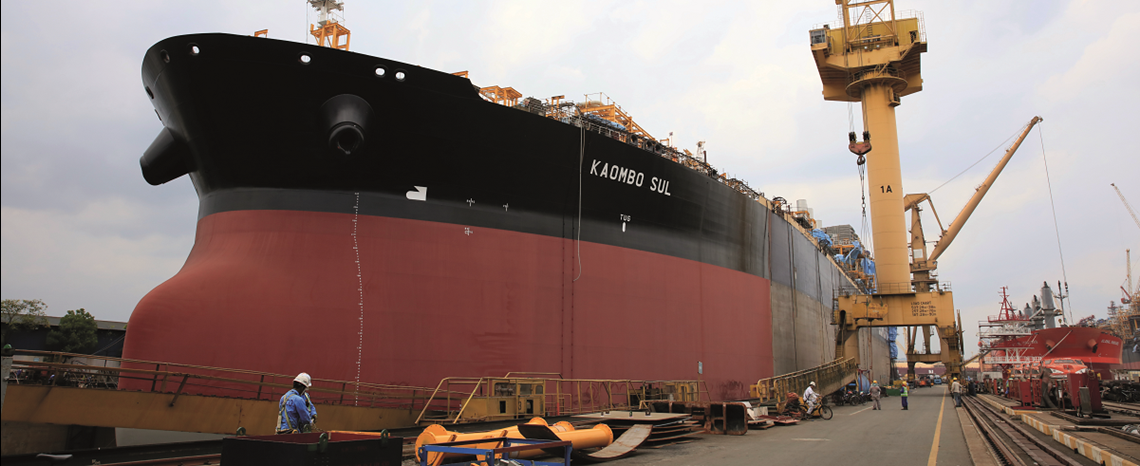
Angolan overhaul: The Kaombo Sul facility scheduled to come on line in 2019 will help offset declining fields
Africa is back on the deep-water agenda
Drillers are starting to renew interest in African projects deemed too costly and risky
Confidence in the sub-Saharan African offshore sector has been boosted by the increasing availability of relatively low-cost floating production, storage and offloading (FPSO) and floating liquefied natural gas (FLNG) facilities. While the industry's successful efforts to cut operating costs during the recent downturn have also helped make African deep-water look a more attractive option. Both Nigeria and Angola, Africa's largest oil producers, are now having at least a modicum of success in revitalising the hydrocarbons sector after several lean years. Shell said in late July it hoped to finalise talks with Nigeria soon on a framework to expand its Bonga deep-water oil field, preparing the

Also in this section
23 April 2026
The addition of an oil pipeline to the Power of Siberia 2 gas project could ensure deliveries of Russian oil to China, materially shorten logistics lines between West Siberia and final customers, and—amid disruption in the Strait of Hormuz—offer a land-based export route that reduces exposure to maritime chokepoints
23 April 2026
There is a clear push to bolster exports to Asia amid uncertainty around its North American neighbour, but there are limits to the benefits from the energy crisis
23 April 2026
Shell made the play-opening discovery in Namibia’s Orange basin back in 2022, but its next well could decide whether the project can actually be commercialised
22 April 2026
The failure of OMV Petrom’s keenly watched exploration campaign at Bulgaria’s Han Asparuh block highlights the Black Sea’s uneven track record, despite major successes like Neptun Deep and Sakarya


