


Newsletters | Request Trial | Log in | Advertise | Digital Issue   |   Search
  • Upstream
  • Midstream & Downstream
  • Gas & LNG
  • Trading & Markets
  • Corporate & Finance
  • Geopolitics
  • Podcasts
Search
Related Articles
OPEC+’s cohesive restraint
The alliance is keeping output on track and the market in balance amid geopolitical tensions and a fragile supply-demand ledger
OPEC’s discipline sets tone for 2026
OPEC+ remains on track as output falls, with only Gabon failing to hit its output targets in December, although Kazakhstan’s compliance was involuntary
OPEC presses pause
The group’s oil production declined in November, our latest analysis finds, amid divided sentiment over market balances and geopolitical jitters
Letter from London: Oil’s golden triangle
The interplay between OPEC+, China and the US will define oil markets throughout 2026
OPEC+ nears output targets amid unsolved riddles
OPEC+ has proven to be astute at bringing back oil production, but mysteries around Chinese buying, missing barrels and oil-on-water have left the group in wait-and-see mode
Mexico must overhaul its NOC
Crucial structural reforms and change in operating philosophy are needed to arrest PEMEX’s ongoing decline and restore oil production growth
OPEC+ exposes its producers’ limits
Saudi Arabia, the UAE and Iraq appear to be only members able to increase output as Russia approaches close to maximum capacity
Mexico’s upstream Pemex gamble
The government refuses to expand E&P access despite the NOC’s high debt pile, falling crude output and growing gas import dependence
Letter from Vienna: OPEC at 65
Following its founding in September 1960, OPEC has become a key player in the global energy sector and a vital source of market stability
OPEC’s realignment
The group is cleansing itself of non-compliers and resetting expectations as it unwinds quicker than expected in a bid to go beyond production quotas
Mexico Donald Trump Opec
Charles Waine
16 April 2020
Follow @PetroleumEcon
Forward article link
Share PDF with colleagues

Mexico plays hardball

Regional outlier initially baulked at Opec’s demand to scale back barrels, before bleeding oil revenues forced a rethink

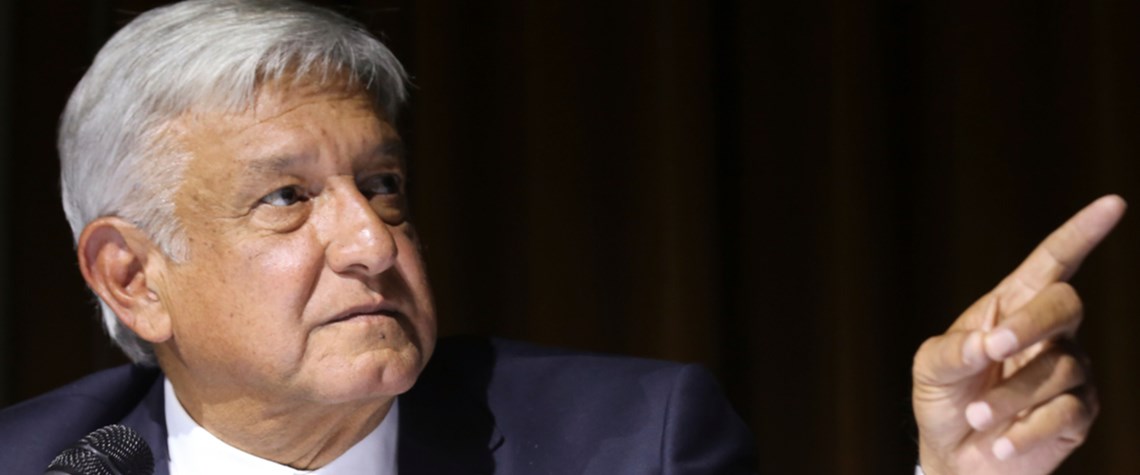
Mexico proved an unusually stubborn negotiator during last week’s Opec+ alliance crisis talks in Vienna. President Andres Lopez Obrador refused to revise down production targets, despite the oil price crash’s heavy financial toll on state oil firm Pemex. Indeed, confidence that Mexico would consent to the cuts was at one point so low that US president Donald Trump weighed in with an offer of support to help it achieve the 10pc supply drop. Mexico eventually accepted a 100,000bl/d reduction, a cut significantly short of the 400,000bl/d that Opec and its allies originally demanded. The decrease represented half the volume pledged by Latin American rival Petrobras, despite the Brazilian company

Also in this section
A bigger and longer crisis
20 March 2026
Attacks on key oil and LNG assets across the Gulf mean a prolonged supply disruption, with damage to Qatar’s export capacity undermining confidence in the global gas system
How Russia gains from the Hormuz supply shock
20 March 2026
The US may be systemically stripping Russia of key geopolitical allies, but Moscow can reap rewards from the Hormuz crisis, both in the short and long term
Hormuz crisis delivers tailwinds for US LNG
20 March 2026
Disruptions to Qatari LNG exports have highlighted the risks of concentrated supply, potentially strengthening the long-term position of US exporters despite limited near-term flexibility
Through the oil looking glass
20 March 2026
The extent of the US-Israel war with Iran means there will be no going back to the previous market equilibrium no matter how the conflict ends

Share PDF with colleagues

COPYRIGHT NOTICE: PDF sharing is permitted internally for Petroleum Economist Gold Members only. Usage of this PDF is restricted by <%= If(IsLoggedIn, User.CompanyName, "")%>’s agreement with Petroleum Economist – exceeding the terms of your licence by forwarding outside of the company or placing on any external network is considered a breach of copyright. Such instances are punishable by fines of up to US$1,500 per infringement
Send

Forward article Link

Send
Sign Up For Our Newsletter
Project Data
Maps
Podcasts
Social Links
Featured Video
Home
  • About us
  • Subscribe
  • Reaching your audience
  • PE Store
  • Terms and conditions
  • Contact us
  • Privacy statement
  • Cookies
  • Sitemap
All material subject to strictly enforced copyright laws © 2025 The Petroleum Economist Ltd
Cookie Settings
;

Search
