


Newsletters | Request Trial | Log in | Advertise | Digital Issue   |   Search
  • Upstream
  • Midstream & Downstream
  • Gas & LNG
  • Trading & Markets
  • Corporate & Finance
  • Geopolitics
  • Podcasts
Search
Related Articles
Libya’s upstream caught between hope and caution
The North African producer’s first bidding round in almost two decades is an important milestone but the recent extension suggests a degree of trepidation
MENA states try to change their gas fortunes
While Syria has gas import plans and Jordan is targeting greater production, Egypt is struggling with declining output and Lebanon with the after-effects of conflict
BP’s long stay in Russia
After failed attempts to find a buyer for its stake in Russia’s largest oil producer, BP may be able to avoid the harsh treatment meted out to ExxonMobil and Shell when they exited—and could even restart operations if geopolitical conditions improve
TotalEnergies sticks to winning formula
TotalEnergies is an outlier among other majors for remaining committed to low-carbon investments while continuing to replenish and expand its ample oil and gas portfolio, with an appetite for high risk/high return projects.
Nigeria bullish about oil recovery
Efforts to restructure and boost investment appear to be working, but doubts remain about the plan to almost double crude production by 2030
Old hands dominate Algeria’s upstream auction
The country’s latest licensing round attracted bids from IOCs and NOCs in a better showing than its last outreach to bidders
Libya’s NOC sees E&P optimism through the anger
North African producer hopeful of bringing in IOCs despite the disagreements over terms as latest bidding round is launched
Oil majors target Suriname as new exploration frontier
Companies including Shell, TotalEnergies and Chevron are turning to Suriname’s oil potential as South America’s smallest country seeks to replicate the success of neighbouring Guyana
Asia’s potential upstream powerhouse
Petronas-Eni eyes joint venture to prioritise key gas developments, with huge opportunities for growth in Indonesia and a steady Malaysia portfolio
Hydrocarbon Processing Refining Databook 2025: Middle East & Africa
The Middle East is focusing on modernisation and expansion projects, while Africa is seeking to reduce its imports of refined products
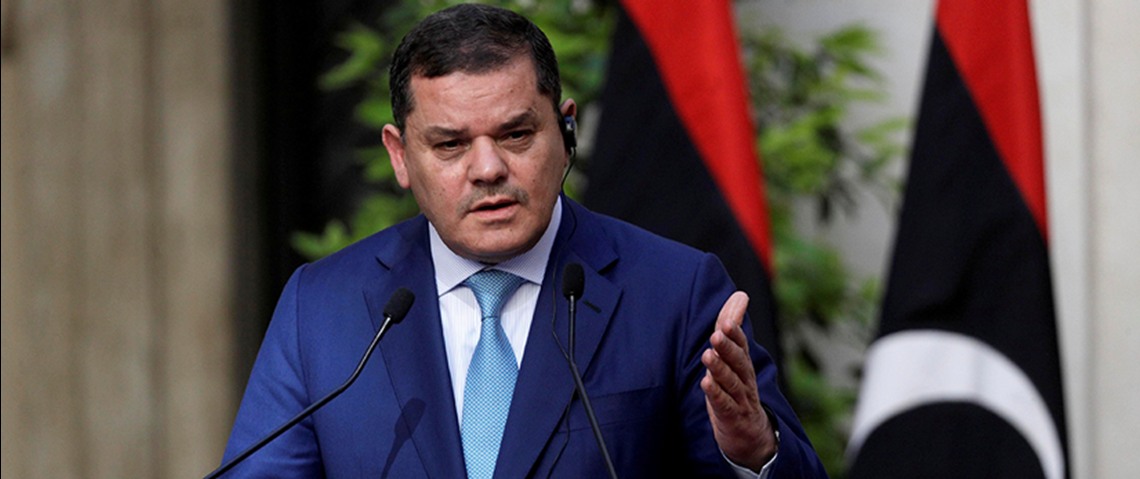
Libyan prime minister Abdulhamid Dbeibeh
Libya IOCs ConocoPhillips Eni TotalEnergies
Chris Stephen
13 December 2021
Follow @PetroleumEcon
Forward article link
Share PDF with colleagues

IOCs plot risky Libya return

Despite the continuing threat that the country’s security situation could implode, oil firms are keen to get going again

Italy’s Eni has started gas exploration off Libya’s northeast coast. Meanwhile, TotalEnergies and US independent Conoco­Phillips have enlarged their stakes in Waha Oil—Libya’s largest joint-venture oil company—splitting evenly an 8.16pc stake previously held by exiting US producer Hess. And speculation that Shell could be returning to Libya ratcheted up at the end of November following the leak to the media of an internal briefing document. Shell pulled out of Libya in 2012, but could now revive three promising exploration sites—two in the Sirte basin and a third in the southwest—as well as solar and gas-flaring reduction projects. It is not just large IOCs that are returning. In the country

Also in this section
Explainer: Iran’s indispensable energy role
16 January 2026
The country’s global energy importance and domestic political fate are interlocked, highlighting its outsized oil and gas powers, and the heightened fallout risk
Oil’s tanker transformation
16 January 2026
The global maritime oil transport sector enters 2026 facing a rare convergence of crude oversupply, record newbuild deliveries and the potential easing of several geopolitical disruptions that have shaped trade flows since 2022
Letter from the US: The curse of strong energy exports
Opinion
15 January 2026
Rebuilding industry, energy dominance and lower energy costs are key goals that remain at odds in 2026
Venezuela mismanaged its oil, and US shale benefitted
14 January 2026
Chavez’s socialist reforms boosted state control but pushed knowledge and capital out of the sector, opening the way for the US shale revolution

Share PDF with colleagues

COPYRIGHT NOTICE: PDF sharing is permitted internally for Petroleum Economist Gold Members only. Usage of this PDF is restricted by <%= If(IsLoggedIn, User.CompanyName, "")%>’s agreement with Petroleum Economist – exceeding the terms of your licence by forwarding outside of the company or placing on any external network is considered a breach of copyright. Such instances are punishable by fines of up to US$1,500 per infringement
Send

Forward article Link

Send
Sign Up For Our Newsletter
Project Data
Maps
Podcasts
Social Links
Featured Video
Home
  • About us
  • Subscribe
  • Reaching your audience
  • PE Store
  • Terms and conditions
  • Contact us
  • Privacy statement
  • Cookies
  • Sitemap
All material subject to strictly enforced copyright laws © 2025 The Petroleum Economist Ltd
Cookie Settings
;

Search
