


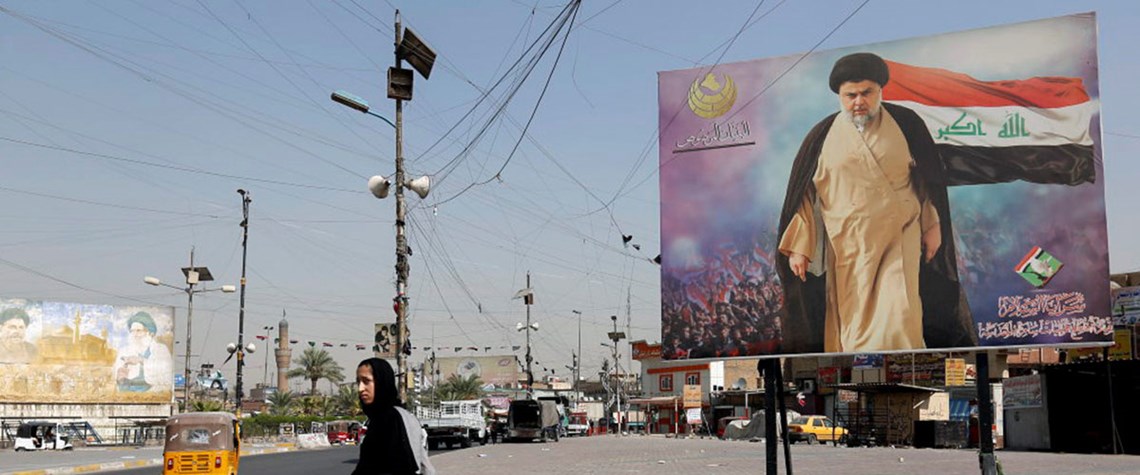
Shia cleric Muqtada al-Sadr withdrew his MPs from parliament in mid-June
Paper progress only in Iraq
Oil Ministry claims around key IOC investments ignore its lame duck status
All looks rosy in the Iraqi oil garden. The first major contract off the back of TotalEnergies’ planned $27bn investment in the country’s energy sector was signed in mid-July. Ever-bullish oil minister Ihsan Ismail declared in June that necessary approvals had been received for a state firm to buy ExxonMobil out from a key oilfield, potentially enabling some of Baghdad’s record crude export revenues to be ploughed into its slow-moving expansion. But flat production and sales—combined with, and in no small part caused by, prolonged political paralysis—paint a far bleaker picture. After a Paris meeting with the major’s CEO, Patrick Pouyanne, Ismail announced that a design contract had been ink

Also in this section
2 April 2026
Alongside a rapid continued build-out of renewables, China’s latest five-year plan stresses the value of domestic hydrocarbon production for energy security and calls for increased Russian gas imports
2 April 2026
The government is taking important steps to revive domestic production, lift investment and benefit from the geopolitical crisis even if more needs to be done in the longer term
1 April 2026
Golden Pass’s startup offers QatarEnergy a timely boost but may also force a difficult choice between honouring disrupted contracts and capitalising on soaring spot LNG prices
1 April 2026
It is not a case of if or when, but the length and magnitude of economic damage from elevated oil prices


