



For ASX-listed independent oil and gas explorer Carnarvon Energy, 2026 is shaping up to be a defining year as the company advances a dual-track strategy designed to strengthen both its offshore exploration and onshore development exposure.
At the centre of this strategy is future planned drilling in the Bedout Sub-Basin offshore Western Australia—a region that has rapidly emerged as one of the nation’s most prospective offshore oil and gas frontiers.
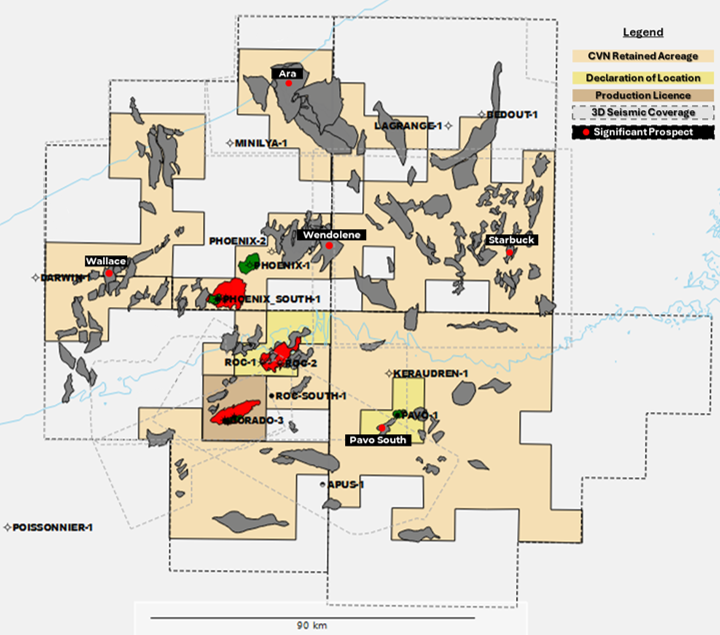
Home to the enormous 2018 Dorado and nearby 2022 Pavo discoveries, the Bedout has delivered a high strike rate for Carnarvon, which owns four exploration permits and a production licence in the field.
In the year ahead, Carnarvon is looking to advance high-impact exploration planning offshore, with a focus on targets prioritised by our 2025 Bedout Seismic Mega Merge Project.
The Mega Merge delivered one of the most advanced 3D seismic datasets ever developed in the region, integrating ten seismic surveys covering 15,240km² and providing more than 80% seamless coverage of the Bedout acreage in which Carnarvon has equity.
More than 130 prospects and leads have been identified across multiple structural play types in the acreage, with undrilled potential of 1.6b bl liquids and 9tcf gas (gross, Pmean, unrisked).
Along with joint venture partners Santos and CPC Taiwan subsidiary OPIC Australia, a detailed multi-well environmental plan is in final stages of submission to the regulator after going out for consultation through the second half of 2025.
One of the well candidates is Ara-1, within Carnarvon’s WA-435-P permit area. Located north of the Dorado and Pavo oil discoveries, the Ara prospect is estimated to contain more than 549bcf of gas and 91m bl of condensate (Pmean, gross).
The play is considered comparable to the Caley and Baxter reservoirs that underpinned Carnarvon’s earlier exploration success in the basin.
For Carnarvon, Ara represents the next phase of a long-term effort to consolidate its position in a basin with strong geological fundamentals and growing international attention.
Over the past decade, the Bedout Sub-Basin has evolved from an underexplored frontier into one of Asia-Pacific’s most closely watched hydrocarbon provinces, offering high liquids content, favourable reservoir quality and tangible development potential in shallow water.
The Bedout Basin has already proven its ability to deliver world-class discoveries with a 67% success rate. Ara gives Carnarvon the opportunity to extend that success and continue building its understanding of a region that remains underexplored but highly prospective.
Onshore investment
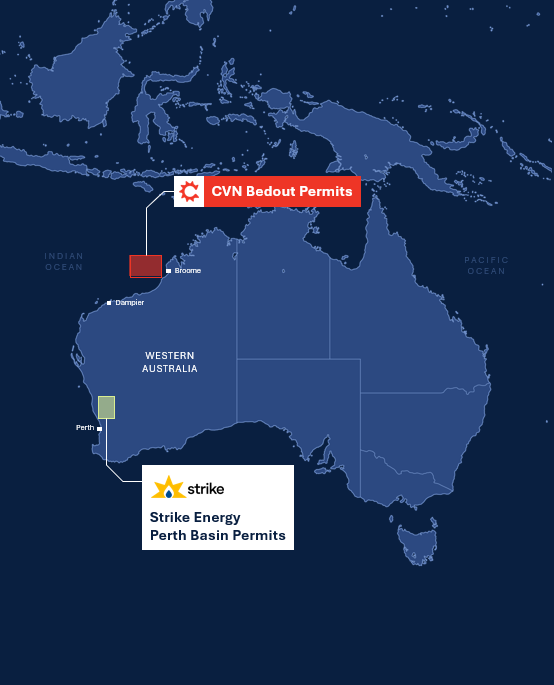
In parallel, Carnarvon has strengthened its presence in Western Australia’s (WA’s) onshore sector through a 20% investment in local producer Strike Energy (ASX: STX) formalised in September 2025.
Strike has a portfolio of producing and development-ready gas assets—including Walyering, South Erregulla and Ocean Hill in the Perth Basin—that contribute already to the state’s domestic gas supply and underpin WA’s industrial sector.
The investment in Strike complements Carnarvon’s offshore portfolio. It provides exposure to near-term production and development while aligning Carnarvon with a company that shares its view of gas as a critical component of Australia’s energy mix.
Together, the two companies’ offshore and onshore initiatives provide balanced exposure across exploration, development and production—a model increasingly adopted by independent energy companies seeking resilience through diversification.
The Strike partnership gives Carnarvon a strategic foothold in onshore exploration, development and production, enhancing portfolio balance and financial resilience while highlighting the importance of collaboration in today’s shifting investment environment.
Collaboration and flexibility are key in the current environment. Carnarvon’s involvement with Strike allows it to participate in multiple parts of the value chain, while maintaining the focus and agility that define independent exploration.
Carnarvon’s strategy illustrates how mid-sized independents are adapting to a new operating environment—one defined by the need to balance traditional resource development with decarbonisation pressures and evolving capital flows.
By combining offshore exploration with onshore production exposure, the company has positioned itself to balance near-term returns with long-term growth opportunities.
This approach provides a hedge against commodity price volatility and ensures continued participation in both domestic energy supply and export-focused exploration activity.
Energy systems are evolving, but the world still requires secure and affordable supply. Carnarvon’s goal is to contribute to that need responsibly, through a portfolio that is technically advanced and strategically diversified, within a company that is financially robust.
As it prepares for the Ara drilling campaign and deepens its engagement with Strike, Carnarvon enters 2026 with a portfolio designed to deliver optionality and long-term value. Its integrated model—combining offshore frontier exploration with onshore production exposure—reflects the broader trajectory of Australia’s independent sector as it navigates the dual demands of growth and transition.
Agility, strategic partnerships and disciplined capital deployment remain critical. Carnarvon is building a business that can adapt and create value through change. That adaptability—across partnerships, projects and energy types—is what will define the shape of energy to come.
Philip Huizenga is CEO of Carnarvon Energy. This article is taken from our Outlook 2026 report. To read Outlook 2026 in full, click here.



Comments