



As global demand for reliable, lower-carbon energy intensifies, Africa’s untapped hydrocarbon potential presents both a challenge and an opportunity—to develop resources that drive economic growth while supporting a balanced energy transition.
For Invictus Energy, an independent upstream oil and gas company headquartered in Perth, Western Australia, Africa’s shifting energy dynamics are central to its long-term strategy of creating a solid foundation for a diversified, sustainable energy ecosystem.
At the heart of this vision lies Invictus’ flagship asset, the Cabora Bassa Project in northern Zimbabwe—a 360,000 hectare development area within the Cabora Bassa Basin, one of the most exciting frontier rift basins in sub-Saharan Africa and one of the last untested.
Cabora Bassa has quickly evolved into a near-term development project capable of reshaping southern Africa’s energy supply and strengthening broader regional energy security ambitions.
In late 2023, Invictus announced a high-quality gas-condensate discovery at the Mukuyu-2 well, establishing the Mukuyu gas field, with multi-tcf resource potential.
This discovery reinforced results from Mukuyu-1, drilled a year earlier, that confirmed a working hydrocarbon system in the basin without bringing samples to surface. It also marked Zimbabwe’s first conventional hydrocarbon discovery, validating Invictus’ confidence in the basin’s immense potential.
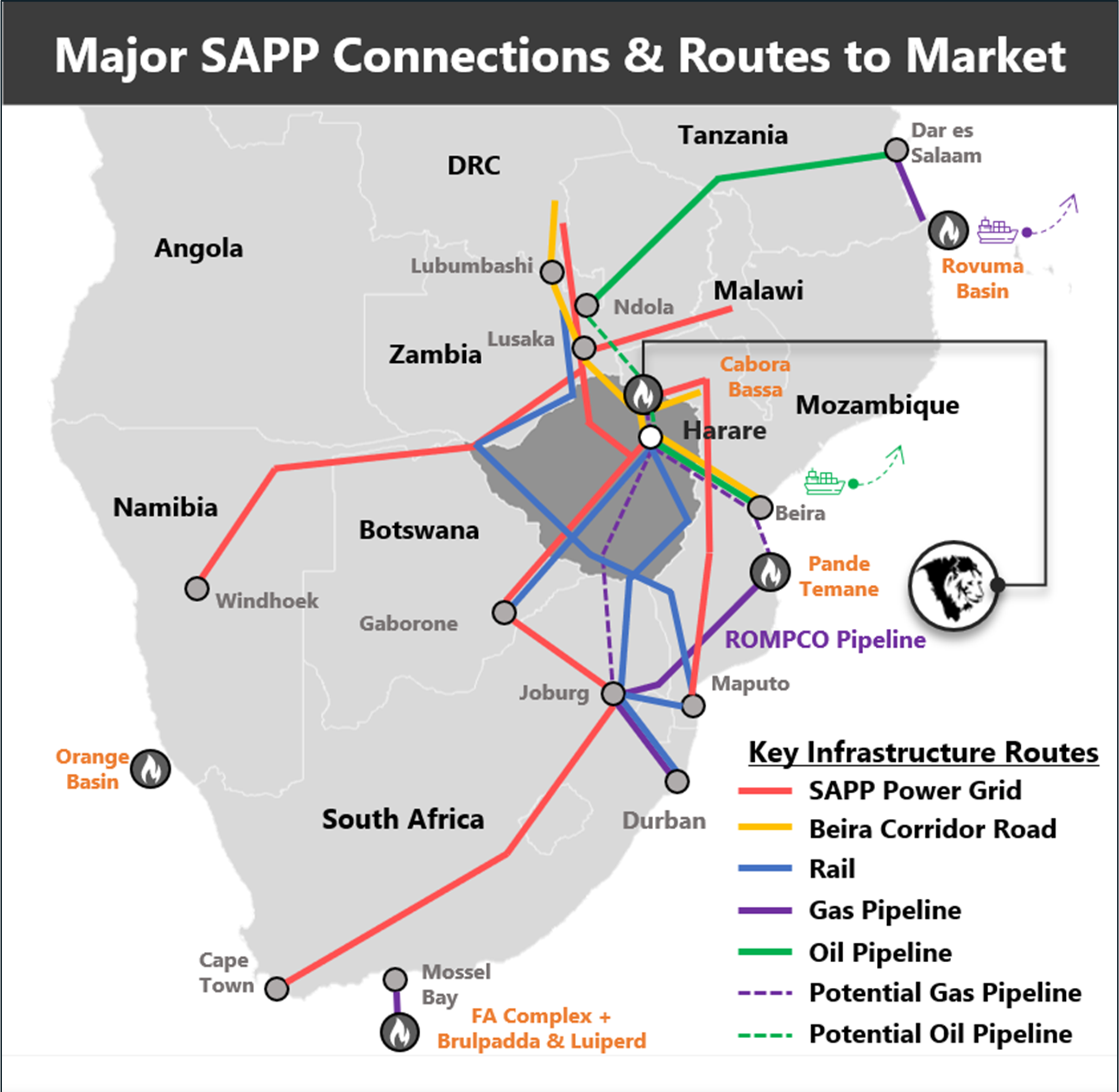
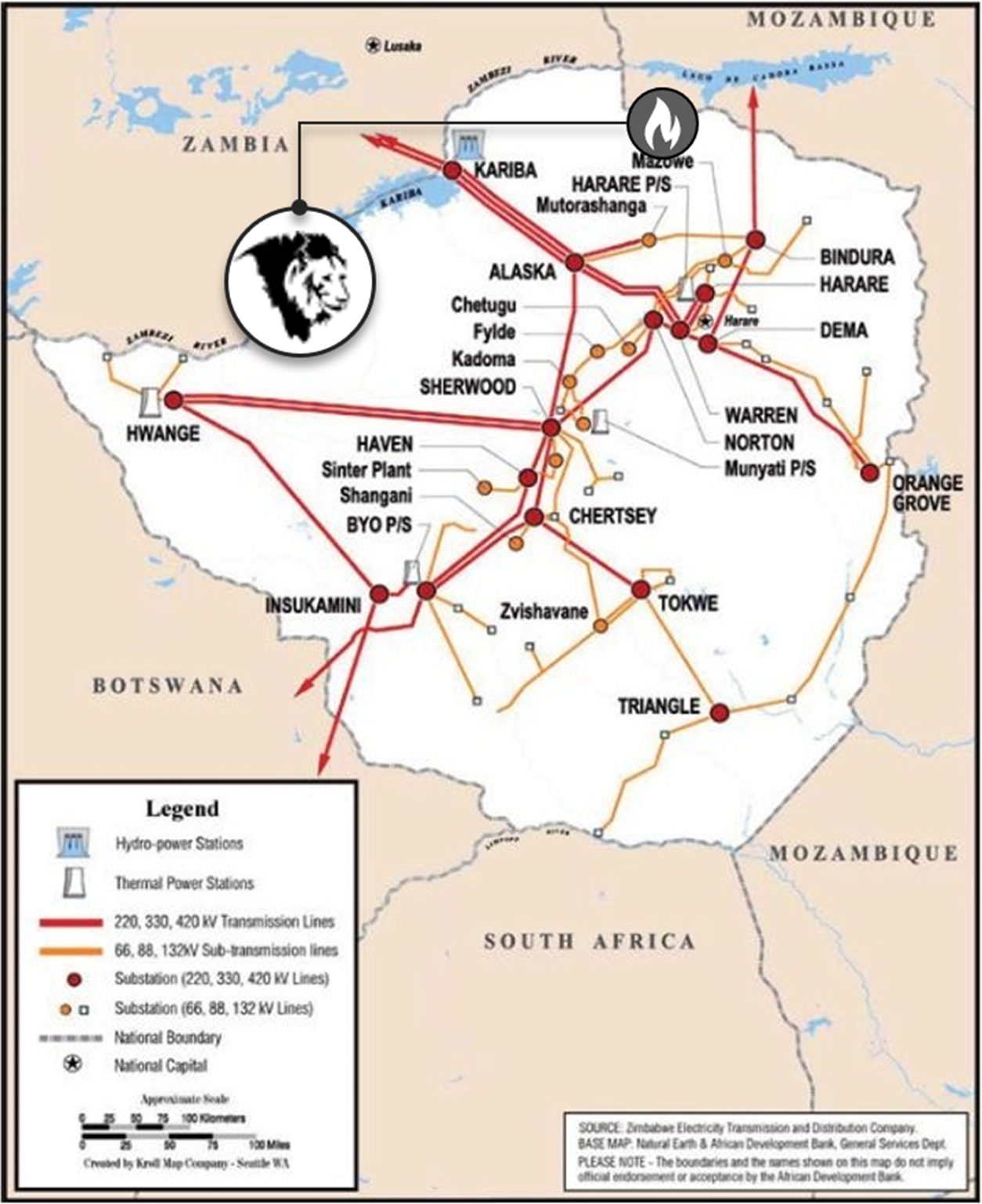
Fast forward to 2026, and Invictus is preparing to advance early-stage commercialisation of Cabora Bassa, including a gas-to-power pilot and exploring the potential of network connections into the Southern Africa Power Pool (SAPP) to supply domestic and regional markets.
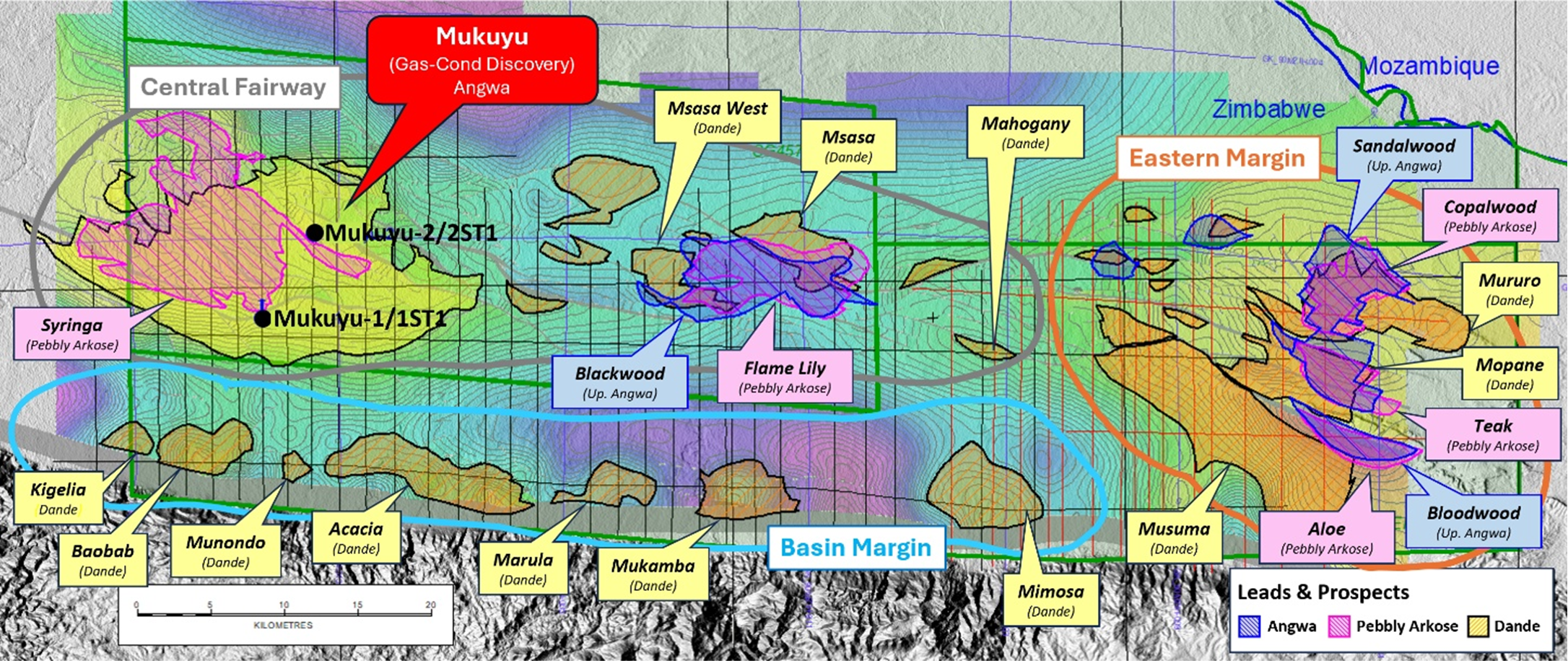
This work is being done in tandem with preparation to drill the Musuma target in the Eastern Margin of Cabora Bassa in the first half of 2026—the first high-impact exploration well outside the Mukuyu gas-condensate discovery area.
Musuma-1 is a priority of eight high potential targets identified in the Eastern Margin and estimated to have a recoverable prospective resource of 1.17tcf of gas and 73m bl of condensate (gross mean unrisked).
Invictus selected the Musuma prospect to test the Eastern Margin play due to the direct hydrocarbon indicators and potential flat spot—often an indicator of a hydrocarbon contact—observed in the seismic data.
If successful, it will open those additional targets in the Eastern Margin and provide the company with some optionality of where to focus for the initial development.
Energy demand in Zimbabwe and much of southern Africa continues to outpace supply, particularly for electricity generation.
Regional gas can help bridge this gap, supporting industrial development, reducing reliance on imports and displacing more carbon-intensive fuels.
Rather than pursuing a traditional export-first model, Invictus is focused on developing Cabora Bassa as a priority domestic and potentially regional asset.
Invictus has a range of commercialisation opportunities, supplying energy to important Zimbabwean industries, powering up communities and integrating with regional grids to shore up more reliable power supply.
The company has memorandums of understanding in place to establish both pilot and full-field-scale gas-to-power projects to supply industry and the SAPP respectively.
Beyond its resource potential, Cabora Bassa has capacity to strengthen local economic and social outcomes, create jobs, enhance infrastructure and build technical expertise in the energy space, aligning with Zimbabwe’s broader national development goals.
As energy projects are increasingly evaluated by their social and environmental impact, Invictus’ commitment to partnership, transparency and local value creation sets a benchmark for responsible development in emerging markets.
A defining step forwards
A major inflection point came in August 2025, when Invictus signed a transformational partnership with Qatar-backed Al Mansour Holdings (AMH), simultaneously forming Al Mansour Oil and Gas (AMOG)—a joint venture focused on producing and near-term development assets, as well as strategic merger and acquisition opportunities across Africa.
AMH’s 19.9% stake in Invictus, supported by up to $500m in conditional funding, signals a new alliance of Middle Eastern expertise meeting local expertise to unlock a frontier African opportunity.
This partnership highlights a broader shift in global investment flows, with African upstream ventures increasingly supported by a diversified investor base beyond traditional Western sources of capital, particularly from the Middle East.
The creation of AMOG marks a defining step in Invictus’ evolution, signalling investment confidence gained from progress at Cabora Bassa and the company’s readiness to expand its footprint across the continent.
At the same time, the recent granting of National Project Status and finalisation of the petroleum production-sharing agreement terms between the company and the Zimbabwean government further highlight Cabora Bassa’s strategic role in Zimbabwe’s economic growth and energy transformation.
Navigating Africa’s evolving energy landscape requires more than technical capability. It requires trust, adaptability and alignment with host nations’ long-term objectives.
Invictus’ collaboration with the Zimbabwean government, reinforced through its partnership with AMH, demonstrates an understanding of these dynamics.
As Invictus transitions from explorer to developer, the company’s strategy remains focused on unlocking resources that power economies, improve lives and contribute to a more balanced global energy future.
In an industry defined by shifting alliances and emerging frontiers, Invictus is testament to what focused independents can achieve, charting a course not only for Zimbabwe’s energy independence but also for southern Africa’s energy future.
Scott Macmillan is managing director at Invictus Energy. To read Outlook 2026 in full, click here.



Comments