Newsletters | Request Trial | Log in | Advertise | Digital Issue   |   Search
  • CCUS
  • Cap & Trade Markets
  • Voluntary Markets & Offsets
  • Corporate & Finance
  • Net Zero Strategies
  • Podcasts
Search
Related Articles
Letter on carbon: Has the EU ETS come of age?
The launch of the bloc’s emissions trading system in 2005 was a pioneering step, but as the scheme hits 21 its impact as a driver of decarbonisation is still open to debate
Letter from London: Shell blasts EU carbon storage targets
Binding CO₂ injection targets for oil and gas firms are ill-defined and very unrealistic, oil major tells London CCS summit
Europe in race to unlock CDR investment
Policymakers acknowledge crucial role for direct air capture and other removal technologies in meeting climate goals
An end to EU green illusions
EU industry and politicians are pushing back against the bloc’s green agenda. Meanwhile, Brussels’ transatlantic trade deal with Washington could consolidate US energy dominance
EU’s binding CCS targets: A burden or a blessing?
Oil and gas companies will face penalties if they fail to reach the EU’s binding CO₂ injection targets for 2030, but they could also risk building underused and unprofitable CCS infrastructure
Brazil eyes leadership role in global carbon market
Latin American country plans a cap-and-trade system and supports the scale-up of CCS as it prepares to host COP30
EU proposes 90% 2050 climate target
European Commission introduces new flexibilities for member states to ease compliance with headline goal
Greater Mekong taps carbon market growth
Supportive government policy, deforestation threat and economic opportunity drive forward the region’s monetisation of forest carbon
A disorderly transition
Last year was one of records for renewables but also for oil, gas and coal, as the energy transition progresses in an increasingly uneven way, according to the Energy Institute’s latest annual report
Carbon border tax exemptions to become law
EU Parliament and Council both agree to exempt bulk of importers from paying a carbon tax on goods imported into the EU
Carbon taxes are expected gain traction
Trading Policy EU
Stuart Penson
27 March 2023
Follow @PetroleumEcon
Forward article link
Share PDF with colleagues

Traders expect more carbon border taxes

EU’s Cbam model likely to be replicated as national emission reduction schemes move at different speeds, global trading companies say

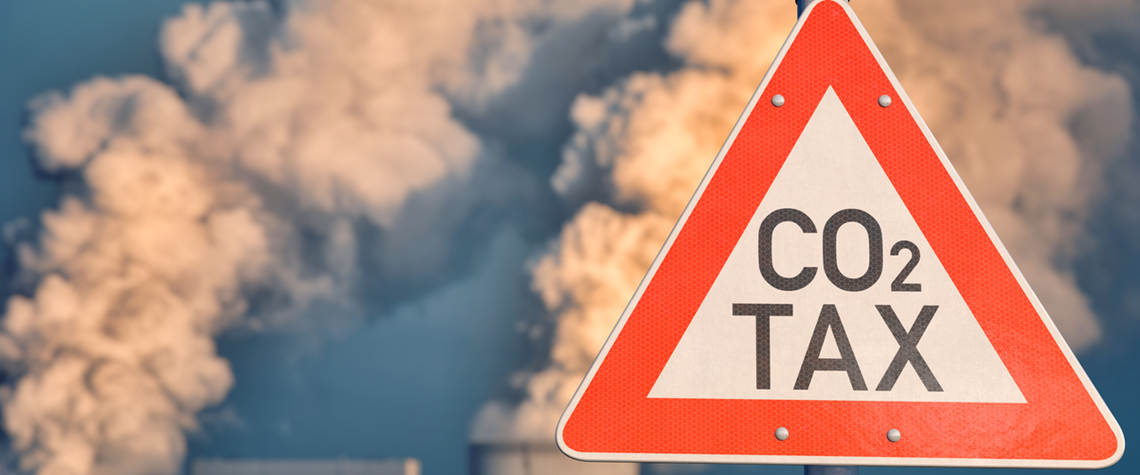
More governments are expected to follow the EU’s lead in imposing carbon border taxes as domestic emissions reduction policies move at different speeds over the coming decades, major carbon traders told the recent FT Commodities Summit. The EU plans to phase in a Carbon Border Adjustment Mechanism (Cbam) from 2026, imposing a carbon tax on goods entering the bloc unless the exporter has already paid for its emissions in its home market. The move is designed to tackle ‘carbon leakage’, where EU producers that have to pay for their carbon emissions are put at a competitive disadvantage to overseas producers that do not. “Over the next decade, for countries to increase their domestic [emissions

Also in this section
Letter on carbon: Has the EU ETS come of age?
28 November 2025
The launch of the bloc’s emissions trading system in 2005 was a pioneering step, but as the scheme hits 21 its impact as a driver of decarbonisation is still open to debate
Can Oxy’s integrated CO₂ approach set a new benchmark for transition-era oil companies?
18 November 2025
Vicki Hollub, president and CEO of Occidental, has been selected as the 2026 recipient of the Dewhurst Award, the highest honour bestowed by WPC Energy. The Dewhurst Award celebrates exceptional leadership, groundbreaking innovation and a lifetime of significant achievements in sup-port of the development and advancement of the energy industry.
Letter from London: Show me the carbon
11 November 2025
Transition policies must recognise that significant industrial demand for carbon will continue even as economies hit net zero
Letter from Europe: Western retreat raises doubts over climate leadership
Opinion
6 November 2025
After years of pursuing ideologically driven climate leadership, Western powers are now stepping back under mounting political pressure and rising populist opposition—prompting concern essential climate action could be sidelined

Share PDF with colleagues

COPYRIGHT NOTICE: PDF sharing is permitted internally for Petroleum Economist Gold Members only. Usage of this PDF is restricted by <%= If(IsLoggedIn, User.CompanyName, "")%>’s agreement with Petroleum Economist – exceeding the terms of your licence by forwarding outside of the company or placing on any external network is considered a breach of copyright. Such instances are punishable by fines of up to US$1,500 per infringement
Send

Forward article Link

Send
Sign Up For Our Newsletter
Project Data
Maps
Podcasts
Social Links
Featured Video
Home
  • About us
  • Subscribe
  • Reaching your audience
  • PE Store
  • Terms and conditions
  • Contact us
  • Privacy statement
  • Cookies
  • Sitemap
All material subject to strictly enforced copyright laws © 2025 The Petroleum Economist Ltd
Cookie Settings
;

Search