Newsletters | Request Trial | Log in | Advertise | Digital Issue   |   Search
  • Green hydrogen
  • Blue hydrogen
  • Storage & Transportation
  • Consumption
  • Strategies & Trends
  • Finance
  • Women in Hydrogen 50
  • Podcasts
Search
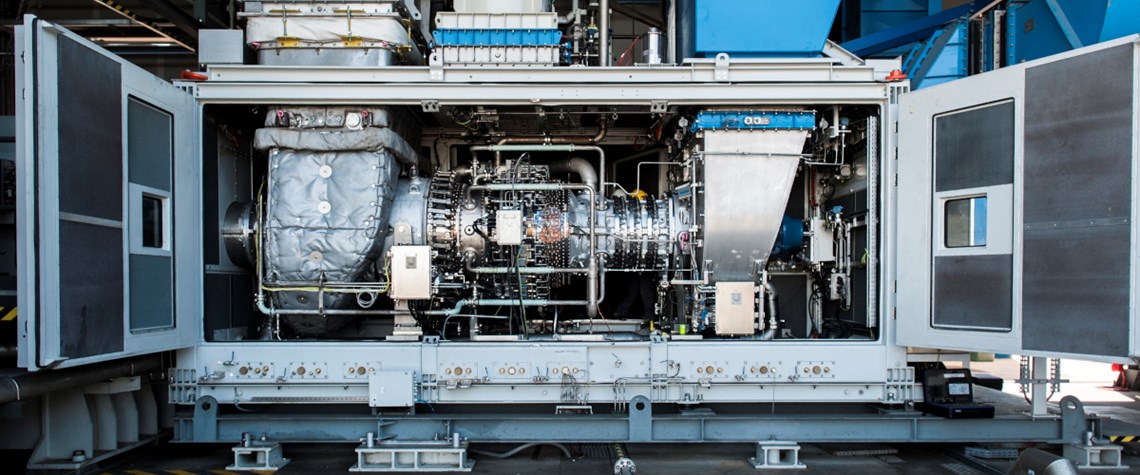
Baker Hughes NovaLT12 turbine at test bench in Florence, Italy
Alastair O’Dell
Senior Editor
6 October 2020
Follow @PetroleumEcon
Forward article link
Share PDF with colleagues

Turbines of tomorrow

The successful test of a hybrid turbine, with hydrogen blended into natural gas, is a significant milestone on the journey to decarbonised gas grids

Baker Hughes, in partnership with Italian gas network operator Snam, announced on 20 July the successful testing of its ­NovaLT12, which it says is the world’s first hybrid hydrogen turbine designed for a gas network. The test clears the way for Snam to blend hydrogen into its transmission system, which it plans to do from early 2022. Baker Hughes designed and manufactured the NovaLT12 in its Florence facility and it will be installed less than 300km northeast at Snam’s gas compressor station in Istrana, near Venice. It will be powered by a blend of up to 10pc hydrogen, although it can run on 100pc. This is possible because 70pc of Snam’s pipelines are already built with ‘hydrogen-ready’ pip

Also in this section
Letter on hydrogen: Out of Africa
14 January 2026
Continent’s governments must seize the green hydrogen opportunity by refining policies and ramping up the development of supply chains and infrastructure
Hydrogen in 2026: Five factors to watch
6 January 2026
Shifts in government policy and rising power demand will shape the clean hydrogen sector as it attempts to gain momentum following a sluggish performance in 2025
Outlook 2026: China’s green hydrogen power play
23 December 2025
Government backing and inflow of private capital point to breakthrough year for rising star of the country’s clean energy sector
Outlook 2026: The need for co-evolving hydrogen infrastructure
19 December 2025
The hydrogen industry faces an important choice: coordinated co-evolution or patched-together piecemeal development. The way forward is integrated co-evolution, and freight corridors are a good example

Share PDF with colleagues

COPYRIGHT NOTICE: PDF sharing is permitted internally for Petroleum Economist Gold Members only. Usage of this PDF is restricted by <%= If(IsLoggedIn, User.CompanyName, "")%>’s agreement with Petroleum Economist – exceeding the terms of your licence by forwarding outside of the company or placing on any external network is considered a breach of copyright. Such instances are punishable by fines of up to US$1,500 per infringement
Send

Forward article Link

Send
Sign Up For Our Newsletter
Project Data
Maps
Podcasts
Social Links
Featured Video
Home
  • About us
  • Subscribe
  • Reaching your audience
  • PE Store
  • Terms and conditions
  • Contact us
  • Privacy statement
  • Cookies
  • Sitemap
All material subject to strictly enforced copyright laws © 2025 The Petroleum Economist Ltd
Cookie Settings
;

Search