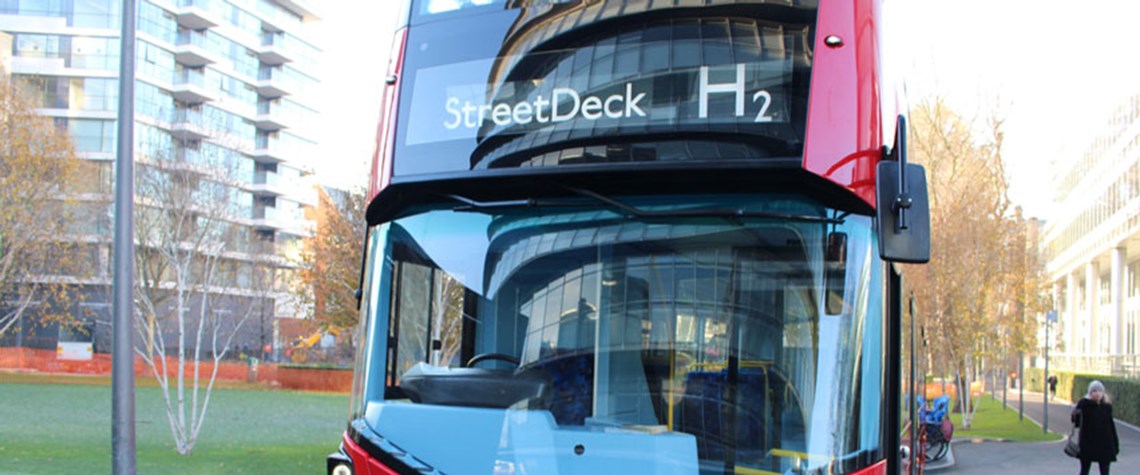
Wrightbus has started operating hydrogen buses in a commercial setting
Fuel cell heavy duty mobility could be cost-competitive in two years—WHS
Hydrogen vehicles and vessels on ‘credible pathway’ to cost crossover point
Hydrogen fuel-cell heavy-duty mobility applications, including trucks and buses, are rapidly falling in cost as scale builds, a panel of experts agreed at the World Hydrogen Summit yesterday. The point where the total cost of ownership becomes competitive with conventional equivalents is now within sight. “The value proposition for fuel cells in mobility applications is strongest, where you have vehicles that have heavy weight, high utilisation requirements, long daily range requirements and a need for fast refuelling,” said Randy MacEwen, president & CEO of Ballard Power Systems, adding that the case is strongest where commercial vehicles or vessels return to a centralised location for

Also in this section
1 April 2026
Multiple projects have been scrapped and valuations have nosedived, but the IEA says hydrogen is no passing fad
25 March 2026
The Middle East energy shock has highlighted the value of France’s unique potential to deploy nuclear-powered electrolysers
18 March 2026
The second fossil-fuel price shock in four years can be a much-needed catalyst for investment in the sector
9 March 2026
Hydrogen has not stalled in the UK because the technology does not work. The problem is that the system around it does not yet move at the speed required