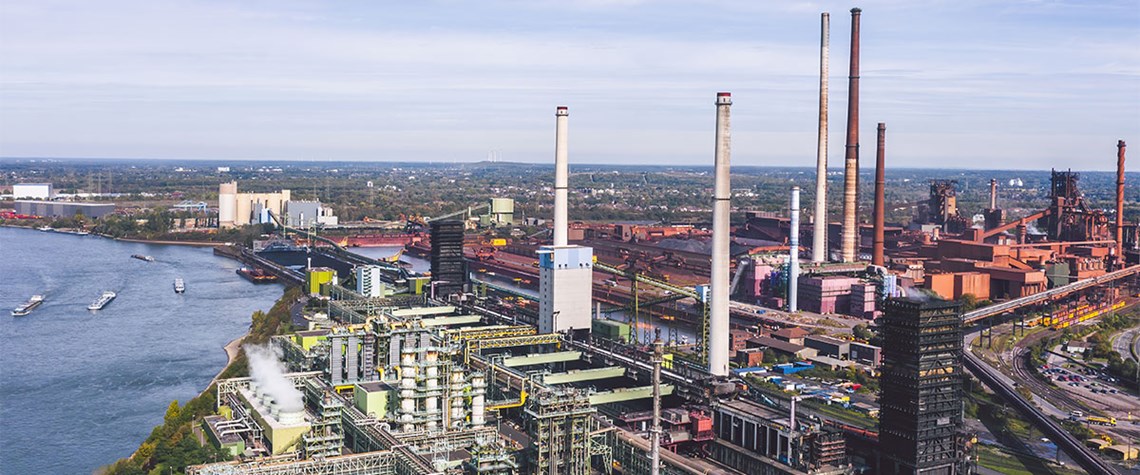
Thyssenkrupp’s Duisberg steelmaking complex
Thyssenkrupp to invest €2bn in hydrogen DRI plant
German steelmaker plans one of world’s largest hydrogen-powered direct-reduced iron facilities at its Duisburg complex
Germany’s Thyssenkrupp plans to spend more than €2bn ($2bn) on the construction of one of the world’s largest hydrogen-powered direct-reduced iron (DRI) plants at its Duisburg steelmaking complex in the Ruhr region. The company expects to start awarding contracts for the project in the next few months, with the facility scheduled to start up in 2026. It will have a production capacity of 2.5mn t/yr—larger than initially planned. The investment is still subject to the securing of some public funding, Thyssenkrupp says. The new DRI plant would replace some of the Duisburg site’s coking coal-fired blast furnace capacity. Thyssenkrupp’s steel operations account for about 2.5pc of Germany’s CO₂ e

Also in this section
1 April 2026
Multiple projects have been scrapped and valuations have nosedived, but the IEA says hydrogen is no passing fad
25 March 2026
The Middle East energy shock has highlighted the value of France’s unique potential to deploy nuclear-powered electrolysers
18 March 2026
The second fossil-fuel price shock in four years can be a much-needed catalyst for investment in the sector
9 March 2026
Hydrogen has not stalled in the UK because the technology does not work. The problem is that the system around it does not yet move at the speed required