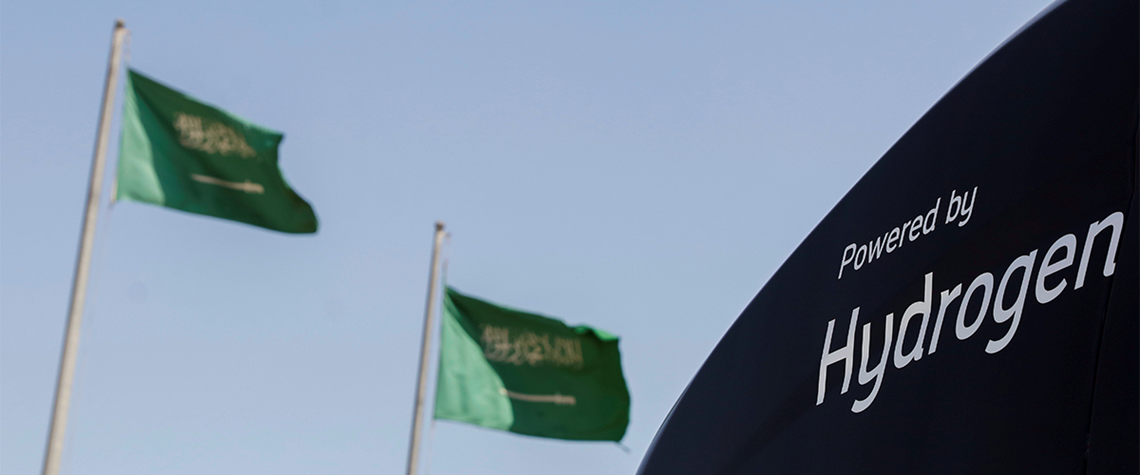
A hydrogen-powered mobile unit at Saudi Aramco demonstration of hydrogen automotive technology
Letter from Saudi Arabia: Gulf countries well set to be hydrogen leaders
Region has competitive edge in low-carbon hydrogen, but infrastructure and export challenges are key roadblocks to overcome
As the global push for decarbonisation gathers momentum, hydrogen—currently a niche industry dominated by the fossil-fuel–derived variety of the fuel—is rapidly evolving. However, only 5% of the planned low-carbon hydrogen projects have reached the investment decision stage. The market leaders of tomorrow will be those who can navigate the technical, financial, regulatory and infrastructural challenges today. Gulf Cooperation Council (GCC) countries are among those seeking to strategically position themselves as leaders in low-carbon hydrogen production and trade. They possess several advantages that may give them an edge over competitors. Navigating the infrastructure and export challenges

Also in this section
1 April 2026
Multiple projects have been scrapped and valuations have nosedived, but the IEA says hydrogen is no passing fad
25 March 2026
The Middle East energy shock has highlighted the value of France’s unique potential to deploy nuclear-powered electrolysers
18 March 2026
The second fossil-fuel price shock in four years can be a much-needed catalyst for investment in the sector
9 March 2026
Hydrogen has not stalled in the UK because the technology does not work. The problem is that the system around it does not yet move at the speed required