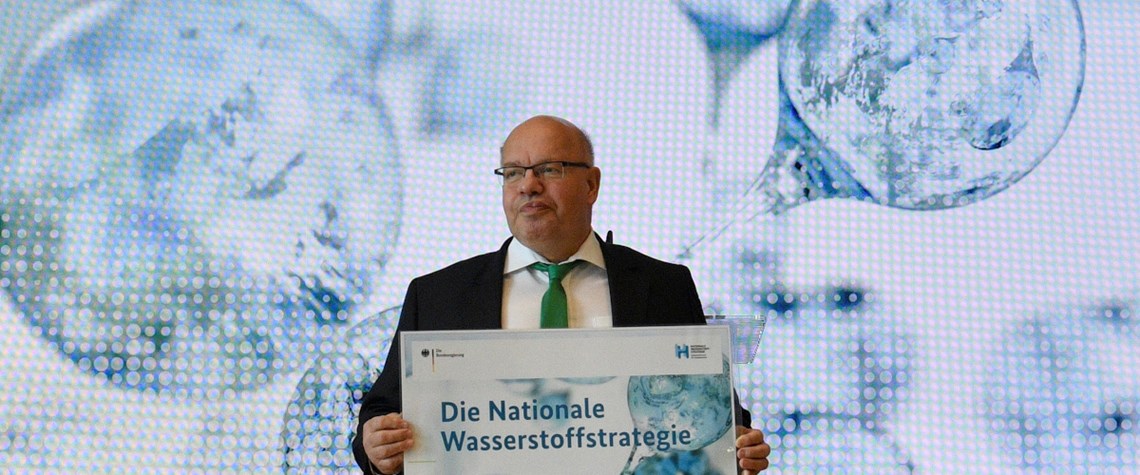
Peter Altmaier, German federal minister for economic affairs and energy
Germany targets global green hydrogen leadership
The country’s national hydrogen strategy will support green hydrogen production and its adoption across the industrial and transport sectors
The German government formally adopted its long-anticipated national hydrogen strategy yesterday, paving the way for the country to take a leading global role in developing a hydrogen economy, and green hydrogen in particular. The aim of the strategy is to decarbonise Germany’s substantial industrial sector, including steel and chemicals, as well as transportation. The federal cabinet has also appointed members to a newly formed National Hydrogen Council, which will implement and further develop the strategy. The strategy also has the aim of underpinning Germany’s economic recovery from the Covid-19 crisis. “We are paving the way for Germany to become the world leader in the field of hydroge

Also in this section
1 April 2026
Multiple projects have been scrapped and valuations have nosedived, but the IEA says hydrogen is no passing fad
25 March 2026
The Middle East energy shock has highlighted the value of France’s unique potential to deploy nuclear-powered electrolysers
18 March 2026
The second fossil-fuel price shock in four years can be a much-needed catalyst for investment in the sector
9 March 2026
Hydrogen has not stalled in the UK because the technology does not work. The problem is that the system around it does not yet move at the speed required