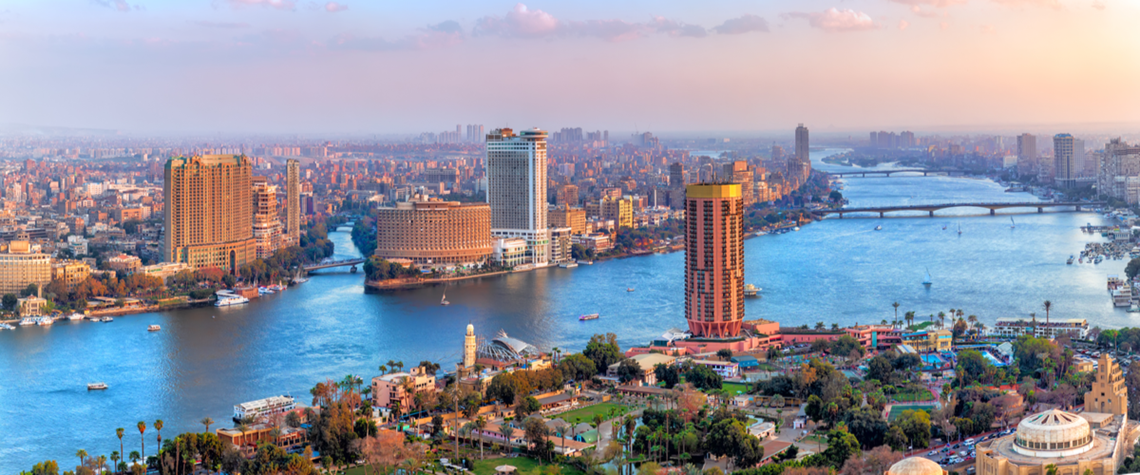
Cairo, Egypt's capital city
Egypt turns to green desalination
Cairo hopes renewables-based water purification could both narrow the domestic deficit and enable it to realise its green hydrogen ambitions
Egypt is preparing to tender for the construction of a network of desalination plants powered by renewables to address an acute shortage of fresh water and provide feedstock for green hydrogen production. The county’s sovereign wealth fund is seeking partners to invest about $2.5bn to build, own and operate 17 desalination facilities powered by solar and other renewable resources with a combined capacity of 2.8mn m³/d by 2025. Egypt is taking advice and technical support from the European Bank for Reconstruction and Development and the World Bank’s International Finance Corporation, with the first tenders—for some 1mn m³/d—due in early 2022. $2.5bn – Projected cost of desalination net

Also in this section
1 April 2026
Multiple projects have been scrapped and valuations have nosedived, but the IEA says hydrogen is no passing fad
25 March 2026
The Middle East energy shock has highlighted the value of France’s unique potential to deploy nuclear-powered electrolysers
18 March 2026
The second fossil-fuel price shock in four years can be a much-needed catalyst for investment in the sector
9 March 2026
Hydrogen has not stalled in the UK because the technology does not work. The problem is that the system around it does not yet move at the speed required