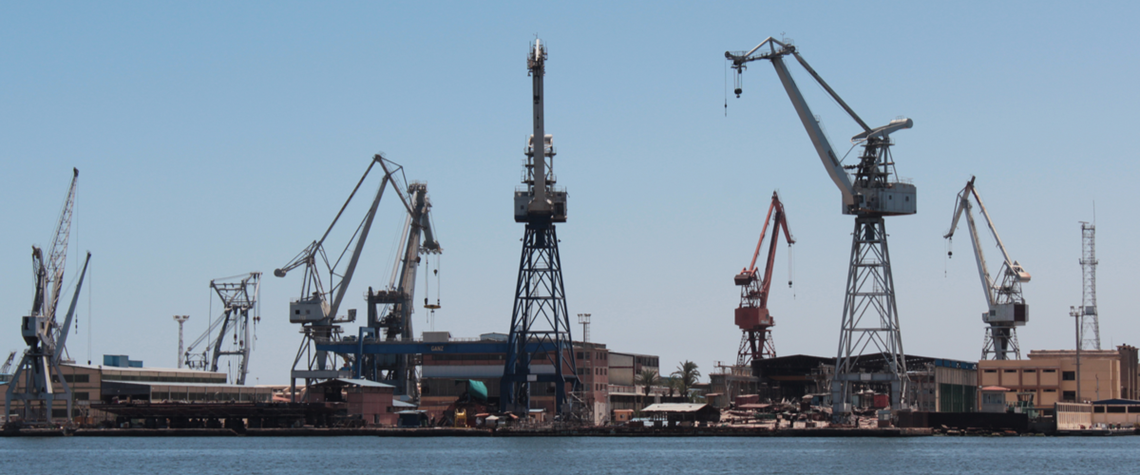
Port Said, Egypt
H2 Industries plans waste-to-hydrogen plant in Egypt
Production process using organic waste and non-recyclable plastic can undercut existing low-carbon technologies, US company says
New York-based H2 Industries has been granted preliminary approval by local authorities in Egypt to develop a waste-to-hydrogen plant at East Port Said on the Suez Canal. The project is designed to produce 300,000t/yr of clean hydrogen from 4mn t/yr of organic waste and non-recyclable plastic feedstock, which will be secured at the Mediterranean entrance to the canal. H2 Industries says the plant’s levelised cost of production will undercut green hydrogen and other low-carbon technologies, as well as grey hydrogen. The company’s proprietary technology uses an integrated thermolysis plant to produce hydrogen, which is then chemically bonded to a liquid organic hydrogen carrier (LOHC). 300,00

Also in this section
1 April 2026
Multiple projects have been scrapped and valuations have nosedived, but the IEA says hydrogen is no passing fad
25 March 2026
The Middle East energy shock has highlighted the value of France’s unique potential to deploy nuclear-powered electrolysers
18 March 2026
The second fossil-fuel price shock in four years can be a much-needed catalyst for investment in the sector
9 March 2026
Hydrogen has not stalled in the UK because the technology does not work. The problem is that the system around it does not yet move at the speed required