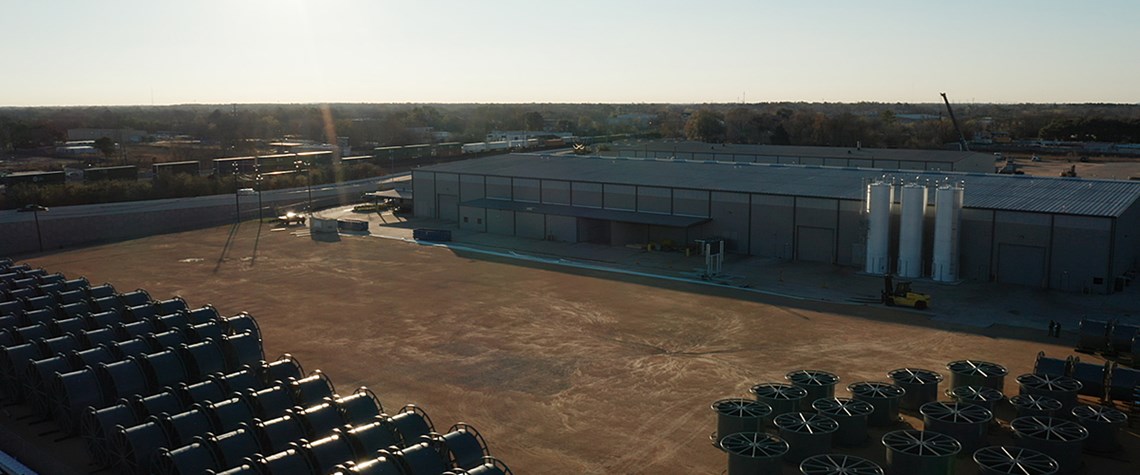
Baker Hughes' new factory
Plumbing the hydrogen economy
Baker Hughes has made a strategic investment in manufacturing products that facilitate the transport of hydrogen and other energy transition-related gases
The buildout of the hydrogen economy is about far more than just headline-grabbing new electolyser plants, turbine installations or carbon capture and storage facilities. A wide range of technology and components must be created or reengineered to meet the specific demands of hydrogen and carbon dioxide. Baker Hughes is strategically investing for growth in non-metallic materials that its customers require for the energy transition. Hatem Haidar, global vice president of flexible pipe systems – onshore, Baker Hughes, speaks to Hydrogen Economist about the challenges presented by the hydrogen economy and what his company is working on in this space. One recent related launch was of a flexible

Also in this section
1 April 2026
Multiple projects have been scrapped and valuations have nosedived, but the IEA says hydrogen is no passing fad
25 March 2026
The Middle East energy shock has highlighted the value of France’s unique potential to deploy nuclear-powered electrolysers
18 March 2026
The second fossil-fuel price shock in four years can be a much-needed catalyst for investment in the sector
9 March 2026
Hydrogen has not stalled in the UK because the technology does not work. The problem is that the system around it does not yet move at the speed required