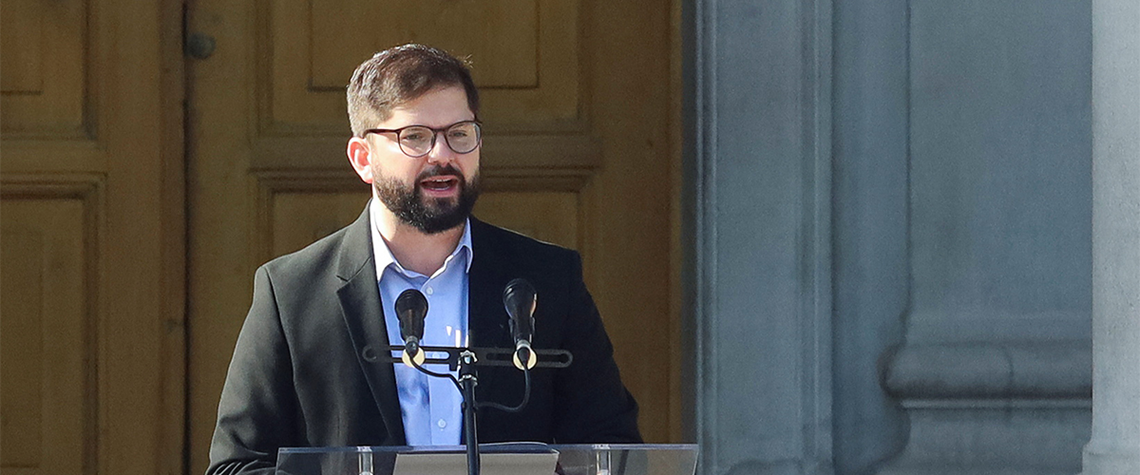
Chilean president-elect Gabriel Boric presents his first cabinet
Economics greater challenge than politics for Chile’s hydrogen sector
Moderate cabinet appointments help ease concerns over industry’s prospects under country’s new president
Chile has great expectations for its fledgling hydrogen industry, and it is moving in the right direction despite concerns by some over the recent election of a far-left candidate as president. President-elect Gabriel Boric, who will take office on 11 March, promised to “bury” Chile’s market-oriented economic system while campaigning for the first round of the presidential election in November, but his rhetoric shifted to the centre-left to win the runoff election on 19 December. This shift appears genuine based on Boric’s recently announced cabinet, says Etienne Gabel, senior director with the Latin America gas, power, and renewables team at information provider IHS Markit “Boric’s cabinet

Also in this section
1 April 2026
Multiple projects have been scrapped and valuations have nosedived, but the IEA says hydrogen is no passing fad
25 March 2026
The Middle East energy shock has highlighted the value of France’s unique potential to deploy nuclear-powered electrolysers
18 March 2026
The second fossil-fuel price shock in four years can be a much-needed catalyst for investment in the sector
9 March 2026
Hydrogen has not stalled in the UK because the technology does not work. The problem is that the system around it does not yet move at the speed required