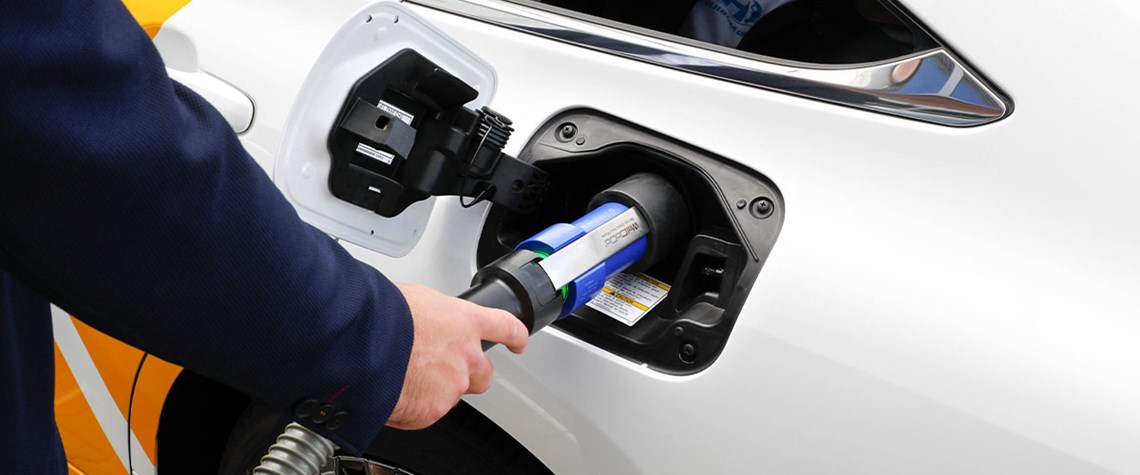
The EU only has 124 hydrogen refuelling stations across ten member states
EU ‘must not dilute’ low-carbon transport proposal
The European Parliament must not water down Commission proposals on infrastructure for electic vehicle charging and hydrogen refuelling, say industry groups
European lawmakers should not weaken targets proposed by the European Commission for battery-electric-vehicle (BEV) charging and hydrogen refuelling infrastructure, according to four advocacy groups. The EU is legislating on the issue in the Alternative Fuels Infrastructure Regulation (Afir) proposal, part of its ‘Fit for 55’ package. The initial proposal from the European Commission set a target for the Trans-European Transport Network (Ten-T) to have 4mn charging points for BEVs with a capacity of 1kW and a hydrogen refuelling station every 150km for compressed hydrogen and every 450km for liquefied hydrogen. As it stands, the proposal would require member states to install almost 2,000 h

Also in this section
1 April 2026
Multiple projects have been scrapped and valuations have nosedived, but the IEA says hydrogen is no passing fad
25 March 2026
The Middle East energy shock has highlighted the value of France’s unique potential to deploy nuclear-powered electrolysers
18 March 2026
The second fossil-fuel price shock in four years can be a much-needed catalyst for investment in the sector
9 March 2026
Hydrogen has not stalled in the UK because the technology does not work. The problem is that the system around it does not yet move at the speed required