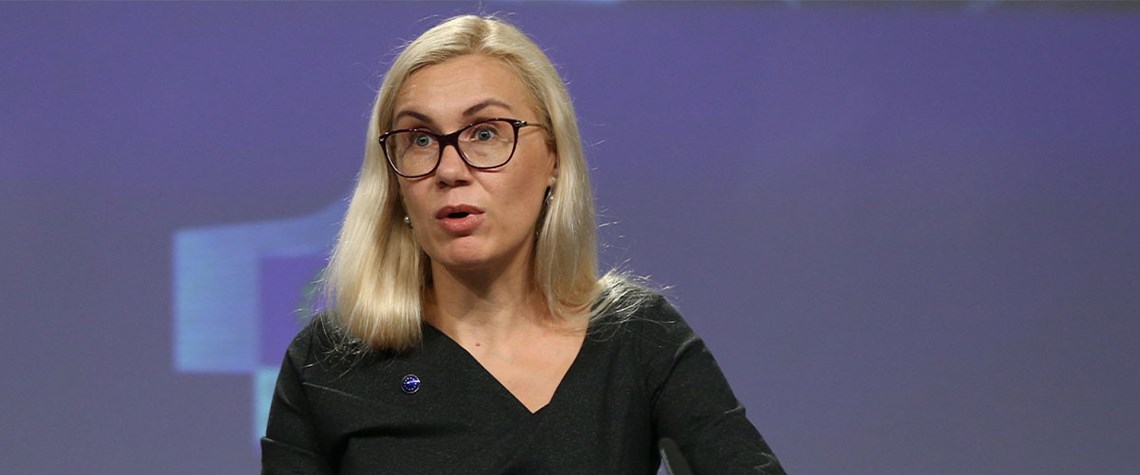
EU Commissioner for Energy Kadri Simson
War adds impetus to Europe’s gas decarbonisation
Gas businesses have embraced the acceleration of decarbonisation prompted by the Ukraine war but are concerned about the feasibility of new targets—especially for hydrogen
EU businesses were facing an avalanche of legislation even before the war in Ukraine, most notably the ‘Fit for 55’ package, adopted by the European Commission in July 2021, and the hydrogen and gas decarbonisation package, adopted in December 2021. These proposals alone would have kept stakeholders busy for months. Russia’s invasion of its neighbour in February has ramped up the legislative agenda considerably with what EU Commissioner for Energy Kadri Simson described at last week’s annual Eurogas conference as “our blueprint for removing Russian fossil [fuels] from our system as early as possible”—the RepowerEU proposals, published in May. 31pc – Share of Russian gas imports into EU

Also in this section
1 April 2026
Multiple projects have been scrapped and valuations have nosedived, but the IEA says hydrogen is no passing fad
25 March 2026
The Middle East energy shock has highlighted the value of France’s unique potential to deploy nuclear-powered electrolysers
18 March 2026
The second fossil-fuel price shock in four years can be a much-needed catalyst for investment in the sector
9 March 2026
Hydrogen has not stalled in the UK because the technology does not work. The problem is that the system around it does not yet move at the speed required