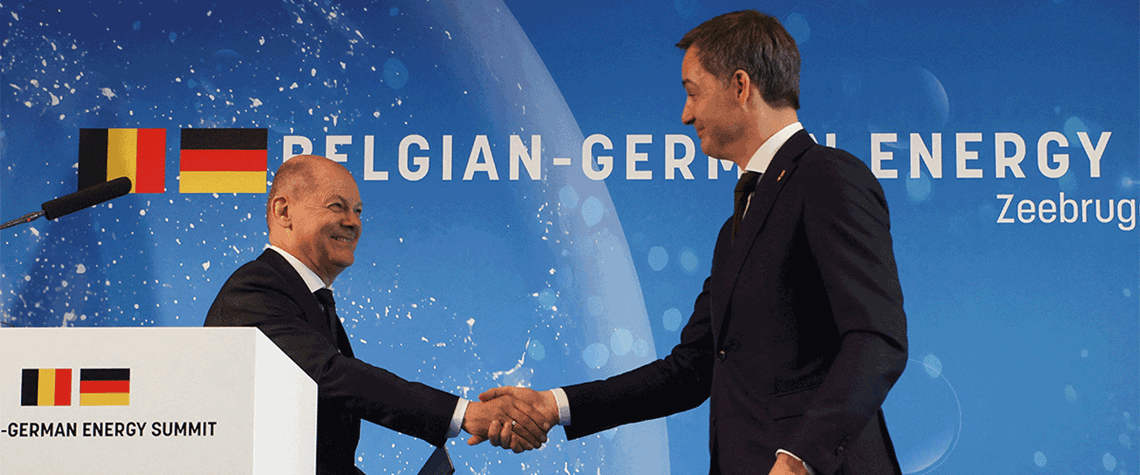
German chancellor Olaf Scholz and Belgian prime minister Alexander de Croo at a recent energy summit
Germany and Belgium strengthen hydrogen ties
The countries aim to have a hydrogen pipeline interconnection in place by 2028, amid plans to double Belgium’s gas transit capacity
Germany and Belgium have reiterated plans to open a cross-border hydrogen pipeline network linking the two countries by 2028 as part of wider cooperation on both hydrogen and CCS, according to a joint declaration signed this week. Belgium recently updated its hydrogen strategy to target 20TWh of hydrogen imports by 2030—and 350TWh in 2050—in a bid to become an import hub for Europe. “Today, port of Antwerp-Bruges is working out concrete plans to transport sustainable hydrogen and hydrogen carriers to Germany, further establishing ourselves as the green energy and feedstock hub of the future,” says Jacques Vandermeiren, CEO of Belgium’s port of Antwerp-Bruges. 20TWh – Belgian hydrogen i

Also in this section
1 April 2026
Multiple projects have been scrapped and valuations have nosedived, but the IEA says hydrogen is no passing fad
25 March 2026
The Middle East energy shock has highlighted the value of France’s unique potential to deploy nuclear-powered electrolysers
18 March 2026
The second fossil-fuel price shock in four years can be a much-needed catalyst for investment in the sector
9 March 2026
Hydrogen has not stalled in the UK because the technology does not work. The problem is that the system around it does not yet move at the speed required