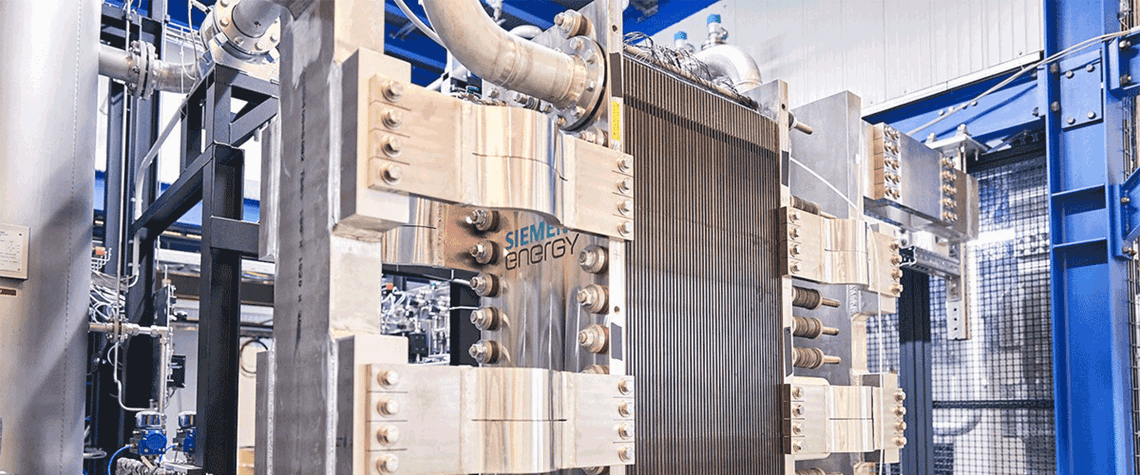
Siemens Energy electrolyser
Hydrogen: A promising new energy carrier, but how can projects be financed?
How can we overcome difficulties in raising capital and other obstacles to green hydrogen playing a major part in the future energy mix?
Hydrogen is one of the new energy carriers that is generating a great deal of interest and shows a lot of promise as a route to decarbonisation. Although many companies are offering solutions, few of them have roadmaps to achieve scale, which increases project risk and makes raising capital much harder. The IEA’s World Energy Outlook forecasts hydrogen production around three scenarios: net zero, pledges, and rules and regulations. Depending on the scenario, electrolyser capacity ranges from 30GW to 100GW or even up to 300GW. Looking at planned capacity additions, the forecast shows there will be sufficient hydrogen production capacity to meet the demand between the net zero case and the ple

Also in this section
1 April 2026
Multiple projects have been scrapped and valuations have nosedived, but the IEA says hydrogen is no passing fad
25 March 2026
The Middle East energy shock has highlighted the value of France’s unique potential to deploy nuclear-powered electrolysers
18 March 2026
The second fossil-fuel price shock in four years can be a much-needed catalyst for investment in the sector
9 March 2026
Hydrogen has not stalled in the UK because the technology does not work. The problem is that the system around it does not yet move at the speed required