


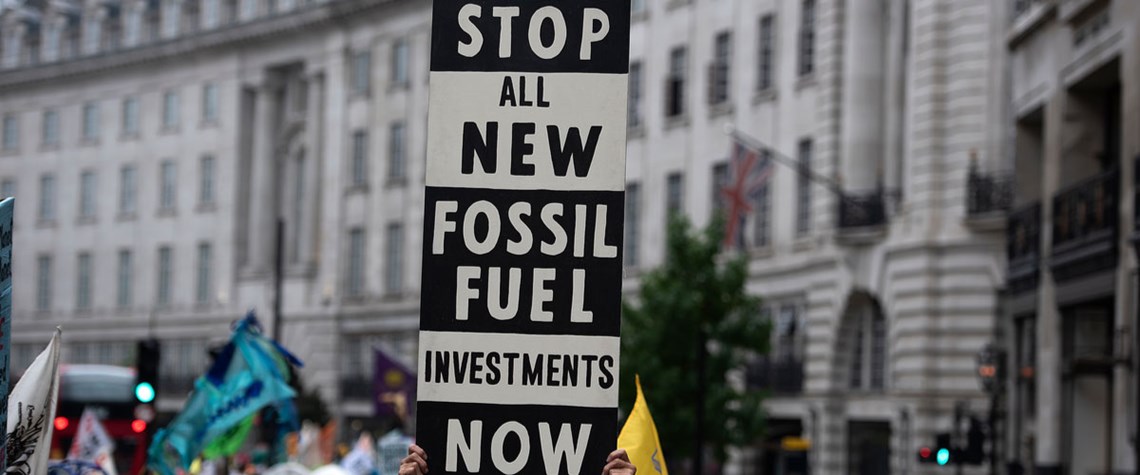
A protest against fossil fuels in London
Social licence needed in a decarbonising world
Oil and gas producers can become part of the solution. But only if they can maintain, or regain, public trust
The UK oil and gas E&P industry and its continuing social licence to operate came under significant scrutiny in the run-up to and aftermath of Cop26 in Glasgow. Never before have the names of hydrocarbons projects or their owners been so front and centre of people’s consciousness. The recent unprecedented rise in prices for gas—and more recently also for oil—has also loomed large in the consciousness of the general public and the media. Thus, the role of firms operating on the UK continental shelf (UKCS) in a decarbonising world has come into ever sharper focus. The UK oil and gas sector has long accepted the need to reinvent itself as an integrated energy and carbon capture and storage

Also in this section
23 April 2026
The addition of an oil pipeline to the Power of Siberia 2 gas project could ensure deliveries of Russian oil to China, materially shorten logistics lines between West Siberia and final customers, and—amid disruption in the Strait of Hormuz—offer a land-based export route that reduces exposure to maritime chokepoints
23 April 2026
There is a clear push to bolster exports to Asia amid uncertainty around its North American neighbour, but there are limits to the benefits from the energy crisis
23 April 2026
Shell made the play-opening discovery in Namibia’s Orange basin back in 2022, but its next well could decide whether the project can actually be commercialised
22 April 2026
The failure of OMV Petrom’s keenly watched exploration campaign at Bulgaria’s Han Asparuh block highlights the Black Sea’s uneven track record, despite major successes like Neptun Deep and Sakarya


