


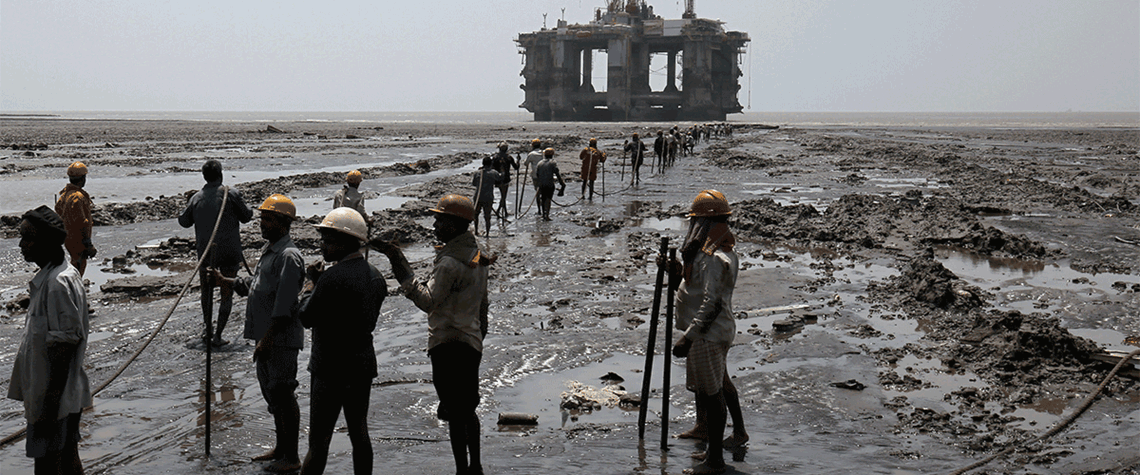
Workers prepare to dismantle an oil rig in Gujarat, India
Letter from Singapore: Beware oil investment’s death rattle
High prices are no longer a guarantee for increased investment in oil projects despite the warnings of an energy crunch
Some energy professionals have been writing the obituary for oil investment for several years. A disdain for financing hydrocarbons across the banking world, punitive measures on energy companies that dare to make a profit, a cult-like pursuit of ESG and fears of stranded assets amid apocalyptic warnings of a collapse in oil demand have left the industry on life support. But what does not kill you only makes you stronger, right? The crux of the matter is the relationship between oil prices and investment. The two have understandably had a close correlation. Higher prices lead to greater investment, which then leads to a glut in projects, a crash in the price, a cull in investment and—once ag

Also in this section
24 March 2026
It is an unusual story of out with the new and in with the old, as America First Refining shows the US going back to trusted energy security developments
23 March 2026
A complex and sometimes contradictory web of factors that include unpredictable oil prices, the globalisation of LNG markets, the expansion of Middle Eastern sovereign capital and the growth of datacentre demand will shape the energy landscape beyond 2026
23 March 2026
The Strait of Hormuz crisis highlights how key waterways can become global chokepoints
20 March 2026
Attacks on key oil and LNG assets across the Gulf mean a prolonged supply disruption, with damage to Qatar’s export capacity undermining confidence in the global gas system


