


Newsletters | Request Trial | Log in | Advertise | Digital Issue   |   Search
  • Upstream
  • Midstream & Downstream
  • Gas & LNG
  • Trading & Markets
  • Corporate & Finance
  • Geopolitics
  • Podcasts
Search
Related Articles
Coal-to-gas switch drives Asian demand
Countries in the region are turning to the cleaner-burning fuel for power generation, driving demand for imports
US continues gas infrastructure buildout
The US has used booming shale production to massively expand its LNG infrastructure, but Canadian developments have not fare so well while in South America consumption outstrips production
Eni scales up in Kutei
The latest gas discovery adds momentum to Eni’s push in Indonesia’s Kutei Basin, as it presses ahead with its fast-track development model aided by collaboration with Petronas
In pipelines we trust
The addition of an oil pipeline to the Power of Siberia 2 gas project could ensure deliveries of Russian oil to China, materially shorten logistics lines between West Siberia and final customers, and—amid disruption in the Strait of Hormuz—offer a land-based export route that reduces exposure to maritime chokepoints
Europe’s LNG buildout slows
The EU is still weaning itself off Russian gas, but the expansion of its import infrastructure has slowed while Russia and Kazakhstan push ahead with expanding production
Mideast plans big spending on gas to meet demand
The region’s gas producers are investing heavily in the fuel in order to satisfy burgeoning demand resulting from economic growth and a shift to cleaner fuels
Gas growth cools in 2025
The GECF has warned it may revise its projections for demand this year downwards in light of conflict in the Middle East, although it maintains its forecasts for 2027 and onwards
China’s secure energy transition
Alongside a rapid continued build-out of renewables, China’s latest five-year plan stresses the value of domestic hydrocarbon production for energy security and calls for increased Russian gas imports
Qatar’s Golden Pass dilemma
Golden Pass’s startup offers QatarEnergy a timely boost but may also force a difficult choice between honouring disrupted contracts and capitalising on soaring spot LNG prices
Hormuz crisis delivers tailwinds for US LNG
Disruptions to Qatari LNG exports have highlighted the risks of concentrated supply, potentially strengthening the long-term position of US exporters despite limited near-term flexibility
China LNG Papua New Guinea India Pakistan Thailand Indonesia
Sally Bogle
Perth
28 June 2018
Follow @PetroleumEcon
Forward article link
Share PDF with colleagues

Downward drift

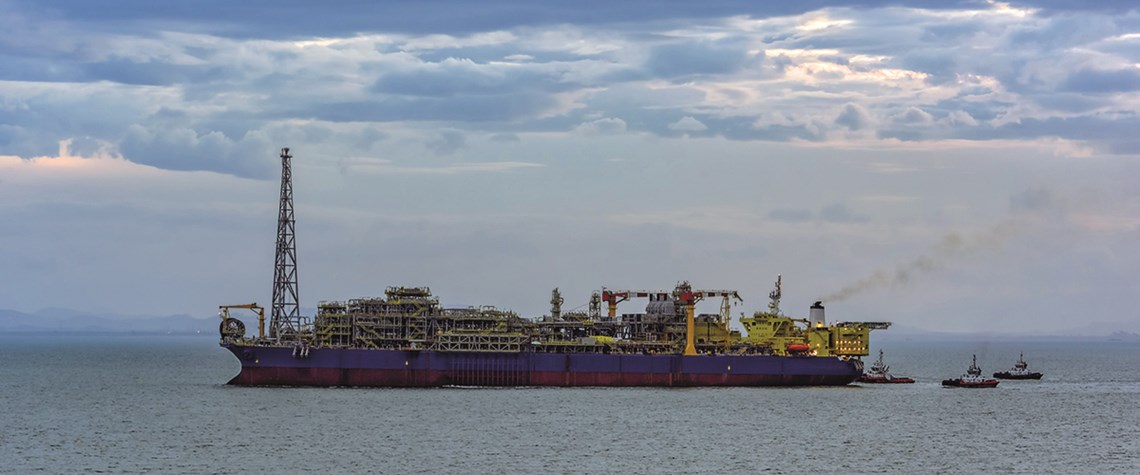
Gas production across the region is set to decline, with China the major exception, leading to increasing LNG imports

After peaking at over 440bn cubic metres a year in 2015, gas production in Asia is predicted to start gradually declining in the coming decade. Indonesia, Pakistan, Thailand, Bangladesh, Myanmar—and to some extent Malaysia—will see falling indigenous production from established reserve bases. By 2030, gas production in Asia is predicted at just over 390bn cm/y, according to Rystad Energy, representing an annual average reduction of 0.8%. Gas production is set to increase most markedly in China, where output will rise from 120bn cm/y in 2016 to around 150bn cm/y by 2030, surpassing all other Asian nations. Dominant producer PetroChina has been steadily building gas production capacity across

Also in this section
Billion-dollar deal sees Gabon swap barrels for instant cash
29 April 2026
Trafigura’s $1b prepayment agreement confirms African resource holders’ renewed interest in oil-backed financing deals as they look to capitalise on high oil prices
Why the UAE decided to quit OPEC
29 April 2026
The UAE’s departure from the oil producers’ group was a surprise to many, but the move can be traced back to a single point five years ago
Letter from the US: This crisis Is different
Opinion
28 April 2026
Oil traders warning of $200/bl oil are wrong, and the market should be wary of proclamations that the impact of the oil shortage has only begun to be felt and a that a ‘harsh adjustment’ is coming—even for industrialised nations
Middle East oil’s multi-step recovery plan
28 April 2026
Restoring supply from Saudi Arabia, the UAE, Kuwait, Qatar, Bahrain and Iraq involves complexities far beyond simply adjusting operational controls

Share PDF with colleagues

COPYRIGHT NOTICE: PDF sharing is permitted internally for Petroleum Economist Gold Members only. Usage of this PDF is restricted by <%= If(IsLoggedIn, User.CompanyName, "")%>’s agreement with Petroleum Economist – exceeding the terms of your licence by forwarding outside of the company or placing on any external network is considered a breach of copyright. Such instances are punishable by fines of up to US$1,500 per infringement
Send

Forward article Link

Send
Sign Up For Our Newsletter
Project Data
Maps
Podcasts
Social Links
Featured Video
Home
  • About us
  • Subscribe
  • Reaching your audience
  • PE Store
  • Terms and conditions
  • Contact us
  • Privacy statement
  • Cookies
  • Sitemap
All material subject to strictly enforced copyright laws © 2025 The Petroleum Economist Ltd
Cookie Settings
;

Search
