


Newsletters | Request Trial | Log in | Advertise | Digital Issue   |   Search
  • Upstream
  • Midstream & Downstream
  • Gas & LNG
  • Trading & Markets
  • Corporate & Finance
  • Geopolitics
  • Podcasts
Search
Related Articles
Letter from the US: The curse of strong energy exports
Rebuilding industry, energy dominance and lower energy costs are key goals that remain at odds in 2026
Venezuela mismanaged its oil, and US shale benefitted
Chavez’s socialist reforms boosted state control but pushed knowledge and capital out of the sector, opening the way for the US shale revolution
Outlook 2026: Freedom gas, captive buyer
Japan once wrote the book on LNG supply diversification, but it is now looking increasingly reliant on a single major provider
Outlook 2026: Grand plan for offshore leasing should give boost to US Gulf
As activity in the US Gulf has stagnated at a lower level, the government is taking steps to encourage fresh exploration and bolster field development work
Outlook 2026: LNG markets and the overhang
A third wave of LNG supply is coming, and with it a likely oversupply of the fuel by 2028
Outlook 2026: The US energy paradox – Efficiency at home, influence abroad
The US’ domestic energy market may be stagnating, but its role in the global energy system looks set to bloom
Outlook 2026: The geopolitical weaponisation of LNG
Global gas markets are being reshaped by politics as much as by gas prices and fundamentals. From Washington to Doha, Brussels and Beijing, LNG has become a strategic weapon as much as a commodity
Outlook 2026: LNG’s Pacific FID race heats up – Ramp-ups, rejuvenations and restarts
The US Gulf dominated investment decisions this year, but Asian importers’ concerns over supplier diversity mean the focus is shifting
Outlook 2026: Trump’s LNG diplomacy will likely run into commercial, regulatory reality
The president is aiming for ‘energy dominance’ via LNG sales, largely to Europe, but supply is set to outstrip demand, and EU regulations remain a stumbling block
Outlook 2026: US onshore holds steady at sluggish rate as shale stagnates
As contradictory as it might seem, US oil output has continued to grow over the last several years, even as drilling in the shale plays has maintained a slow decline. This improbable dichotomy is a testimony to the industry’s technological prowess
LNG China Russia US South Korea Japan
Peter Ramsay
28 January 2019
Follow @PetroleumEcon
Forward article link
Share PDF with colleagues

The LNG wave is on the way

Liquefaction ramp-ups and a slowing rate of Chinese demand growth finally deliver the oft-anticipated supply glut

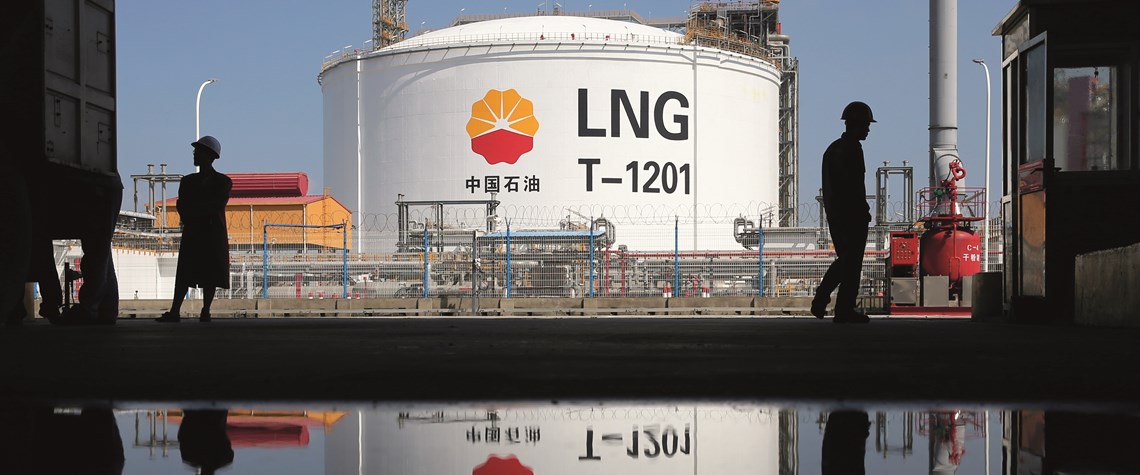
Europe's LNG terminals are set to be over 60pc busier in January 2019 compared to the same month last year. Australian, Russian and US supply has stepped up, and Asia is working through a backlog of fourth-quarter oversupply after mild weather. But is this just a temporary blip or finally the arrival of the widely predicted but much delayed "wave" that would send the global LNG markets into oversupply? Analysts are in a broad agreement that it is the latter. According to Paris-headquartered Kpler, one of the market-leading LNG cargo analysts, Europe will receive 5.8mn t of LNG in January, based on observed arrivals and anticipated ship movements until the end of the month, up by 2.2mn t from

Also in this section
Explainer: Iran’s indispensable energy role
16 January 2026
The country’s global energy importance and domestic political fate are interlocked, highlighting its outsized oil and gas powers, and the heightened fallout risk
Oil’s tanker transformation
16 January 2026
The global maritime oil transport sector enters 2026 facing a rare convergence of crude oversupply, record newbuild deliveries and the potential easing of several geopolitical disruptions that have shaped trade flows since 2022
Letter from the US: The curse of strong energy exports
Opinion
15 January 2026
Rebuilding industry, energy dominance and lower energy costs are key goals that remain at odds in 2026
Venezuela mismanaged its oil, and US shale benefitted
14 January 2026
Chavez’s socialist reforms boosted state control but pushed knowledge and capital out of the sector, opening the way for the US shale revolution

Share PDF with colleagues

COPYRIGHT NOTICE: PDF sharing is permitted internally for Petroleum Economist Gold Members only. Usage of this PDF is restricted by <%= If(IsLoggedIn, User.CompanyName, "")%>’s agreement with Petroleum Economist – exceeding the terms of your licence by forwarding outside of the company or placing on any external network is considered a breach of copyright. Such instances are punishable by fines of up to US$1,500 per infringement
Send

Forward article Link

Send
Sign Up For Our Newsletter
Project Data
Maps
Podcasts
Social Links
Featured Video
Home
  • About us
  • Subscribe
  • Reaching your audience
  • PE Store
  • Terms and conditions
  • Contact us
  • Privacy statement
  • Cookies
  • Sitemap
All material subject to strictly enforced copyright laws © 2025 The Petroleum Economist Ltd
Cookie Settings
;

Search
