


Newsletters | Request Trial | Log in | Advertise | Digital Issue   |   Search
  • Upstream
  • Midstream & Downstream
  • Gas & LNG
  • Trading & Markets
  • Corporate & Finance
  • Geopolitics
  • Podcasts
Search
Related Articles
Letter from London: Oil’s golden triangle
The interplay between OPEC+, China and the US will define oil markets throughout 2026
The curious case of oil-on-water
The market is facing being drowned in excess crude, but one caveat is that a large chunk is due to buyers reluctant to snap up sanctioned barrels
Accelerating MENA’s gas transformation
Gas has become a pillar of MENA economies and a catalyst for development strategies, fostering cooperation and creating new paths for economic diversification. Continued progress will require substantial investment and adapted regulations
China’s oil plan comes together
The country’s rapid output growth is an example that other producers could learn from
MENA states sharpen their gas focus
The GCC countries and other states in the region are looking to make greater domestic use of gas, both that produced at home and imported volumes
China seizes oil security opportunity
A combination of geopolitical uncertainty and OPEC+ barrels has driven a renewed focus on building strategic oil stocks despite flagging demand
Arctic LNG comes in from the cold
Beijing now appears prepared to accept discounted Russian LNG, even at the cost of heightened sanctions risk
Middle East doubling down on oil strength
Saudi Arabia, the UAE, Iraq and Kuwait aim to turn geological advantage into sustained geopolitical power via greater spare capacity
China’s role as oil buffer stock manager
The country’s intervention in global oil markets to stabilise prices could last well into 2026
Middle East gas can power regional prosperity
The Middle East natural gas playbook is being rewritten. The fuel source offers the region a pathway to a cleaner, sustainable and affordable means of local power, to fasttrack economic development and as a lucrative opportunity to better monetise its energy resources.
Iran Iraq China Sinopec
Clare Dunkley
8 May 2021
Follow @PetroleumEcon
Forward article link
Share PDF with colleagues

Iraq renews gas drive

Baghdad turns again to China to develop its second largest gasfield

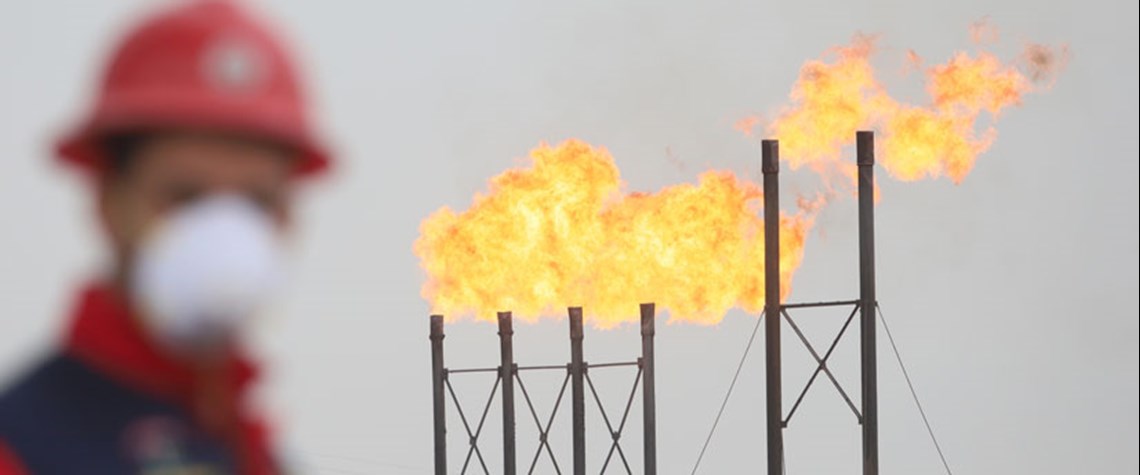
Iraq’s two largest non-associated gas deposits have languished unexploited for some seven years, even while the country's ability to supply year-round electricity to its increasingly disillusioned population relies on importing the resource from Iran. But new contract awards finally promise some progress on improving domestic supply. A long-delayed project to harness associated gas from some of the country’s biggest oilfields—flaring from which over the past decade represents another egregious financial (and environmental) failure—is a central plank of a wide-ranging investment pact signed with Total last month, confirming renewed focus on a gas self-sufficiency drive. Pressure from Washingt

Also in this section
Outlook 2026: Grand plan for offshore leasing should give boost to US Gulf
24 December 2025
As activity in the US Gulf has stagnated at a lower level, the government is taking steps to encourage fresh exploration and bolster field development work
Outlook 2026: Revitalising Syria’s oil and gas sector – A new chapter
Outlook 2026
23 December 2025
The new government has brought stability and security to the country, with the door now open to international investment
Outlook 2026: LNG markets and the overhang
Outlook 2026
23 December 2025
A third wave of LNG supply is coming, and with it a likely oversupply of the fuel by 2028
Outlook 2026: Energy realism regains the initiative from energy idealism
Outlook 2026
22 December 2025
Weakening climate resolve in the developed world and rapidly growing demand in developing countries means peak oil is still a long way away

Share PDF with colleagues

COPYRIGHT NOTICE: PDF sharing is permitted internally for Petroleum Economist Gold Members only. Usage of this PDF is restricted by <%= If(IsLoggedIn, User.CompanyName, "")%>’s agreement with Petroleum Economist – exceeding the terms of your licence by forwarding outside of the company or placing on any external network is considered a breach of copyright. Such instances are punishable by fines of up to US$1,500 per infringement
Send

Forward article Link

Send
Sign Up For Our Newsletter
Project Data
Maps
Podcasts
Social Links
Featured Video
Home
  • About us
  • Subscribe
  • Reaching your audience
  • PE Store
  • Terms and conditions
  • Contact us
  • Privacy statement
  • Cookies
  • Sitemap
All material subject to strictly enforced copyright laws © 2025 The Petroleum Economist Ltd
Cookie Settings
;

Search
