


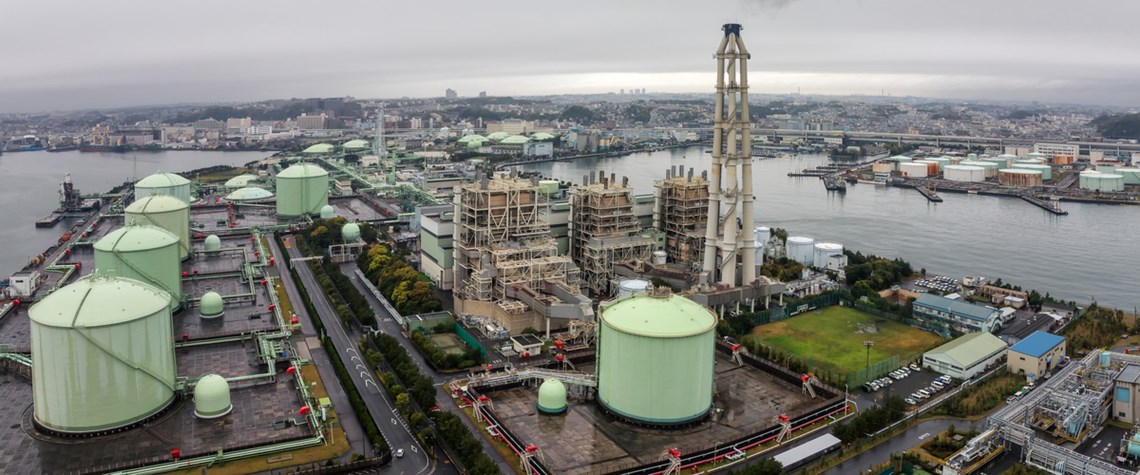
Yokohama, Japan
Japan considers scaling back LNG use
Global LNG demand might not reach previously forecast heights this decade as Tokyo mulls an increased role for renewables
Japan's government has published a new draft energy plan for 2030 that envisages more renewable power, reduced gas and coal-fired generation, as well as steady nuclear targets as the country seeks to meet its 2050 decarbonisation goals. The revised draft anticipates renewables becoming by far the country’s single largest energy source by 2030, whereas previous plans placed renewables third—below LNG and coal. But it is not clear when the revised plans—which were published by the Resources and Energy Study group subcommittee of the powerful Ministry for Economy, Trade and Industry (Meti)—might become official policy. Tokyo now wants to give “top priority to renewable energy” to reach 36-38p

Also in this section
14 April 2026
The GECF has warned it may revise its projections for demand this year downwards in light of conflict in the Middle East, although it maintains its forecasts for 2027 and onwards
13 April 2026
Petroleum Economist analysis highlights sharp shift from crude oversupply to market deficit, with Iraq and Kuwait badly affected and key producers Saudi Arabia and the UAE also seeing output sharply lower
13 April 2026
Turkmenistan is moving ahead with a modest expansion of the giant Galkynysh field to sustain gas deliveries abroad, but persistent delays to other key pipeline projects and geopolitical risks continue to constrain its export ambitions
13 April 2026
Expensive electricity has forced out swathes of energy-intensive industry and now threatens the country’s ability to attract future investment in datacentres and the digital economy


