


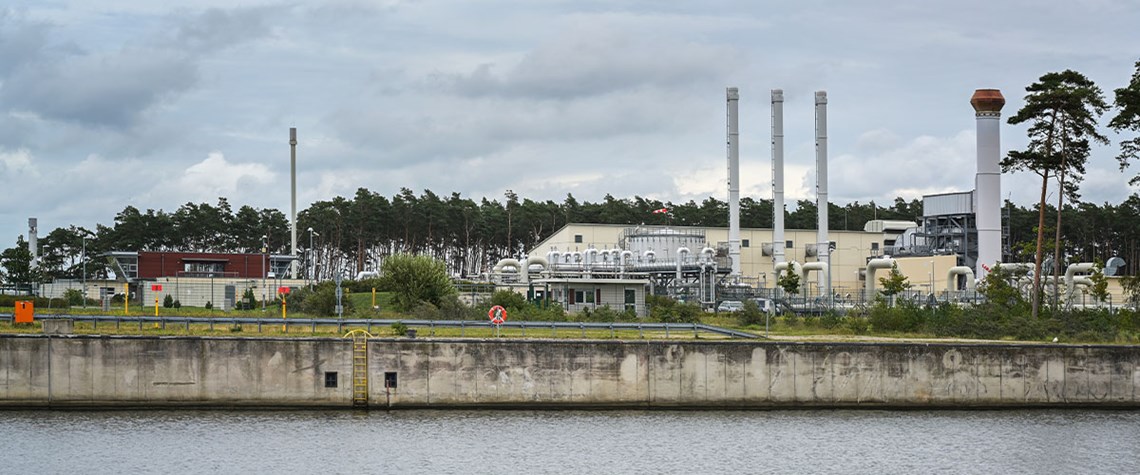
Lubmin is where the Nord Stream pipeline beaches, as well as the location for up to four FSRUs
Germany chooses locations for additional FSRUs
Stade and Lubmin selected as LNG import locations as minister also backs a fifth privately held project
Stade, close to Hamburg in Germany’s northwest, and Lubmin, on the country’s northeast coast, will play host to the third and fourth LNG FSRUs chartered by Berlin to try to offer an alternative to Russian pipeline gas supply, the country’s economy and energy minister Robert Habeck has revealed. The two terminals are due to be operational at the end of 2023—although for Lubmin that target is “at the earliest”—a year behind two FSRUs already earmarked for Brunsbuettel and Wilhelmshaven. The government is also expecting a fifth floating import facility to be ready by the end of this year, this last being led by private developer Deutsche Regas, which has secured a partnership with TotalEnergies

Also in this section
2 April 2026
Alongside a rapid continued build-out of renewables, China’s latest five-year plan stresses the value of domestic hydrocarbon production for energy security and calls for increased Russian gas imports
2 April 2026
The government is taking important steps to revive domestic production, lift investment and benefit from the geopolitical crisis even if more needs to be done in the longer term
1 April 2026
Golden Pass’s startup offers QatarEnergy a timely boost but may also force a difficult choice between honouring disrupted contracts and capitalising on soaring spot LNG prices
1 April 2026
It is not a case of if or when, but the length and magnitude of economic damage from elevated oil prices


