


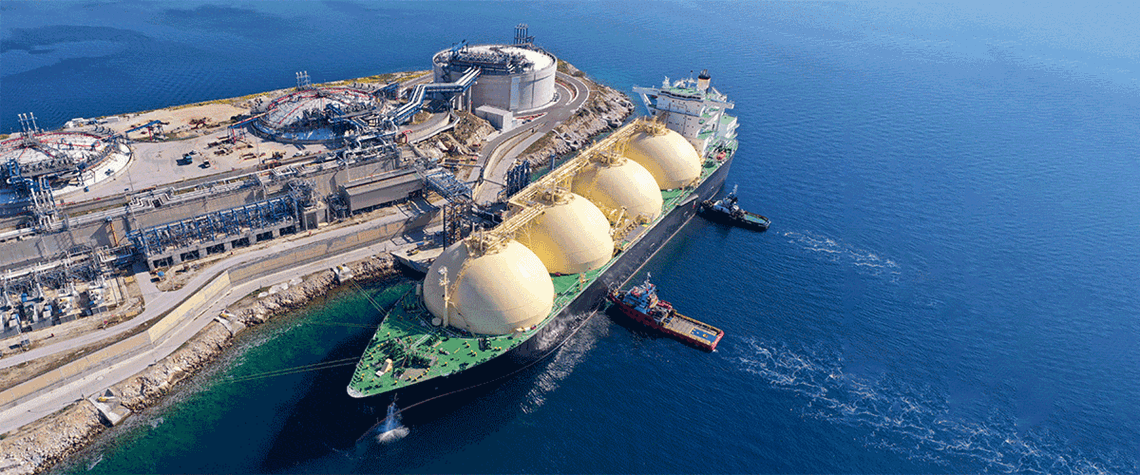
Capex on new LNG capacity has significantly increased over the past several years
Global LNG analysis report 2023 — Part 1
Decarbonisation and the war in Ukraine are just two of the factors driving the massive investment in liquefaction and regasification around the world. The first part of this deep-dive analysis looks at developments in Africa
Numerous trends are driving the short-term and long-term demand for gas globally. These include, but are not limited to, decarbonisation efforts by numerous countries around the world and Russia’s war with Ukraine. In turn, capex on new LNG capacity—both liquefaction and regasification—has skyrocketed over the past several years, with hundreds of billions of dollars in announced investments under development globally. According to the Gas Exporting Countries Forum (GECF), global gas demand will continue to increase to 2050 (see Fig.1). The forum’s report, Global Gas Outlook 2050, sees demand surging to more than 5,600bn m³/yr by 2050. Nearly 50pc of the demand growth will come from the Asia-

Also in this section
2 April 2026
Alongside a rapid continued build-out of renewables, China’s latest five-year plan stresses the value of domestic hydrocarbon production for energy security and calls for increased Russian gas imports
2 April 2026
The government is taking important steps to revive domestic production, lift investment and benefit from the geopolitical crisis even if more needs to be done in the longer term
1 April 2026
Golden Pass’s startup offers QatarEnergy a timely boost but may also force a difficult choice between honouring disrupted contracts and capitalising on soaring spot LNG prices
1 April 2026
It is not a case of if or when, but the length and magnitude of economic damage from elevated oil prices


