


Newsletters | Request Trial | Log in | Advertise | Digital Issue   |   Search
  • Upstream
  • Midstream & Downstream
  • Gas & LNG
  • Trading & Markets
  • Corporate & Finance
  • Geopolitics
  • Podcasts
Search
Related Articles
Hormuz crisis delivers tailwinds for US LNG
Disruptions to Qatari LNG exports have highlighted the risks of concentrated supply, potentially strengthening the long-term position of US exporters despite limited near-term flexibility
Letter from the Middle East: LNG – the weak link the Gulf crisis just exposed
The crisis in the Middle East has put LNG’s ability to offer security and flexibility under uncomfortable scrutiny
India taking pole position on oil demand growth
The country’s rapidly expanding economy is boosting its consumption of oil as demand for the fuel slows elsewhere in the world
Filling a gap in the global LNG market
De la Rey Venter, CEO of LNG player MidOcean Energy, discusses strategy, project developments and the prospects for the LNG market
Navigating the next LNG cycle
Eni’s director for global gas and LNG portfolio, Cristian Signoretto, discusses how demand will respond to rising LNG supply, and how the company is expanding its own gas and LNG operations through disciplined, capital-efficient investments
Next wave of floating LNG growth in developing markets
After Europe’s rapid buildout of floating LNG import capacity, Exmar CEO Carl-Antoine Saverys says future growth in floating gas infrastructure will increasingly be driven by developing markets as lower prices, rising energy demand and the need to replace coal unlock new opportunities for unconventional and tailor-made solutions
Colombia races to shore up gas supply
Gas is a central pillar of Colombia’s energy system, but declining production poses a significant challenge, and LNG will be increasingly needed as a stopgap. A recent major offshore gas discovery offers hope, but policy improvements are also required, Camilo Morales, secretary general of Naturgas, the Colombian gas association, tells Petroleum Economist 
How Hormuz chokehold threatens LNG buyers
A potential blockade of the Strait of Hormuz following the escalating US-Iran conflict risks disrupting Qatari LNG exports that underpin global gas markets, exposing Asia and other markets to sharp price spikes, cargo shortages and renewed reliance on dirtier fuels
Letter from Asia: The nuanced India-Russia oil picture
The South Asian consumer’s next move could tighten the Middle East oil market overnight
New Zealand embraces LNG
LNG would serve as a backup supply source as domestic gas declines and the country’s energy system comes under stress during periods of low hydropower output and high energy demand
Strong late-winter draw on high LNG stocks looks increasingly unlikely
LNG China Japan South Korea India
Shi Weijun
Shanghai
16 March 2023
Follow @PetroleumEcon
Forward article link
Share PDF with colleagues

Subdued Asian LNG interest produces large stockpiles

Weak prices support demand but mild weather, delayed gas projects, large reserves and nuclear alternatives set to blunt upturn

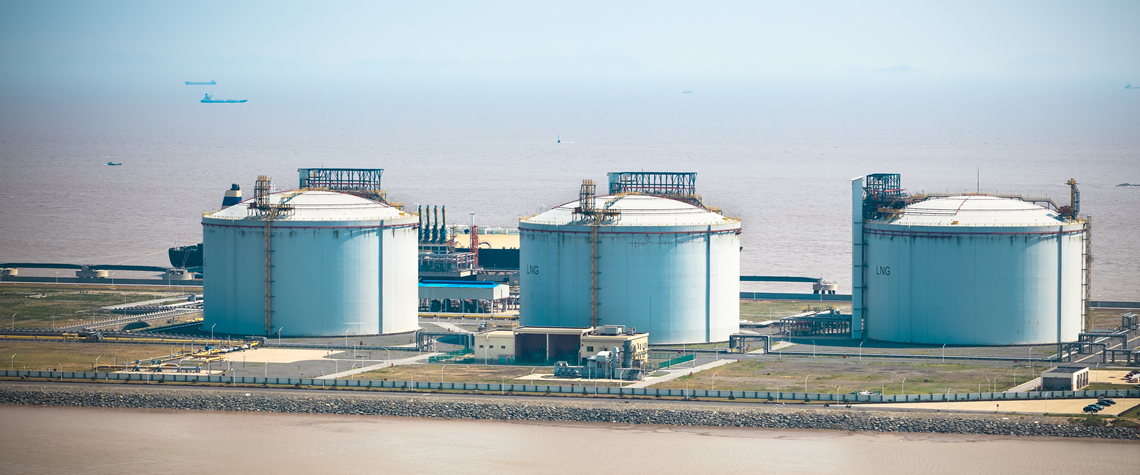
Those fearing a potential global gas crunch later this year will take heart from tepid Asia-Pacific LNG activity, which saw the JKM benchmark for spot Asia-Pacific cargoes hit its lowest level in March since July 2021. The lull in prices has incentivised the return of some Chinese players and is likely to attract price-sensitive markets in Asia, which are now looking to resume purchases. But overall demand remains subdued when it comes to the main import markets, with the weather playing a key role. China, Japan, South Korea and Taiwan are set to finish the winter with 3.4mn t more LNG in reserve than a year earlier, weighing on summer requirements to refill tanks for the peak summer cooling

Also in this section
Letter from the US: Oil refining gets a do-over
24 March 2026
It is an unusual story of out with the new and in with the old, as America First Refining shows the US going back to trusted energy security developments
Middle East chaos creates new oil and gas trends
23 March 2026
A complex and sometimes contradictory web of factors that include unpredictable oil prices, the globalisation of LNG markets, the expansion of Middle Eastern sovereign capital and the growth of datacentre demand will shape the energy landscape beyond 2026
The key arteries of the energy world
23 March 2026
The Strait of Hormuz crisis highlights how key waterways can become global chokepoints
A bigger and longer crisis
20 March 2026
Attacks on key oil and LNG assets across the Gulf mean a prolonged supply disruption, with damage to Qatar’s export capacity undermining confidence in the global gas system

Share PDF with colleagues

COPYRIGHT NOTICE: PDF sharing is permitted internally for Petroleum Economist Gold Members only. Usage of this PDF is restricted by <%= If(IsLoggedIn, User.CompanyName, "")%>’s agreement with Petroleum Economist – exceeding the terms of your licence by forwarding outside of the company or placing on any external network is considered a breach of copyright. Such instances are punishable by fines of up to US$1,500 per infringement
Send

Forward article Link

Send
Sign Up For Our Newsletter
Project Data
Maps
Podcasts
Social Links
Featured Video
Home
  • About us
  • Subscribe
  • Reaching your audience
  • PE Store
  • Terms and conditions
  • Contact us
  • Privacy statement
  • Cookies
  • Sitemap
All material subject to strictly enforced copyright laws © 2025 The Petroleum Economist Ltd
Cookie Settings
;

Search
