


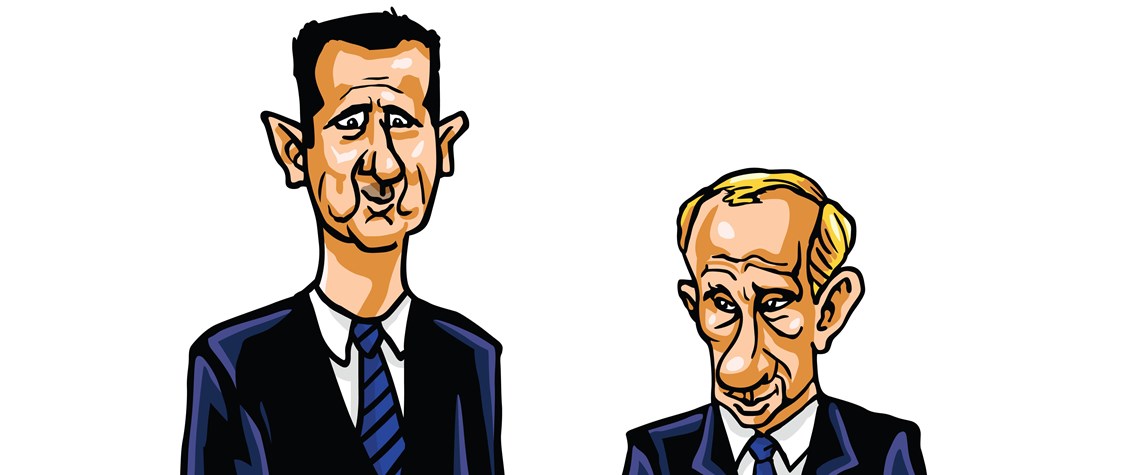
Russia is welcome in the Middle East—up to a point
Arabs encourage Russia's economic advances but are wary of political ones
When Rosneft's chief executive Igor Sechin announced in December 2016 that the Russian firm was taking a 30% share in Egypt's giant offshore Zohr gasfield, Eni had cause to celebrate. For it had further spread the risk associated with developing it, having earlier sold a 10% stake to BP. But Eni's satisfaction was very likely nothing compared to that expressed by President Abdel Fattah el-Sisi when he hosted Sechin at his palace in Cairo. To have a Russian firm involved prominently in a prestige project like Zohr fits with Sisi's strategy of diluting his country's economic dependence on the US and other Western nations. It's a strategy that most Arab governments are adopting. Iraq has welcom

Also in this section
2 April 2026
Alongside a rapid continued build-out of renewables, China’s latest five-year plan stresses the value of domestic hydrocarbon production for energy security and calls for increased Russian gas imports
2 April 2026
The government is taking important steps to revive domestic production, lift investment and benefit from the geopolitical crisis even if more needs to be done in the longer term
1 April 2026
Golden Pass’s startup offers QatarEnergy a timely boost but may also force a difficult choice between honouring disrupted contracts and capitalising on soaring spot LNG prices
1 April 2026
It is not a case of if or when, but the length and magnitude of economic damage from elevated oil prices


