


Newsletters | Request Trial | Log in | Advertise | Digital Issue   |   Search
  • Upstream
  • Midstream & Downstream
  • Gas & LNG
  • Trading & Markets
  • Corporate & Finance
  • Geopolitics
  • Podcasts
Search
Related Articles
Oil and gas now has green licence
The hydrocarbons industry must start to deliver in 2024 on the quiet approvals granted at last year’s COP, which was also dubbed ‘Conference of the Petrostates’
Innovation accelerates drive to sustainability
For Earth Day we focus on the headway made in recent years to improve sustainability and consider future challenges
Cop27 leaves oil and gas unscathed
Opposition from producer countries made a commitment to ‘phase down’ fossil fuels impossible
Letter from South America: Petro plots course for transition
Colombia’s new president has no interest in arresting decline in the country’s oil and gas production
Three key hurdles for Vietnam’s LNG-to-power sector
Tariffs, location and bureaucracy are obstacles to be overcome to drive greater use of gas in Vietnam’s power sector
Outlook 2022: The rise of rights-based claims in climate change disputes
Governments but also, increasingly, corporates could face suits with far-reaching material implications for their futures
Outlook 2022: US bipartisanship and regional divergence
The North American powerhouse will need to develop several energy transitions to green its economy, but has taken important baby steps
How to debate the transition with oil and gas firms
Is anger and a refusal to allow any comeback a useful tactic to shake up cosy complacency? Or is reasoned debate more useful?
Limited role for gas in India's energy mix
Gas is caught between present reliance on coal and future growth for renewables
Policy measures key to US net-zero goal
The new administration has set lofty low-carbon ambitions but must take radical action to overhaul the nation’s energy mix
EVs Renewables Climate change
Beth McLoughlin
1 December 2017
Follow @PetroleumEcon
Forward article link
Share PDF with colleagues

The clock is ticking

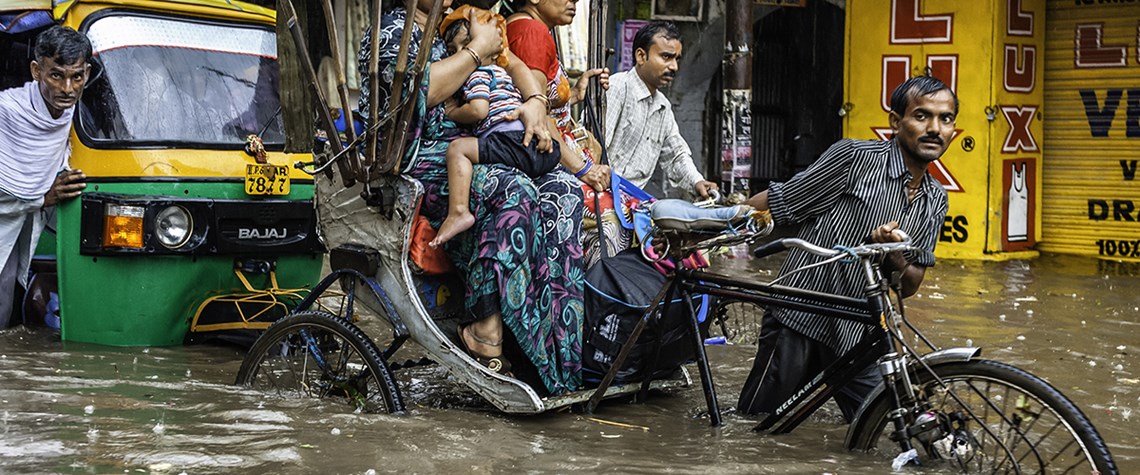
Harald Welzer's predictions in his book Climate Wars may be intellectually sound, but we hope he's wrong

The author's choice of sub-title—an offer to explain why people will be killed in the coming decades—is bound to attract attention. And to sound an alarm is precisely his intention: German social psychologist Harald Welzer wants to wrench us from our comfort zone, and recognise that our current lifestyle in the West will end if temperatures rise above two degrees by the end of this century. Despite countries' best efforts, staying within the limits of the Paris climate accord is widely viewed as highly unlikely. The book's premise is that as resources become more scarce, fighting will break out among those trying to use them. This in turn will displace people, provoking violence between refu

Also in this section
Gas growth cools in 2025
14 April 2026
The GECF has warned it may revise its projections for demand this year downwards in light of conflict in the Middle East, although it maintains its forecasts for 2027 and onwards
OPEC+’s 11m b/d March production collapse
13 April 2026
Petroleum Economist analysis highlights sharp shift from crude oversupply to market deficit, with Iraq and Kuwait badly affected and key producers Saudi Arabia and the UAE also seeing output sharply lower
Galkynysh goes fourth
13 April 2026
Turkmenistan is moving ahead with a modest expansion of the giant Galkynysh field to sustain gas deliveries abroad, but persistent delays to other key pipeline projects and geopolitical risks continue to constrain its export ambitions
The UK’s problematic power price
13 April 2026
Expensive electricity has forced out swathes of energy-intensive industry and now threatens the country’s ability to attract future investment in datacentres and the digital economy

Share PDF with colleagues

COPYRIGHT NOTICE: PDF sharing is permitted internally for Petroleum Economist Gold Members only. Usage of this PDF is restricted by <%= If(IsLoggedIn, User.CompanyName, "")%>’s agreement with Petroleum Economist – exceeding the terms of your licence by forwarding outside of the company or placing on any external network is considered a breach of copyright. Such instances are punishable by fines of up to US$1,500 per infringement
Send

Forward article Link

Send
Sign Up For Our Newsletter
Project Data
Maps
Podcasts
Social Links
Featured Video
Home
  • About us
  • Subscribe
  • Reaching your audience
  • PE Store
  • Terms and conditions
  • Contact us
  • Privacy statement
  • Cookies
  • Sitemap
All material subject to strictly enforced copyright laws © 2025 The Petroleum Economist Ltd
Cookie Settings
;

Search
