


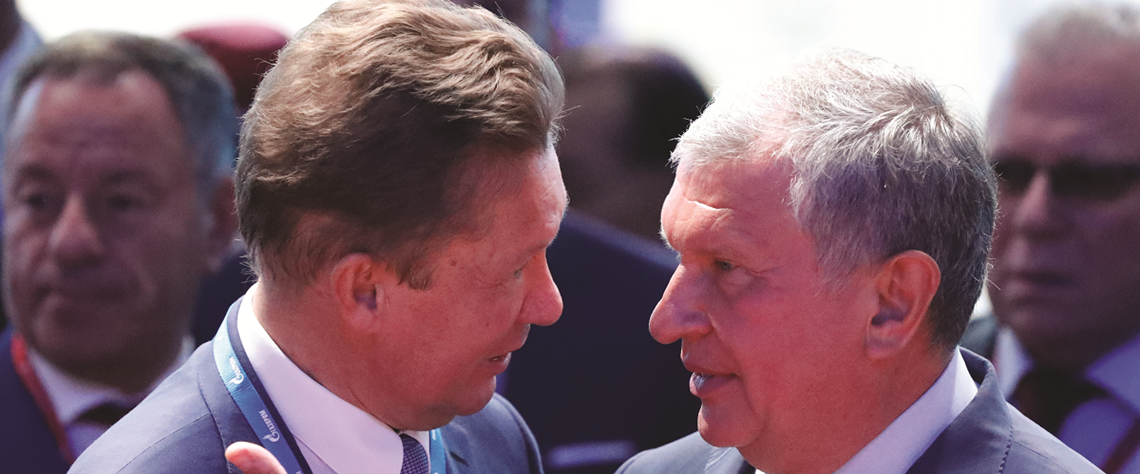
Gazprom chief executive Alexei Miller speaks with Rosneft chief executive Igor Sechin at a meeting in Vladivostok
Gazprom faces tax grab
The Kremlin is pursuing another way to extract money from Gazprom, after failed efforts to force a dividend rise
The Kremlin wants to increase the mineral extraction tax (MET) paid by export monopoly Gazprom, as it looks to quietly abandon a decree obliging state-controlled companies to pay higher dividends. The decree has been observed mainly in the breach. Russia's State Duma legislature in July passed a law adjusting the MET rate paid by Gazprom. From 1 September, a coefficient used to calculate the MET on gas for Gazprom will be raised—to 2.055 from 1.402—for the remainder of the year. Ilya Trunin, deputy finance minister, said this temporary increase in MET would partly compensate for the 72bn-rouble ($1.13bn) shortfall in the state budget from Gazprom's failure to raise its dividend payout in acc

Also in this section
24 March 2026
It is an unusual story of out with the new and in with the old, as America First Refining shows the US going back to trusted energy security developments
23 March 2026
A complex and sometimes contradictory web of factors that include unpredictable oil prices, the globalisation of LNG markets, the expansion of Middle Eastern sovereign capital and the growth of datacentre demand will shape the energy landscape beyond 2026
23 March 2026
The Strait of Hormuz crisis highlights how key waterways can become global chokepoints
20 March 2026
Attacks on key oil and LNG assets across the Gulf mean a prolonged supply disruption, with damage to Qatar’s export capacity undermining confidence in the global gas system


