


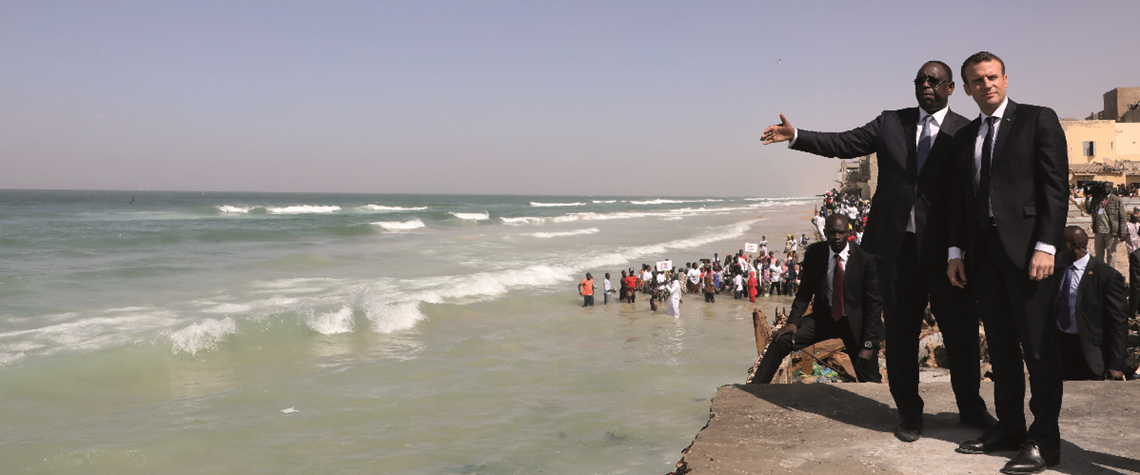
View offshore: President Macky Sall and Emmanuel Macron close to where LNG exports are due in the early 2020s
Senegal seeks to avoid the oil curse
Offshore oil and gas is set to flow within five years, and Senegal is bracing itself for the impact
Senegal's aspirations to become a major hydrocarbons producer are moving ever closer to realisation. Determined that the West African state should avoid the financial mismanagement that has dogged many an oil-rich African country, President Macky Sall is hurrying to implement a regulatory and legislative framework. Senegal is basing plans for its new life as a gas and oil producer on an annual government revenue flow of CFA600bn ($1.04bn) from the two prospective hydrocarbons ventures—the SNE oilfield and the Greater Tortue/Ahmeyim gas project. Both are scheduled to start producing export revenues in the early 2020s. Based on a highly conservative $38.7/barrel average future oil price, this

Also in this section
24 March 2026
It is an unusual story of out with the new and in with the old, as America First Refining shows the US going back to trusted energy security developments
23 March 2026
A complex and sometimes contradictory web of factors that include unpredictable oil prices, the globalisation of LNG markets, the expansion of Middle Eastern sovereign capital and the growth of datacentre demand will shape the energy landscape beyond 2026
23 March 2026
The Strait of Hormuz crisis highlights how key waterways can become global chokepoints
20 March 2026
Attacks on key oil and LNG assets across the Gulf mean a prolonged supply disruption, with damage to Qatar’s export capacity undermining confidence in the global gas system


